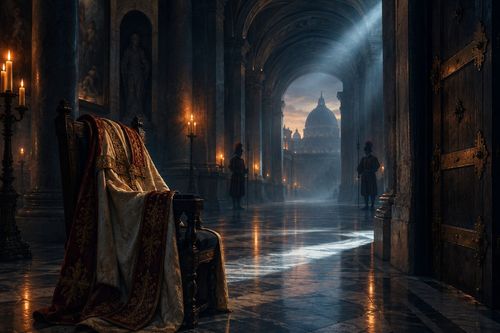
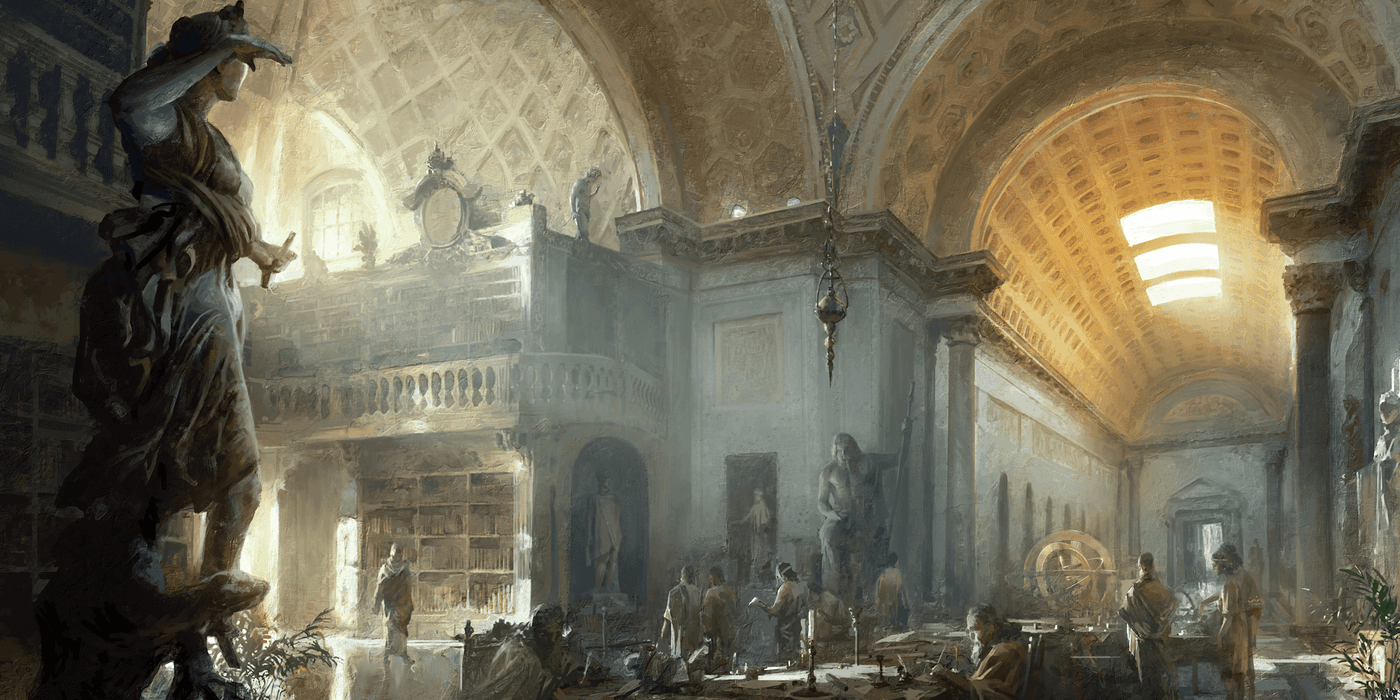
The story most people know goes something like this: the Library of Alexandria — the greatest repository of knowledge in the ancient world — was destroyed in a single catastrophic fire, and humanity lost centuries of accumulated learning in one terrible night. Depending on which version you've heard, the villain is Julius Caesar, a Christian mob, or a Muslim caliph. It's a powerful story. It's also, according to historians, almost entirely wrong.
The Library of Alexandria was established around 300 BCE under the Ptolemaic dynasty and at its height held an estimated 400,000 to 700,000 scrolls — works of mathematics, philosophy, medicine, astronomy, literature, and history gathered from across the ancient world. It was genuinely one of the most extraordinary intellectual institutions ever created. Scholars traveled from across the Mediterranean to study there. The institution funded research, attracted the greatest minds of the era, and for several centuries made Alexandria the intellectual capital of the known world.
There were fires. Julius Caesar did set fire to ships in the harbor during his occupation of Alexandria in 48 BCE, and the flames spread to parts of the city — possibly damaging some portion of the library's collection. But contemporary sources disagree sharply on how much was actually destroyed, and later references to the library suggest it continued operating. A daughter library at the Temple of Serapis was destroyed in 391 CE when Christian authorities ordered pagan temples demolished. These were real losses. But neither event was the singular catastrophe the popular story describes — and the dramatic versions were largely invented or embellished centuries after the fact.
The most widely repeated version — that a Muslim caliph ordered all the scrolls burned in 642 CE because anything contradicting the Quran was heresy and anything agreeing with it was redundant — has been thoroughly debunked by historians. It appears nowhere in any contemporary source and was first recorded in a document written 500 years after the supposed event. Britannica describes it plainly as a 12th-century fabrication. The story was almost certainly invented for political purposes, to cast Muslim conquerors as enemies of knowledge — a charge historians now regard as baseless.
So what actually happened? The modern historical consensus is both less dramatic and more disturbing. The library didn't burn — it faded. As Rome grew increasingly unstable from the 3rd century onward, the funding and institutional support that had kept the library running for centuries began to dry up. Scholars stopped being subsidized. Copying programs — the essential work of transferring aging papyrus scrolls onto fresh material before they deteriorated — slowed and eventually stopped. Papyrus is fragile. Without constant copying, scrolls rotted, crumbled, and disappeared. The collection shrank not in a night, but across generations, through neglect and underfunding and the quiet death of institutional priority.
By the time the Arab conquest arrived in 642 CE, most historians believe there was very little left to destroy. The library hadn't been a functioning institution for centuries. The dramatic story of its burning — whoever you cast as the villain — is a story about an event that destroyed something that had already largely ceased to exist. The real tragedy had already happened, slowly, invisibly, while the people with the power to prevent it chose not to.
The reason the fire myth persists is partly that it's a better story, and partly that it serves a narrative purpose — it gives us a villain to blame, a moment to point to, a crime to prosecute across the centuries. The actual story — that the greatest library in the ancient world was allowed to quietly rot because no one in power cared enough to fund its preservation — doesn't have a villain. It has something harder to process: indifference. The scrolls didn't burn. They just weren't copied in time, and eventually there was nothing left to save.
Historians who study the library's fate often note the uncomfortable contemporary parallel. Libraries, archives, and the institutions that preserve knowledge don't typically die in fires. They die from budget cuts, shifting priorities, and the quiet decision by people in power that preservation is less important than other things. The Library of Alexandria is, in that reading, less a cautionary tale about violence and more a cautionary tale about what happens when no one is watching.