In 1889, a saloon in San Francisco called the Palais Royale tried something new. Louis Glass and William S. Arnold wanted customers to pay for music, one song at a time.
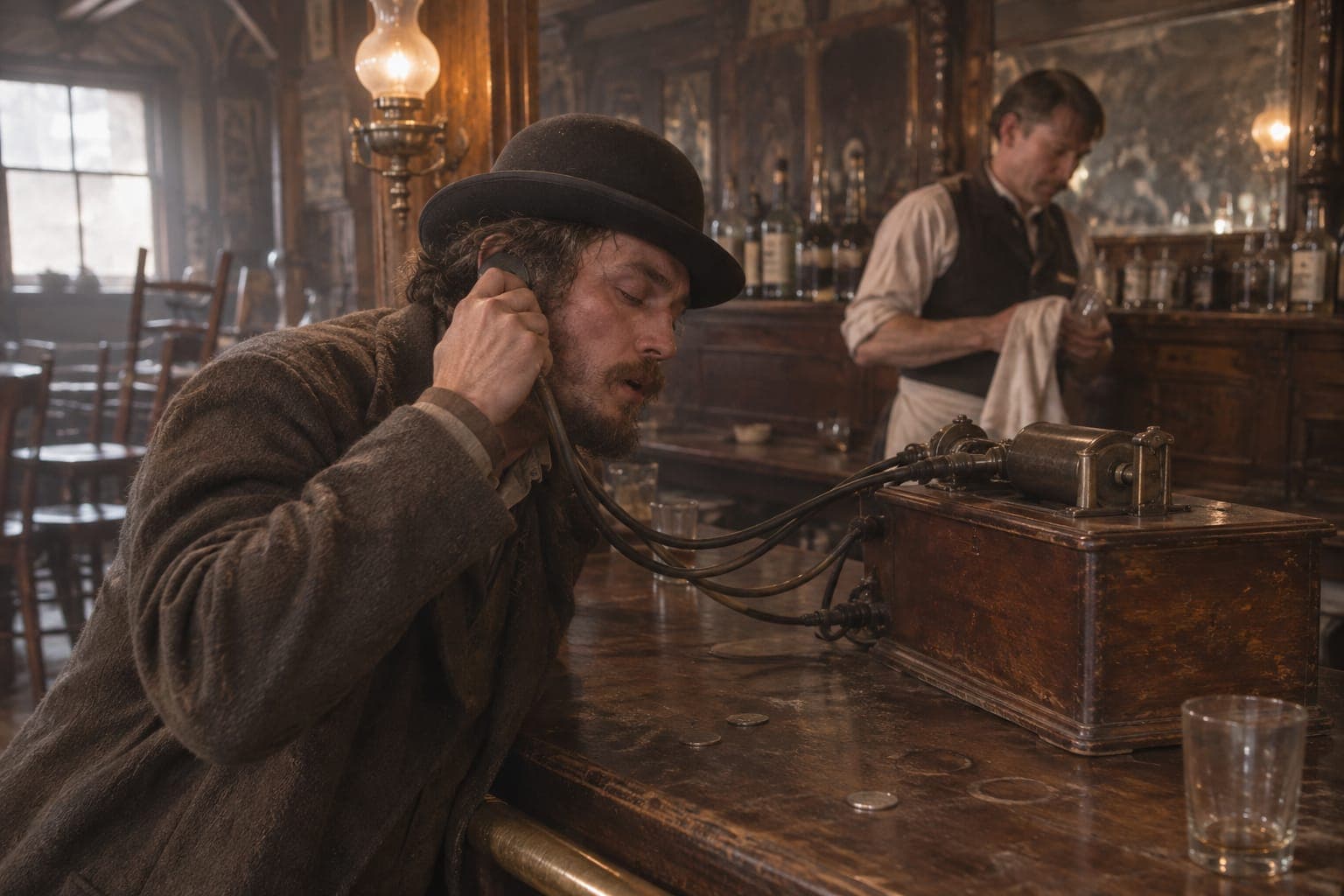
Their machine began as an ordinary Edison phonograph. They retrofitted it with a patented coin attachment, turning a device built for dictation and home listening into a vending machine for sound.
There was no speaker to fill the room, though. Instead, the machine had four listening tubes, and a customer who dropped in a nickel put one tube to an ear to hear the record.
So the world's first coin-operated music machine was a private experience in a public bar. Four people could listen at once, but nobody else in the saloon heard a note.
The money was real. Glass told a Chicago conference in 1890 that the first 15 machines had brought in a little more than $4,000 between December 1889 and May 1890.
Other accounts say a single machine earned over $1,000 in six months. Those figures describe different things, but both point to customers happily spending nickels on the novelty.
The word "jukebox" didn't catch on until decades later. The machine that started it all was never called one, and it looked nothing like the glowing cabinets that came after.