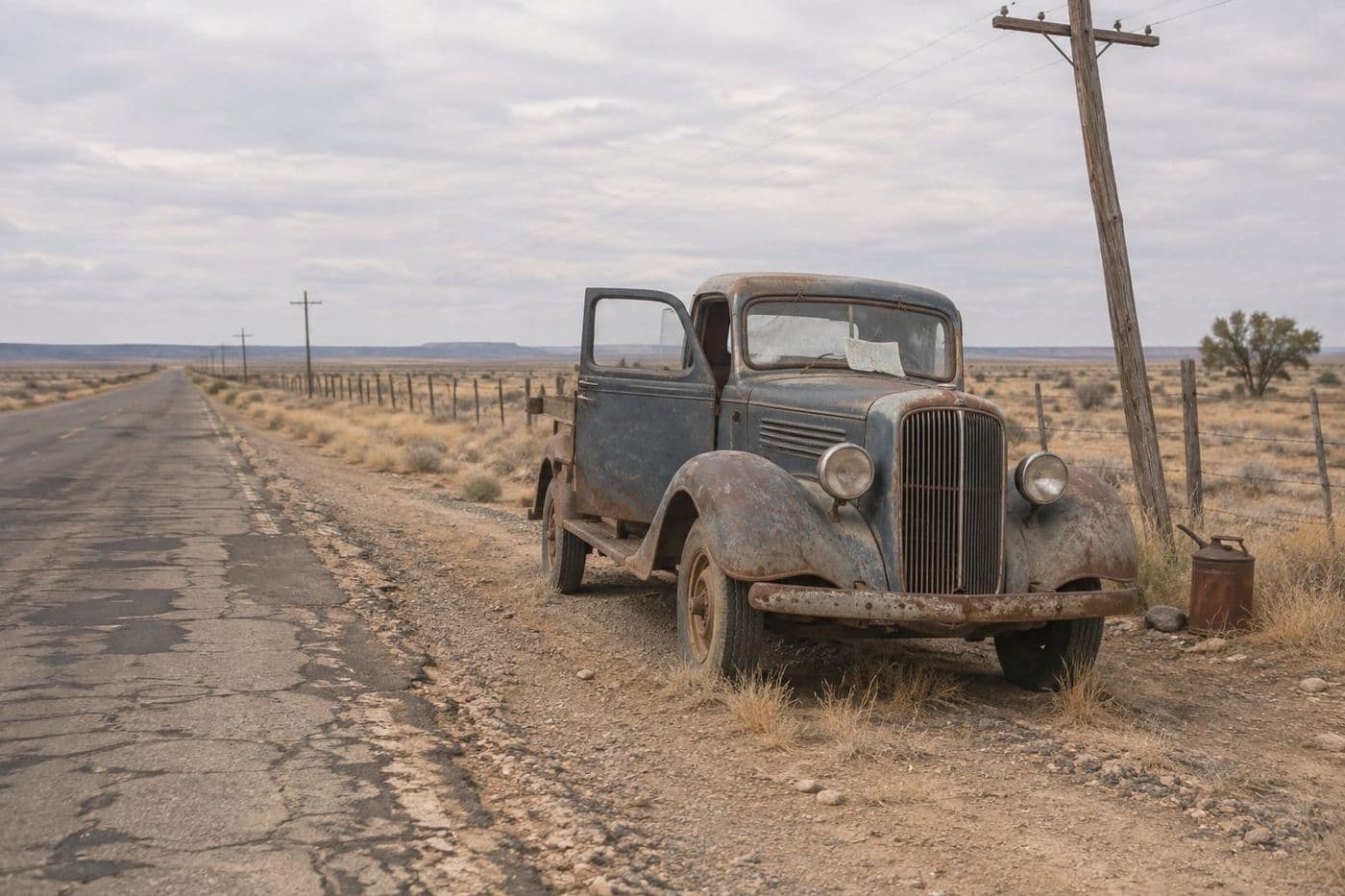
On November 11, 1926, highway officials adopted the U.S. numbered highway system. Among the new routes was a road from Chicago to Los Angeles that would soon become a legend.
The man behind it, Oklahoma's Cyrus Avery, had a number in mind: he wanted it to be U.S. 60. Oklahoma had reportedly started producing signs and brochures with that number on them.
Then came the objections. Commissioners from Kentucky and Virginia argued that a road not running coast to coast shouldn't take a 60 number, a designation they felt belonged on their own route.
The proposed fallback was 62. Avery was not thrilled, since the tidy, memorable number he wanted had slipped away and left him with something that sounded like a leftover.
On April 30, 1926, Avery and a federal official met in Springfield, Missouri. They noticed that 66 had not been assigned, and wired the Bureau of Public Roads that they preferred sixty six to sixty two.
Accounts differ on who spotted the open number first, but the telegram is the part that stuck. A compromise made by wire became one of the most recognizable numbers in American travel.
The glamour came later. Much of the road was still dirt and gravel at the start, and it wasn't fully paved until 1938, so the legend was built on a bumpy second choice.