Claim A says Massachusetts fined people for celebrating Christmas. Claim B says Massachusetts required everyone to celebrate Christmas. Claim A is true, and Claim B is completely made up.
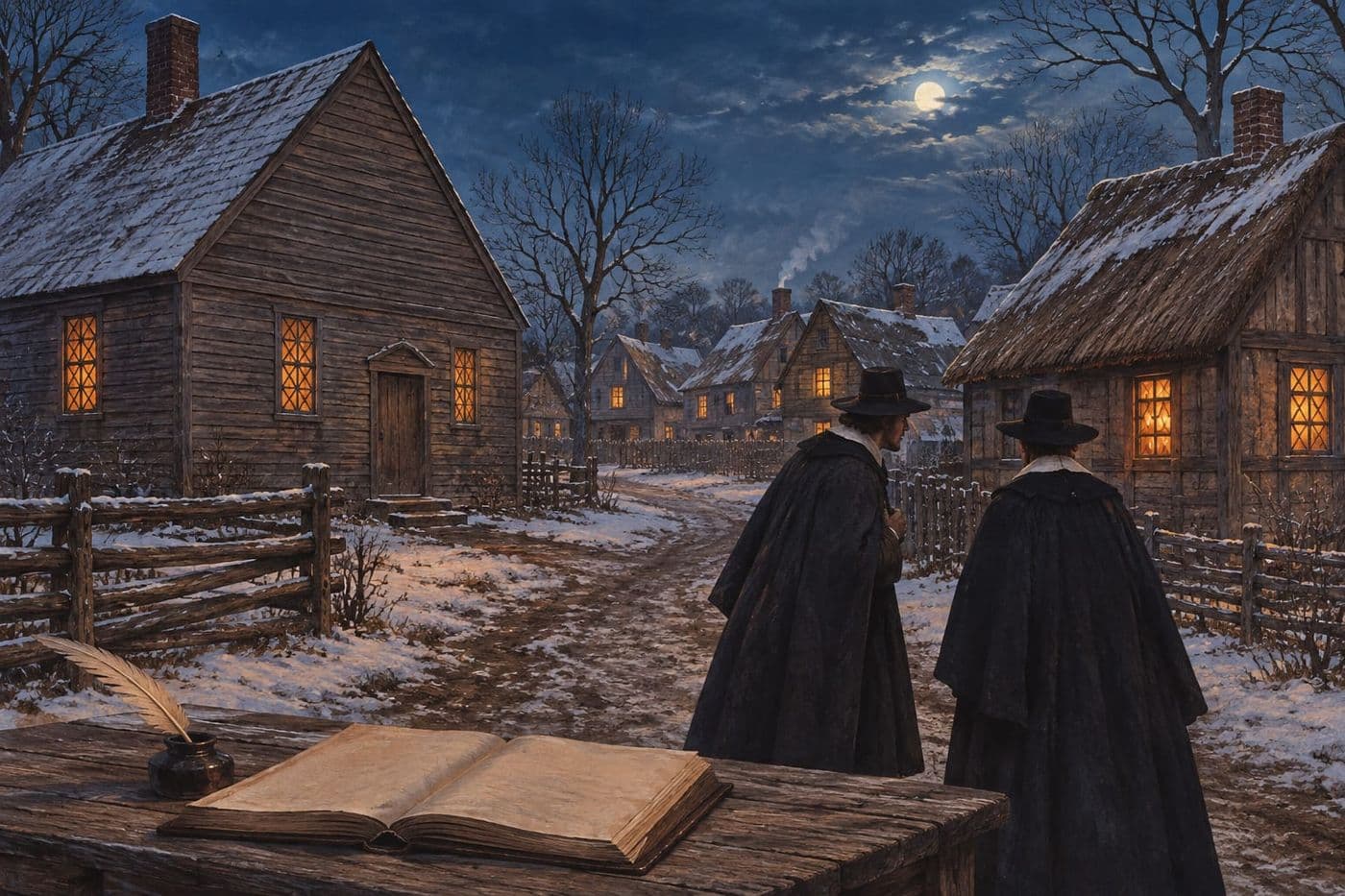
In 1659, the General Court of the Massachusetts Bay Colony passed a law titled "Penalty for Keeping Christmas." Anyone caught observing the day by feasting, skipping work, or any other way faced a five-shilling fine.
The Puritans saw December 25 as a season of excess with no Biblical backing. Even the almanacs printed in the colony left Christmas off the calendar.
The ban lasted 22 years, until it was repealed in 1681 under pressure from London. Christmas didn't become an official state holiday in Massachusetts until 1856.
Not everyone obeyed quietly. In 1679, four men showed up at farmer John Rowden's Salem home on December 25. They sat by his fire, sang, and demanded his pear wine. When he refused, they hurled stones, bones, and other things at the house and made off with several pecks of apples.
Claim B is wrong because the colony never mandated Christmas celebrations. The law did the opposite, punishing those who marked the day.
Think you'd have spotted it? Share this with a friend and see if they'd have risked the fine.