In 1929, a 25-year-old German doctor named Werner Forssmann had an idea that his superiors wanted nothing to do with. He believed a thin tube could be guided safely into the human heart.
The medical wisdom of the day said otherwise. It was widely believed that any entry into the heart would be fatal, so his requests to try it on patients were turned down.
Forssmann decided to be his own test subject. He pushed a rubber tube into a vein in his own arm and fed it upward, steadily, until the tip reached his right ventricle.
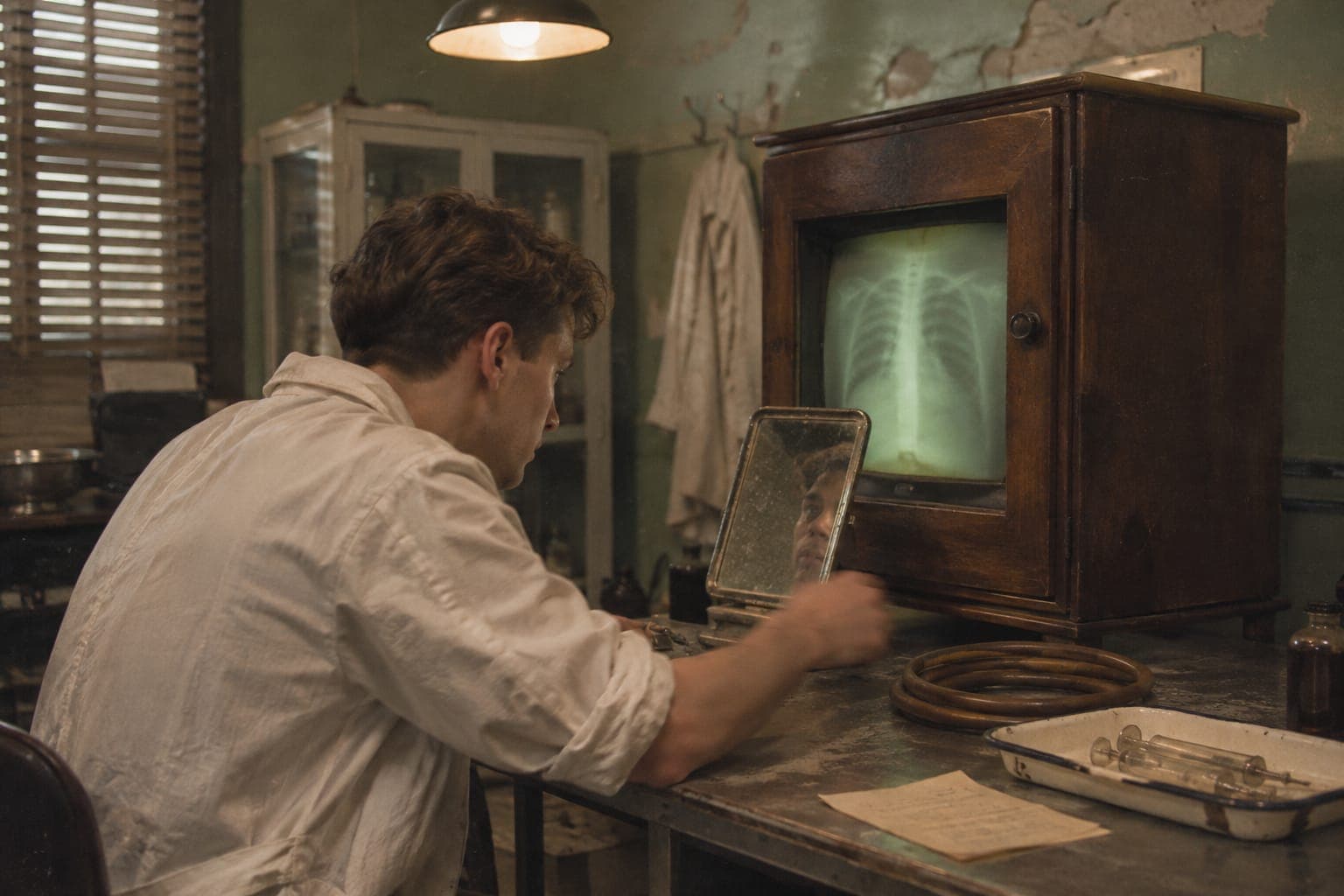
Proof mattered to him, so he did not stop at feeling it. Britannica describes him watching the tube's progress on a fluoroscope screen using a mirror, and he documented the tube sitting inside his heart with an x-ray image.
The scientific world was not impressed. The experiment was condemned at the time as foolhardy and dangerous, and Forssmann drifted away from cardiology and into urology, where he lost several jobs along the way.
The idea sat largely ignored for around ten years. In 1941, André Cournand and Dickinson Richards put the method into practice, turning his stunt into a working way to study the heart.
By 1956, Forssmann was a little-known urologist in Bad Kreuznach, and he was reportedly operating on a kidney when he learned he had won the Nobel Prize. The reckless trainee had become a laureate.