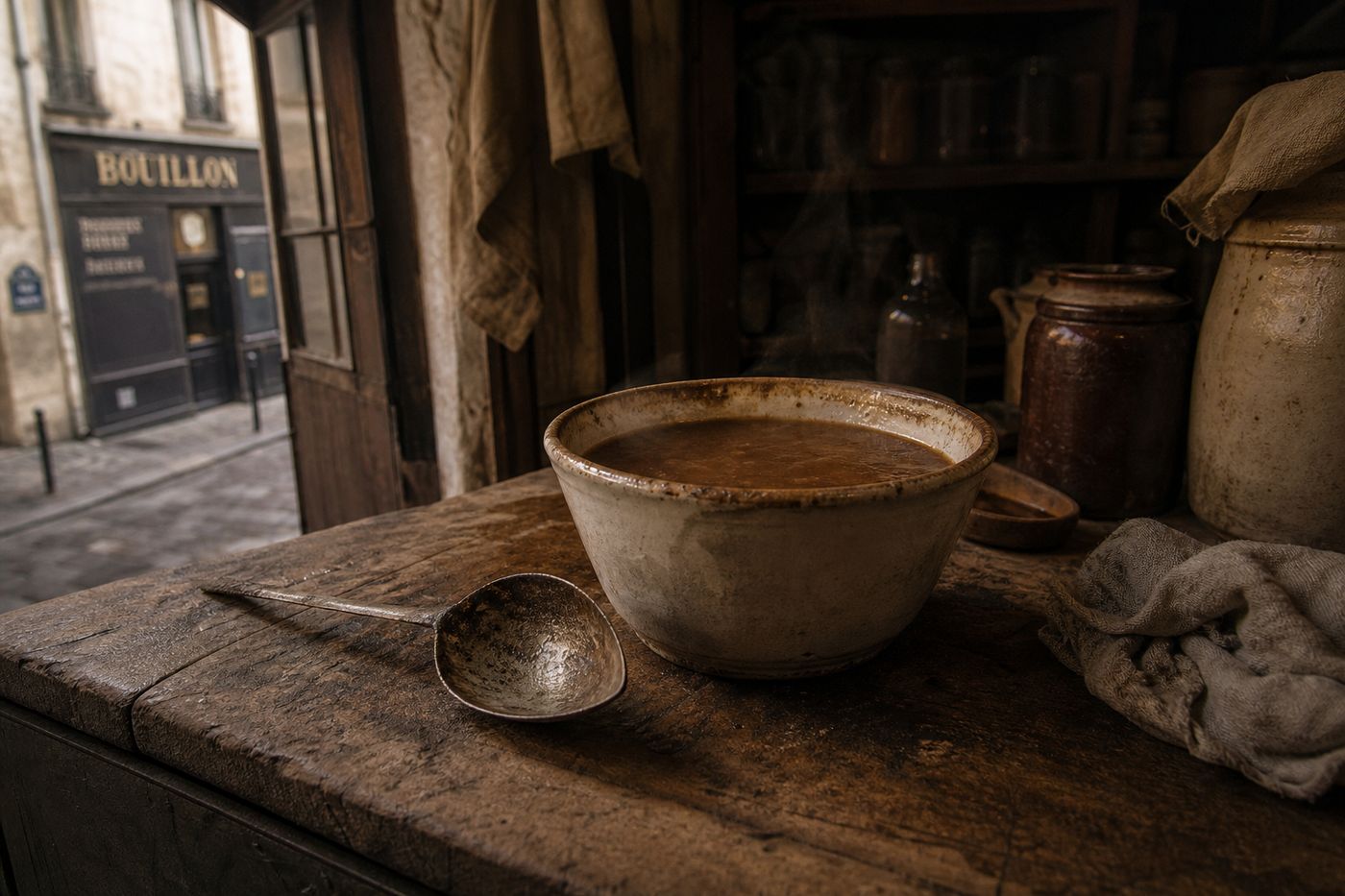
Long before menus and reservations existed, sick and weary Parisians in the 1760s sought out a specific kind of shop selling a thick, meaty broth said to cure exhaustion.
This broth was marketed as a health tonic, a rich bouillon meant to restore strength to the body after illness or overwork, sold by street vendors and small stalls.
The French word for this restorative liquid was "restaurant," derived from "restaurer," meaning "to restore." The soup itself carried the name before anything else did.
A man named Mathurin Roze de Chantoiseau opened one of the first known shops in 1765 specifically to sell this healing soup, calling his establishment a "restaurant."
His shop expanded beyond soup, offering other simple dishes, and the term stuck to describe the entire place rather than just the bowl of broth inside it.
Within decades, the word spread across France and then the world, completely detached from its soupy origins, describing any establishment serving food to paying customers.
So every time someone says they're going out to a restaurant, they're technically invoking a centuries-old bowl of medicinal broth that started it all.