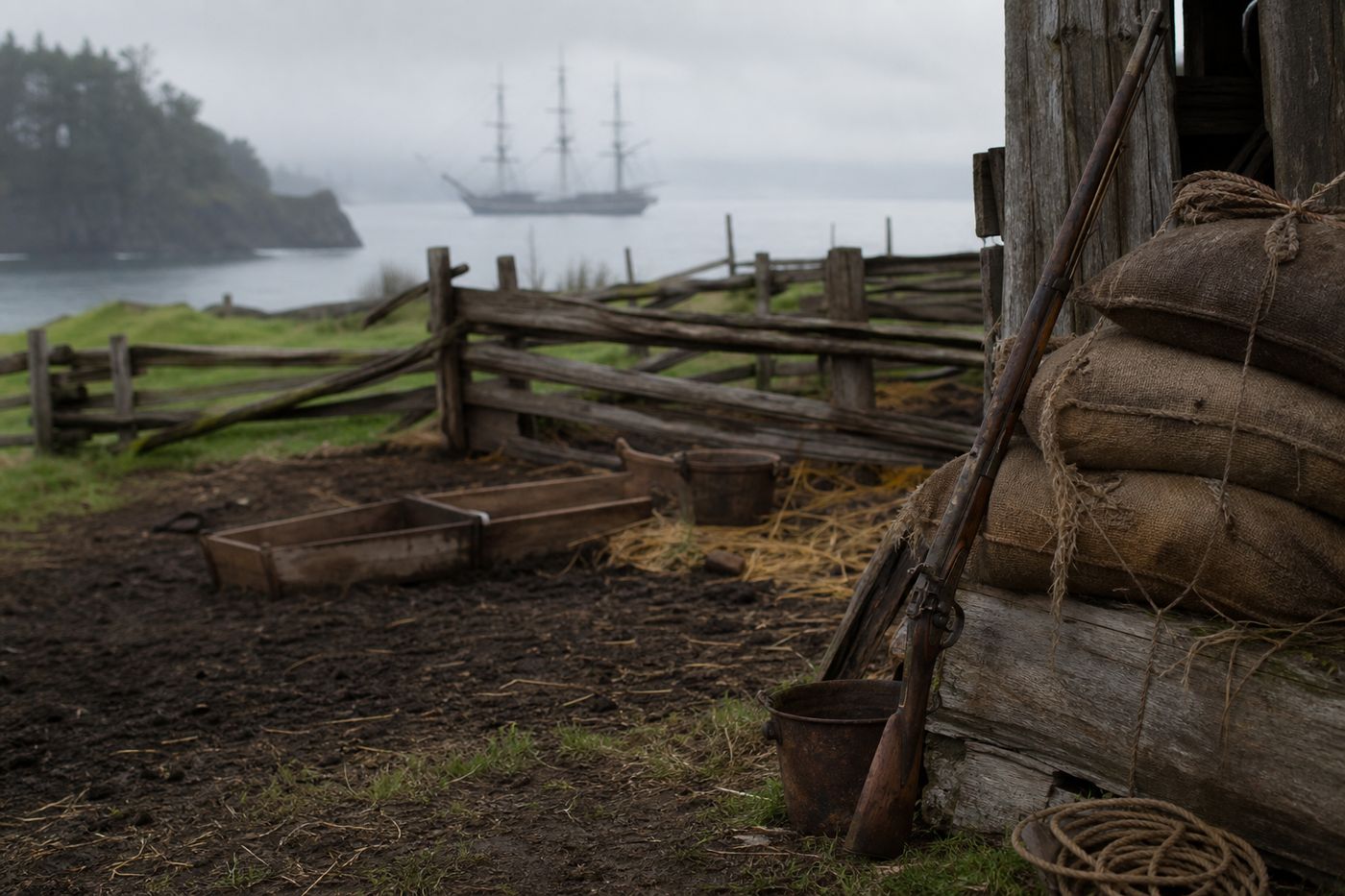
In 1859, a border dispute between the United States and Britain simmered quietly along the coast of the Pacific Northwest. Both nations claimed the San Juan Islands, and tensions had been building for years over vague treaty language nobody had bothered to fix.
The spark wasn't a soldier or a spy. It was a pig. An American farmer shot a British-owned pig for trampling his garden, and suddenly both governments treated it as a matter of national pride.
Within weeks, the United States had sent 66 soldiers to the disputed island, and Britain answered by deploying three warships and hundreds of Royal Marines. At one point nearly 500 American troops faced off against five British warships carrying 70 guns.
Local commanders on both sides actually wanted to fight. British Rear Admiral Robert Baynes reportedly refused an order to attack, later saying he wasn't going to have two great nations go to war over a pig.
Word eventually reached Washington and London, and both governments were horrified that a farm animal had nearly triggered a war. Cooler heads ordered a stand-down while diplomats scrambled to negotiate.
The two sides agreed to a joint military occupation of the islands that lasted 12 years, with British and American camps sitting peacefully within sight of each other. The pig remained the only casualty of the entire standoff.
In 1872, an international arbitrator finally awarded the islands to the United States, closing the book on what's now remembered as the Pig War. No treaty, no cannon fire, just one dead hog and a very tense summer.