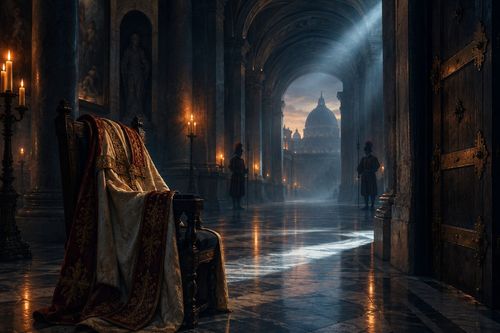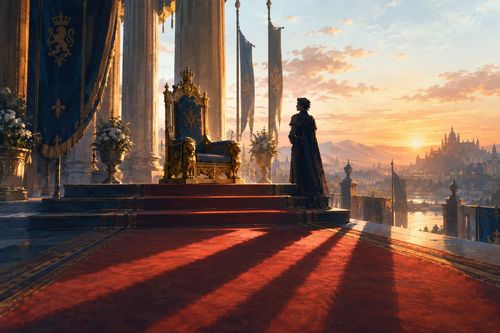
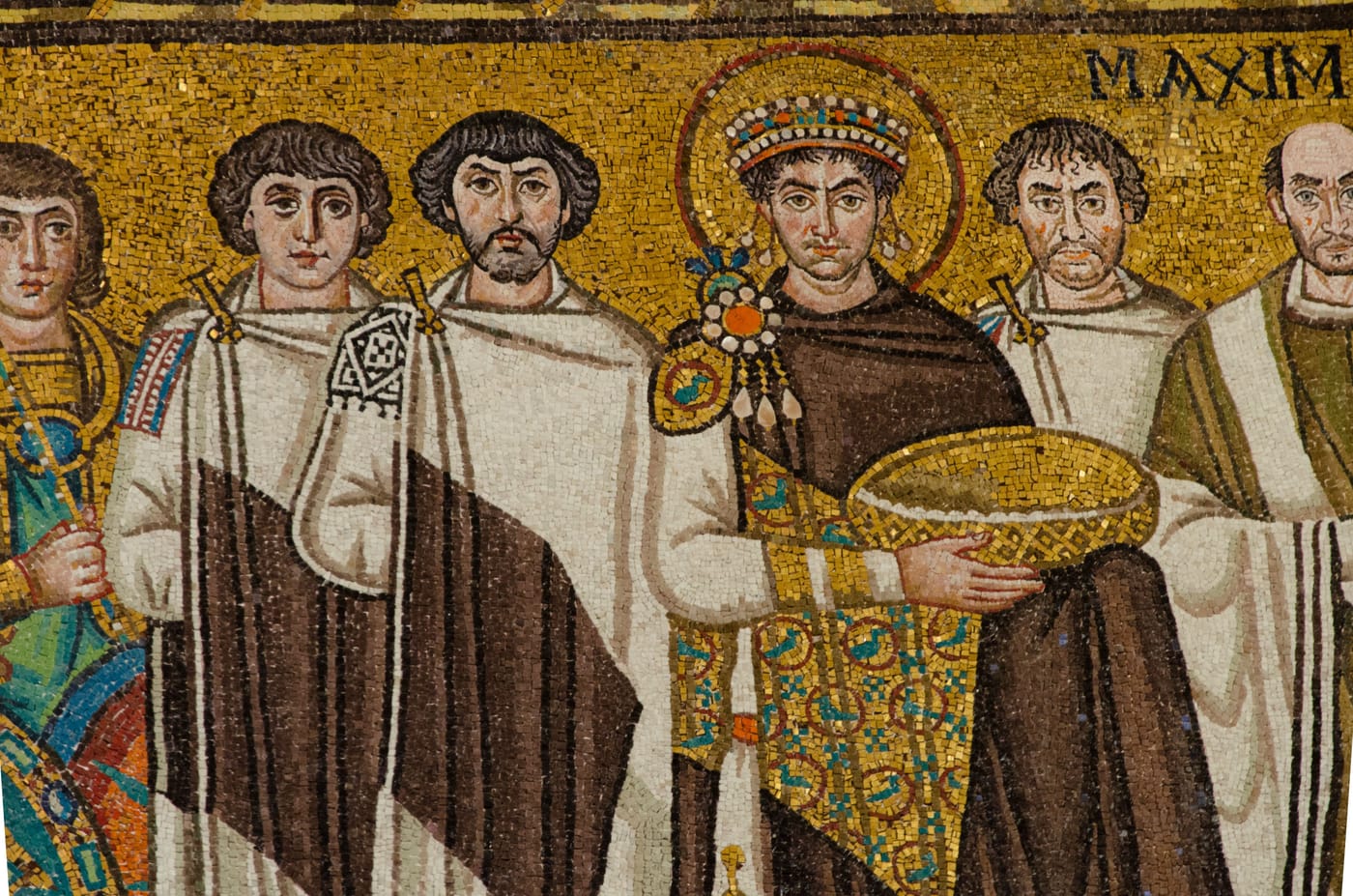
In 476 AD, a Germanic chieftain named Odoacer deposed the last Western Roman emperor — a teenager named Romulus Augustulus — and sent him into comfortable exile in a castle in southern Italy. It is the moment most history textbooks mark as the fall of Rome and the end of the ancient world. There's just one problem: almost nobody alive at the time thought anything particularly significant had happened. The Eastern Roman Empire kept running without interruption from its capital in Constantinople, and it would continue to do so for nearly another thousand years.
The concept of a unified Roman Empire splitting into Western and Eastern halves is itself a retrospective simplification. The empire had been administered from multiple centers for over a century before 476, and the Eastern portion — richer, more urbanized, and more defensible — had consistently been the stronger half. When the Western administrative structure collapsed, the Eastern empire didn't experience it as a catastrophic rupture. It experienced it as the final confirmation of something that had been happening gradually for generations. The Eastern emperor in Constantinople remained the emperor of Rome. There was no vacancy.
What we call the Byzantine Empire, the people who lived inside it never called by that name. They called themselves Romans — Romaioi in Greek — because in their understanding, that's exactly what they were. The term "Byzantine" was invented by Western European historians in the 16th century, well after the empire had ended, as a way of distinguishing the medieval Eastern empire from the ancient Rome they were more interested in studying. It was a retroactive label applied from the outside. The citizens of Constantinople in 1000 AD would have found the term meaningless and probably insulting.
The Eastern Roman Empire maintained Roman law, Roman imperial titles, Roman administrative structures, and — for centuries — Latin as an official language of government. Its legal system, the Corpus Juris Civilis compiled under Emperor Justinian in the 6th century, became the foundation for most of the legal systems in continental Europe and remains influential in international law today. This was not a successor state that borrowed Roman trappings for legitimacy. It was the same institutional structure, administered continuously, that had been running since Augustus.
In the 530s, Emperor Justinian launched a major military campaign to reconquer the lost Western territories — recovering North Africa, Italy, and parts of Spain. For a period, a version of the unified empire existed again. It didn't last — maintaining those western territories proved too costly — but the attempt itself illustrates that Constantinople didn't regard the Western collapse as permanent or as a fundamental break in Roman identity. They were trying to take back what they considered their own territory.
The Eastern Roman Empire finally ended on May 29, 1453, when Ottoman forces under Sultan Mehmed II breached the walls of Constantinople after a 53-day siege. The last Roman emperor, Constantine XI, died fighting on the walls. The empire that 476 was supposed to have ended had actually lasted nearly 1,500 years from its founding under Augustus — with the second half almost entirely omitted from most Western history curricula.
The reason 476 became "the fall" has more to do with the priorities of later Western historians than with what actually happened. Edward Gibbon's enormously influential 18th-century work, "The Decline and Fall of the Roman Empire," framed the story around the Western collapse and treated the Eastern continuation as a diminished epilogue. That framing stuck. It fit a narrative about the ancient world giving way to the medieval one, about civilization lost and eventually recovered — a story that required a clear ending date, even if the actual history was considerably messier.
476 AD was not the end of Rome. It was the end of Rome's administrative presence in Western Europe — which is a meaningfully different thing, though it has taken historians several centuries to make that distinction stick in the popular imagination. The empire kept going. The people kept calling themselves Romans. And the date we were all taught in school marks the fall of something that, by that point, had already been hollowing out for a century — while the more durable half carried on for a thousand years that most people never learned about.