Taipei 101 was once the tallest building on Earth, rising in a region battered by typhoons and sitting near a major fault line. Engineers knew a rigid structure alone couldn't survive the constant sway from wind and seismic activity without risking damage or discomfort to occupants.
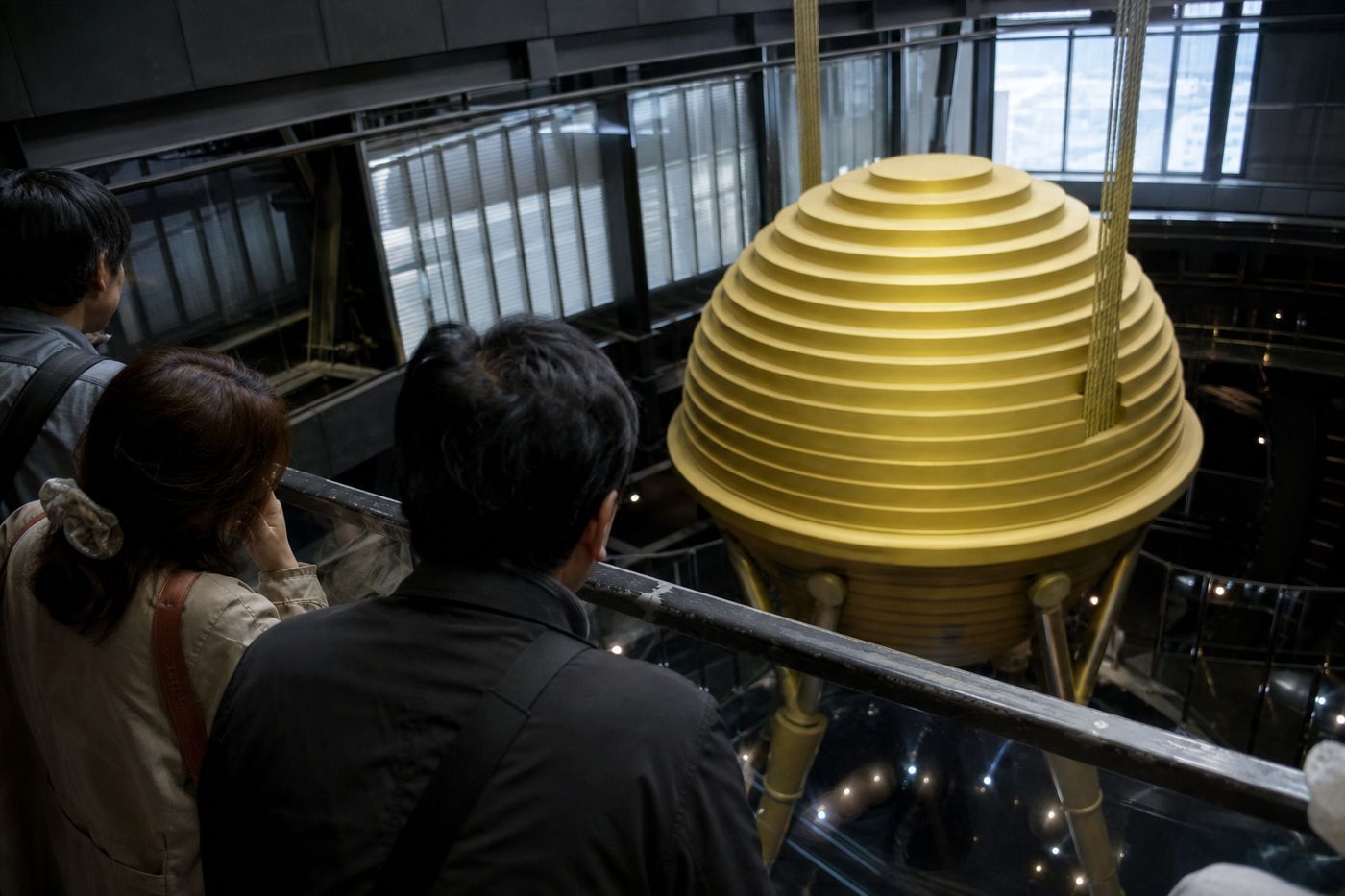
Their solution wasn't more steel or thicker concrete. It was a massive metal sphere, painted gold, suspended by cables between the 87th and 92nd floors like a giant pendulum hanging in open air.
The ball weighs roughly 730 tons, making it one of the largest tuned mass dampers ever built for a building. It's so large that visitors can actually see it in person, since Taipei 101 turned the mechanical floor into a public viewing gallery.
When wind or an earthquake pushes the tower to sway one direction, the sphere swings the opposite way, out of sync with the building's motion. That opposing momentum cancels out much of the sway before it ever reaches uncomfortable levels for people inside.
During a 2015 typhoon, the damper swung nearly a meter, and footage of it in motion went viral online. People were stunned to learn skyscrapers rely on something that looks more like an art installation than an engineering safeguard.
Similar dampers now exist in other tall buildings worldwide, but few are displayed so openly. Most are hidden away in mechanical rooms, invisible to the millions of people who walk beneath them every day without a clue they're there.
Taipei 101 turned an invisible safety mechanism into a marketing feature, complete with its own mascot named Damper Baby. What began as pure physics became one of the building's most photographed attractions.