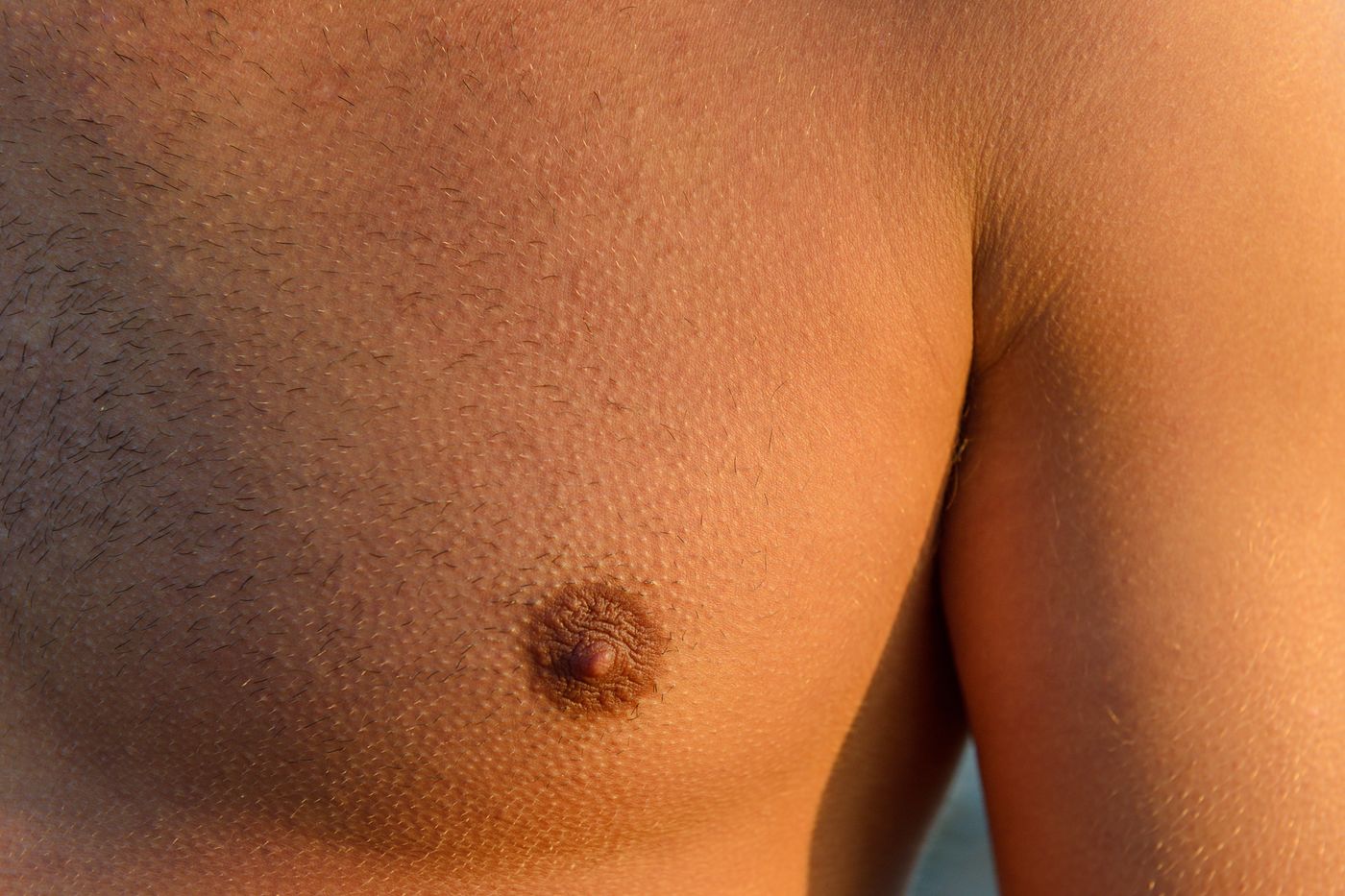
Nipples are one of those body parts nobody really talks about. But start asking questions and the answers get strange fast. Here are three nipple facts that sound made up, and every single one of them is true.
1. Why every man has a pair he'll never use
It all comes down to timing. Nipples form in the womb before the body has even started becoming male or female. Around the fourth week of development, every embryo grows two strips of tissue called milk lines, running from the armpits down toward the groin, and the nipples take shape along them.
The genetic switch that sends an embryo down the male path doesn't flip until somewhere around weeks six to eight. By then the nipples are already there, and nothing in development removes them. And no, that doesn't mean everyone starts out female. Early embryos aren't male or female at all. They're following one shared blueprint, and nipples are part of it.
So why didn't evolution get rid of them? Because they don't cost men anything. With no downside to having them, there's never been any pressure to lose them. Even Charles Darwin puzzled over this one.
2. The extra one you might be carrying
Those same milk lines are why some people end up with more than two. Studies estimate that somewhere between 1 in 18 and 1 in 40 people have an extra nipple, and plenty of them have no idea. That's because it's usually small, brown and easy to mistake for a mole.
Most show up somewhere along the milk line, often just below the chest or on the stomach. But not always. Doctors have documented extra nipple tissue as far away as the foot.
Some people only find out when hormones get involved. Puberty, periods or pregnancy can make an extra nipple darken, swell or turn tender, and in rare cases it can even produce milk.
3. The animal that skipped them entirely
Humans aren't even the weirdest case. Male horses typically have no nipples at all. Male mice and rats don't have them either.
That makes them true oddballs. For male mammals, from dogs to whales, having nipples is the default. Losing them is the rare exception, and people have noticed it for a very long time: Aristotle wrote about stallions without nipples more than 2,000 years ago.
Then there's the platypus, which throws out the rulebook completely. Neither males nor females have nipples. Mothers release milk through patches on their skin, and their babies lap it up.