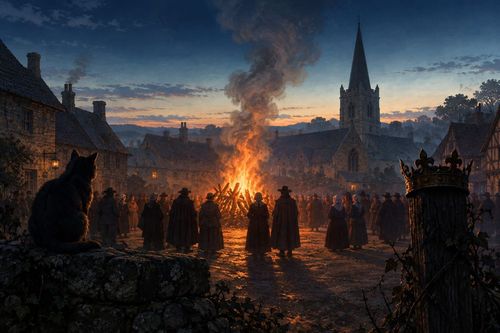
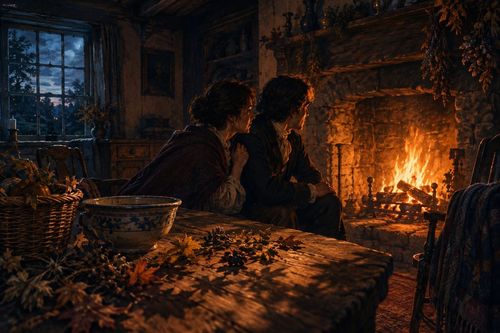
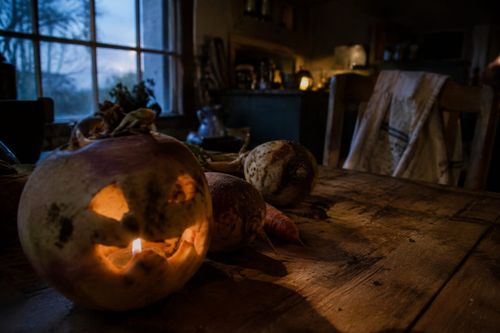
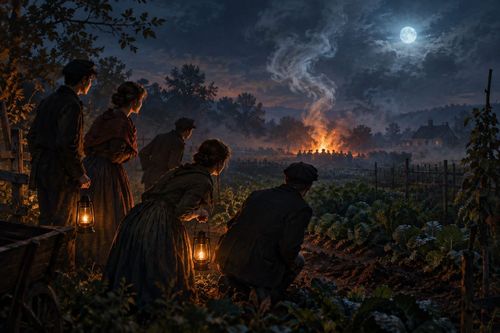
Before costumes and candy took over, Halloween in the 1700s and 1800s belonged to young unmarried adults looking for love. Entire nights were built around divination games meant to reveal a future spouse, often played in groups at harvest gatherings. These weren't quiet parlor activities either, they carried real superstition and real stakes for the people playing them.
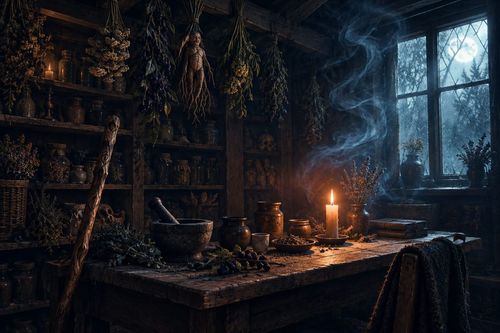
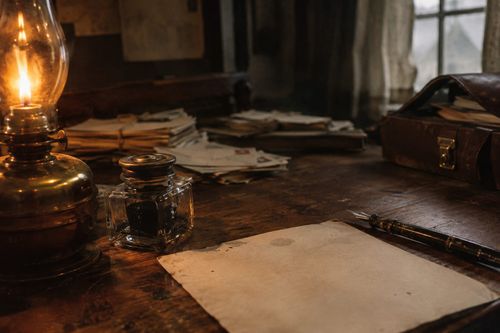
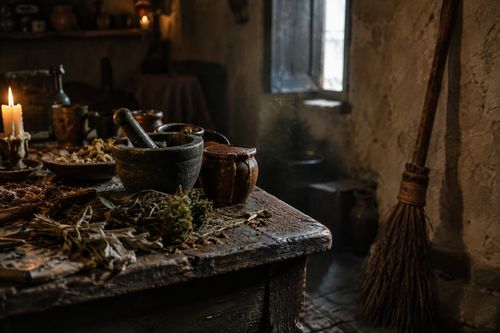
One of the most popular games required total darkness, a single candle, and a mirror. A young woman would walk backward down stairs or into a dim room while staring into the glass, hoping to catch sight of her future husband's face appearing over her shoulder. Folklore insisted that breaking concentration meant seeing something far worse, like a skull or Death itself.
The ritual demanded stillness and a flickering open flame held close to the face for long stretches of time. Candles weren't contained the way modern lighting is, they were raw, unpredictable fire carried by hand through dark rooms full of fabric and furniture.
Victorian and earlier fashion made this combination especially risky. Women's dresses were often made from cotton, muslin, or tulle, materials that were cheap, light, and dangerously flammable compared to modern synthetic blends.
Hoop skirts and wide sleeves made it difficult to judge exactly how close a hemline drifted toward an open flame. Historical records and newspaper accounts from the era describe a surprising number of accidental dress fires tied to candlelit rituals and parlor games, Halloween's mirror game included.
Burn injuries from billowing fabric catching fire were common enough that fire safety became a quiet undercurrent of 19th century womanhood, discussed in household manuals and etiquette guides. Some women reportedly kept damp cloths or water nearby specifically in case a game went wrong.
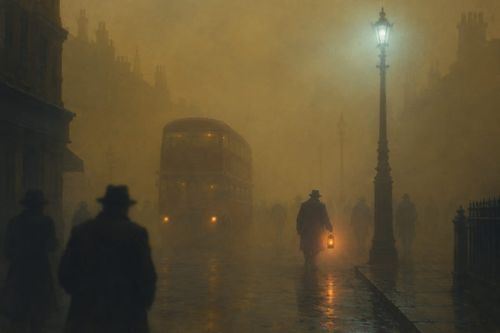
Eventually, safer group traditions, store bought costumes, and electric lighting pushed these high risk rituals out of fashion entirely. What started as a flirtatious night of fortune telling quietly became one of history's more hazardous dating traditions, hiding behind candlelight and superstition.