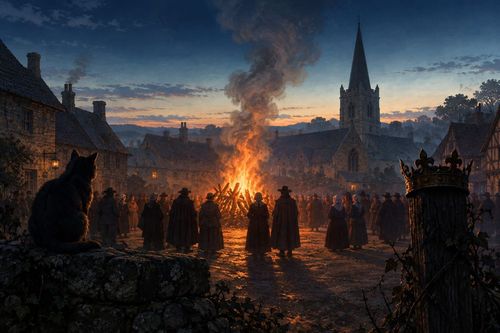
Most people think the Salem witch trials ended in 1693 and that every victim was cleared long ago. The paperwork tells a different story, and one name sat unresolved for centuries.
Elizabeth Johnson Jr. was convicted of witchcraft in 1693 at age 22. She was sentenced to death, but she received a stay of execution and was never hanged.
Others convicted in the panic were cleared in the decades that followed. Johnson petitioned for exoneration in 1712, but her request was never heard, and her conviction stayed on the books.
Fast forward to a civics class at North Andover Middle School. Their teacher, Carrie LaPierre, had students study the case, and they took up Johnson's cause as a real project.
The eighth-graders researched the legislative steps needed to clear a name. They discovered that a 17th-century conviction could be erased only by an act of the state legislature, so they went looking for lawmakers.
State Sen. Diana DiZoglio listened and added an amendment to the state budget bill. The class turned a school assignment into actual law.
On May 26, 2022, Massachusetts formally exonerated Elizabeth Johnson Jr., 329 years after her conviction. It took a classroom of kids to finish a job adults had left undone since 1712.