A kiss feels like the most natural thing in the world. But dig into its history and science and things get weird fast. Here are three kissing facts that sound made up, and every single one of them is true.
1. Where the oldest recorded kiss was found
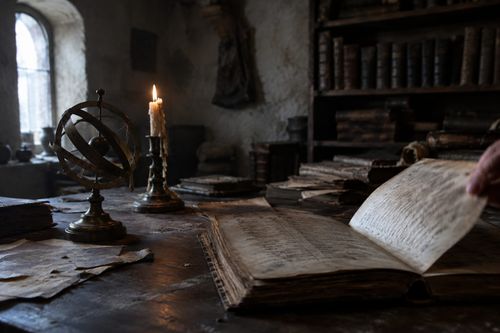
It was pressed into clay. The oldest written records of kissing come from ancient Mesopotamia, in what's now Iraq and Syria, about 4,500 years ago. People there wrote in cuneiform, wedge-shaped marks on clay tablets, and those tablets show kissing was already a well-established part of romance and sex.
That finding, published in the journal Science in 2023, pushed the earliest documented kiss back a full 1,000 years. Before that, the leading theory pointed to South Asia around 3,500 years ago. The tablets even hint at rules: romantic kissing was likely meant for married couples, in private.
And kissing may be far older than writing. A 2025 Oxford study traced kissing back roughly 21 million years, to the common ancestor of humans and great apes, and found that Neanderthals likely kissed too. Since humans and Neanderthals shared mouth bacteria and interbred, scientists now think the two species were making out with each other.
2. What you're really swapping when you kiss
You're trading a lot more than spit. A single 10-second kiss can transfer as many as 80 million bacteria, according to a 2014 study published in the journal Microbiome.
Dutch researchers recruited 21 couples visiting the zoo in Amsterdam. One partner drank a probiotic drink packed with specific bacteria, the couple shared a timed 10-second kiss, and then scientists tested the other partner's saliva. The amount of those bacteria had tripled.
Kiss often enough and your mouths start to match. Couples who kissed at least nine times a day had noticeably similar mouth bacteria. The study turned up one more detail worth bringing up at dinner: men reported kissing about 10 times a day on average, while women reported about five.
3. When kissing was against the law
It sounds like a joke, but on July 16, 1439, King Henry VI of England banned kissing. The reason was plague, which kept sweeping back through England for generations.
Kissing was everywhere in medieval England. People kissed to greet each other, to seal agreements and as part of church ritual, and knights showed respect by kissing the king. Centuries before anyone understood germs, the government decided all that mouth contact was helping disease spread.
The ban didn't stick. By the end of the century, kissing was so common in England again that the Dutch scholar Erasmus wrote about being greeted with kisses wherever he went.