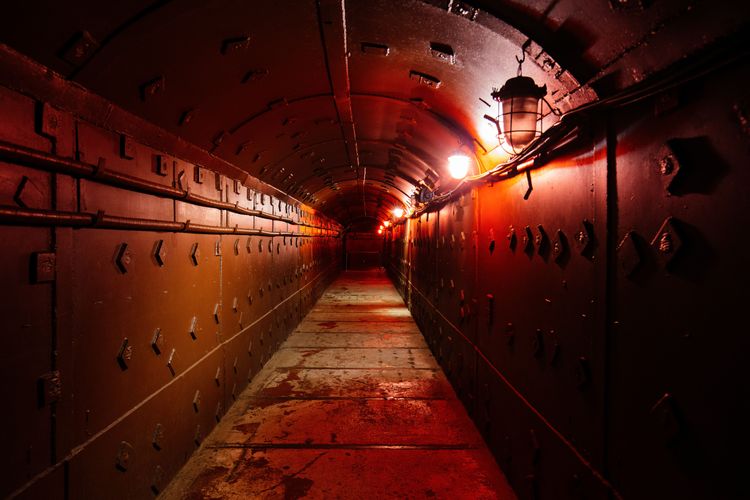
During the Cold War, both the United States and Soviet Union constructed entire underground cities that remained classified for decades. These weren't just bunkers - they were massive subterranean complexes designed to house thousands of people for extended periods.
The U.S. built Cheyenne Mountain in Colorado, a underground fortress that could withstand nuclear attacks and serve as NORAD's command center. The facility extends deep into solid granite and contains multiple buildings, power plants, and life support systems capable of sustaining operations for months.
Mount Weather in Virginia served as an alternate seat of government. Thisunderground city contained dormitories, cafeterias, hospitals, and communication centers where Congress and federal agencies could continue operating during nuclear warfare. The facility remained highly classified until investigative reports revealed its existence in the 1970s.
The Greenbrier hotelin West Virginiahid a massive bunker beneath its luxury resort. For 30 years, hotel guests had no idea they were staying abovea secret congressional fallout shelter complete with chambers for both House and Senate sessions.
The Soviet Union built even more extensive underground networks. Metro-2 is a secret subway system in Moscow that connects government buildings and allows officials to travel undetected throughout the city. The system reportedly includes underground cities with residential areas and command centers.
Kosvinsky Kamen in the Ural Mountains housesa underground complex that serves asan alternate to the Kremlin. Intelligence reports suggest the facility can accommodatethousands of personnel and withstanddirect nuclear strikes.
Many of these facilitiesremain operational today, though their current purposes are often classified. What's remarkable is how extensivethese underground networks became without public knowledge during their construction.
Those Cold War underground cities prove that governments can build massive infrastructure projectscompletely in secret when national security is at stake.