
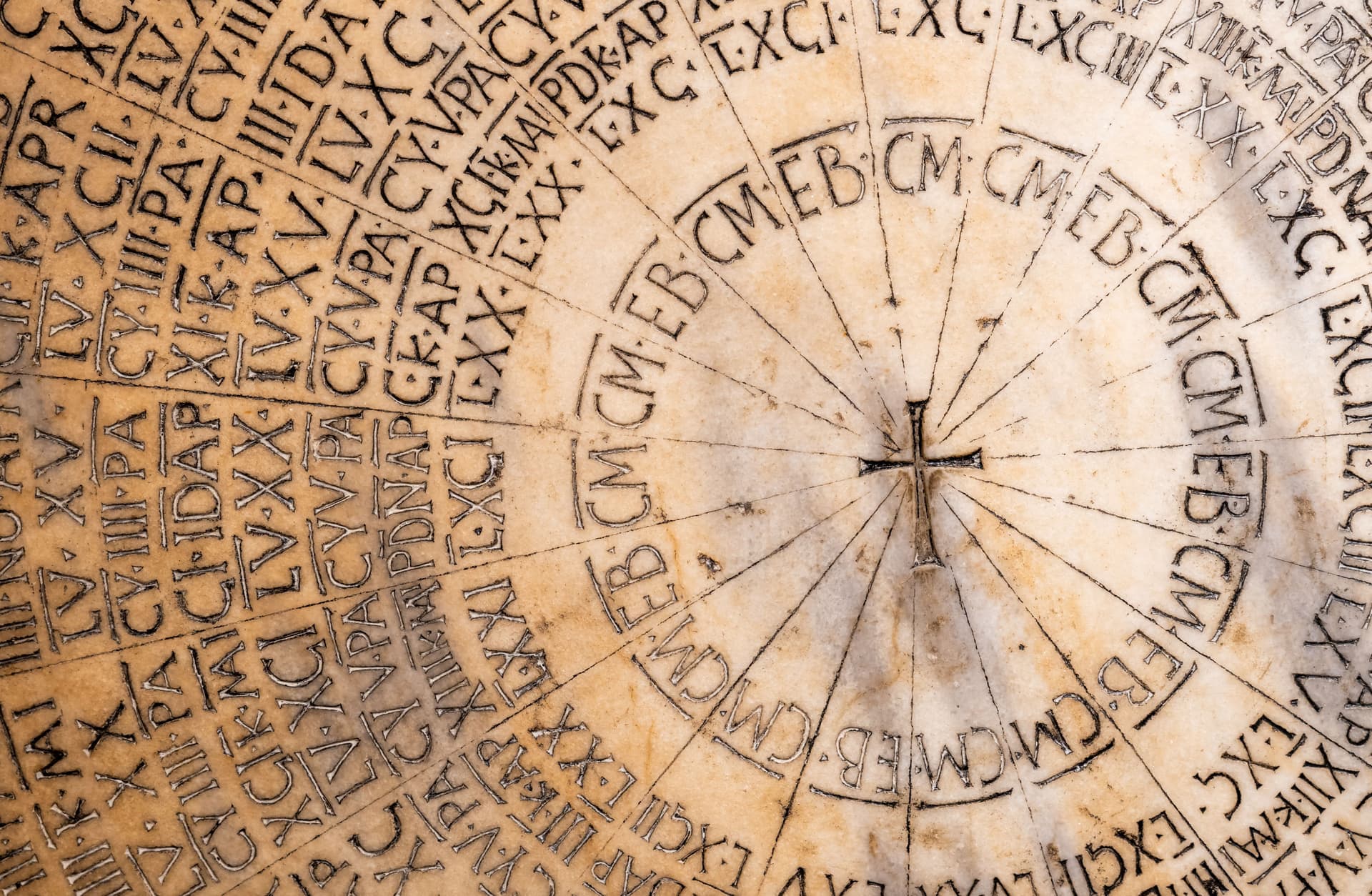
For most people, January 1st has always been New Year's Day. But this tradition only dates back to 46 BC, when Julius Caesar arbitrarily picked January 1st and forced the entire Roman Empire to accept it.
Before Caesar, the Roman new year started on March 1st. This made perfect sense—spring was when life renewed, crops began growing, and the agricultural cycle restarted. Celebrating the new year in the dead of winter was illogical.
You can still see evidence of the old calendar in our month names. September comes from "septem" (seven), October from "octo" (eight), November from "novem" (nine), and December from "decem" (ten). They're named as the 7th, 8th, 9th, and 10th months—because they used to be.
When March was the first month, September really was the seventh month, October the eighth, and so on. January and February were tacked on at the end of the year as an afterthought. The math worked perfectly until Caesar messed with it.
So why did Caesar change it? He was reforming the chaotic Roman calendar, which had become a disaster. Priests in charge of the calendar had been adding random days for political reasons, and by 46 BC, the calendar was three months out of sync with the seasons.
Caesar decided to fix it by creating the Julian calendar. He picked January 1st as the new year because January was named after Janus, the two-faced Roman god of beginnings and transitions. It seemed symbolically appropriate—Janus looked both backward and forward, perfect for a new year.
But here's the thing: Caesar's choice was essentially arbitrary. He could have kept March 1st, which already made agricultural and seasonal sense. Instead, he picked a date in the middle of winter because of a god's symbolism. One man's aesthetic preference changed how humans measure time forever.
Not everyone accepted it immediately. Throughout medieval Europe, different regions celebrated New Year's on different dates—March 1st, March 25th (Annunciation), December 25th (Christmas), or Easter. England didn't officially adopt January 1st until 1752.
Even today, many cultures don't recognize January 1st as their new year. The Chinese New Year falls between January 21st and February 20th. The Islamic New Year shifts annually. The Jewish New Year (Rosh Hashanah) is in September or October. They're all older than Caesar's arbitrary decision.
The weirdest part? We've organized our entire global economy, school systems, and social lives around a date that Julius Caesar picked on a whim 2,070 years ago. Tax years, fiscal years, academic years—all because one Roman dictator thought January sounded nice for a fresh start.