
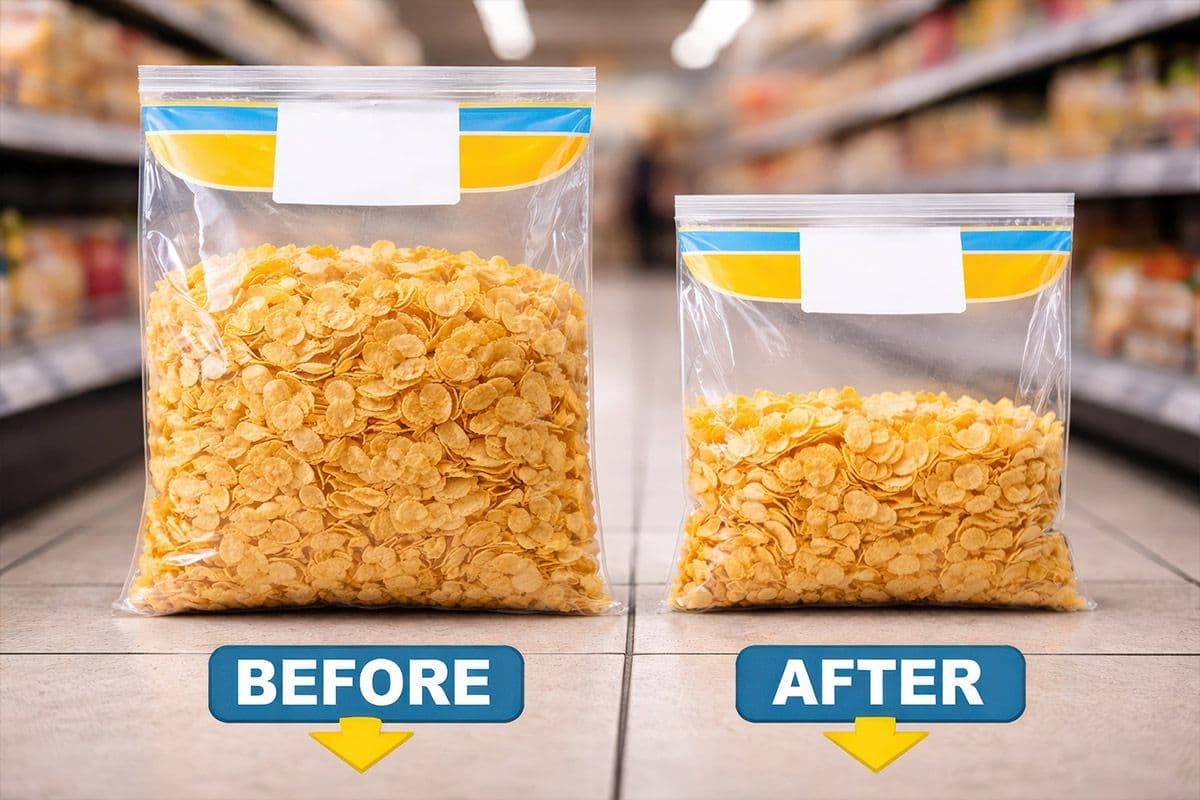
You’re not imagining it.
That cereal box feels lighter.
That chip bag seems emptier.
That snack pack looks… smaller.
Here’s today’s Fun Fact:
Many everyday grocery items have quietly shrunk in size — while prices stayed the same (or even increased).
It’s called shrinkflation — and it’s very real.
What Is Shrinkflation?
Shrinkflation happens when companies reduce the size or quantity of a product instead of raising the price.
Rather than changing the price tag dramatically, brands adjust:
- The number of ounces
- The total weight
- The number of pieces inside
- The packaging dimensions
According to the U.S. Bureau of Labor Statistics, shrinkflation has become more noticeable during periods of inflation, as companies attempt to offset rising production and transportation costs.
The Federal Reserve Bank of St. Louis has also published research explaining how shrinkflation becomes more common when consumers are highly sensitive to visible price increases.
In other words:
It’s easier to make the product smaller than to shock customers with a higher price.
Fun Facts About Shrinkflation
- The term “shrinkflation” dates back to at least 2009 during the global financial crisis.
- Companies often redesign packaging at the same time to make size changes less obvious.
- Many shoppers focus on price per item — not price per ounce — which makes reductions harder to detect.
- Some products shrink by just 5–10%, making the change almost invisible at first glance.
And here’s the kicker:
Most consumers don’t notice unless they compare old and new packaging side-by-side.
Recent Real-World Examples
Over the past few years — and continuing into recent inflation cycles — multiple well-known brands have adjusted product sizes.
Examples reported by consumer watchdog groups and major news outlets include:
Food & Snacks
- Cereal boxes reduced in total ounces
- Potato chip bags with fewer chips per bag
- Ice cream cartons shrinking from 56 oz to 48 oz (and in some cases smaller)
- Candy bars reduced in weight
- Snack multipacks containing fewer individual items
Household Essentials
- Paper towel rolls with fewer sheets
- Toilet paper packs with reduced sheet counts
- Laundry detergent bottles holding fewer loads
Pantry Staples
- Coffee containers reduced in ounces
- Yogurt cups slightly smaller
- Pasta boxes trimmed down in weight
Major outlets including The New York Times, NPR, and Consumer Reports have covered shrinkflation trends extensively in recent inflation reporting.
Consumer Reports has noted that food manufacturers sometimes alter packaging shape or thickness while reducing net weight, making it harder for shoppers to spot changes at a glance.
Why It’s Happening
The drivers are mostly economic:
- Higher ingredient costs
- Increased transportation expenses
- Labor costs
- Supply chain disruptions
- Global commodity price fluctuations
Rather than risk losing customers to sticker shock, companies often reduce size quietly.
It’s a pricing psychology strategy.
And it works.
How to Spot Shrinkflation
Here’s how you can protect yourself:
1. Check the Unit Price
Most grocery stores list price per ounce or per pound on the shelf tag. This is your best comparison tool.
2. Look at Net Weight
Don’t rely on box size. Check the fine print for ounces or grams.
3. Compare Old Packaging
If something feels lighter or emptier, check whether the total weight has changed.
4. Watch for “New Look!” Labels
Packaging redesigns often coincide with size adjustments.
The Bottom Line
Shrinkflation isn’t imaginary.
It’s a documented economic practice that tends to increase during inflationary periods.
And while each size reduction may seem small, over time it means:
You’re often paying the same — for less.
So if your favorite snack feels smaller…
You’re not crazy.
It sounds fake.
It’s real.