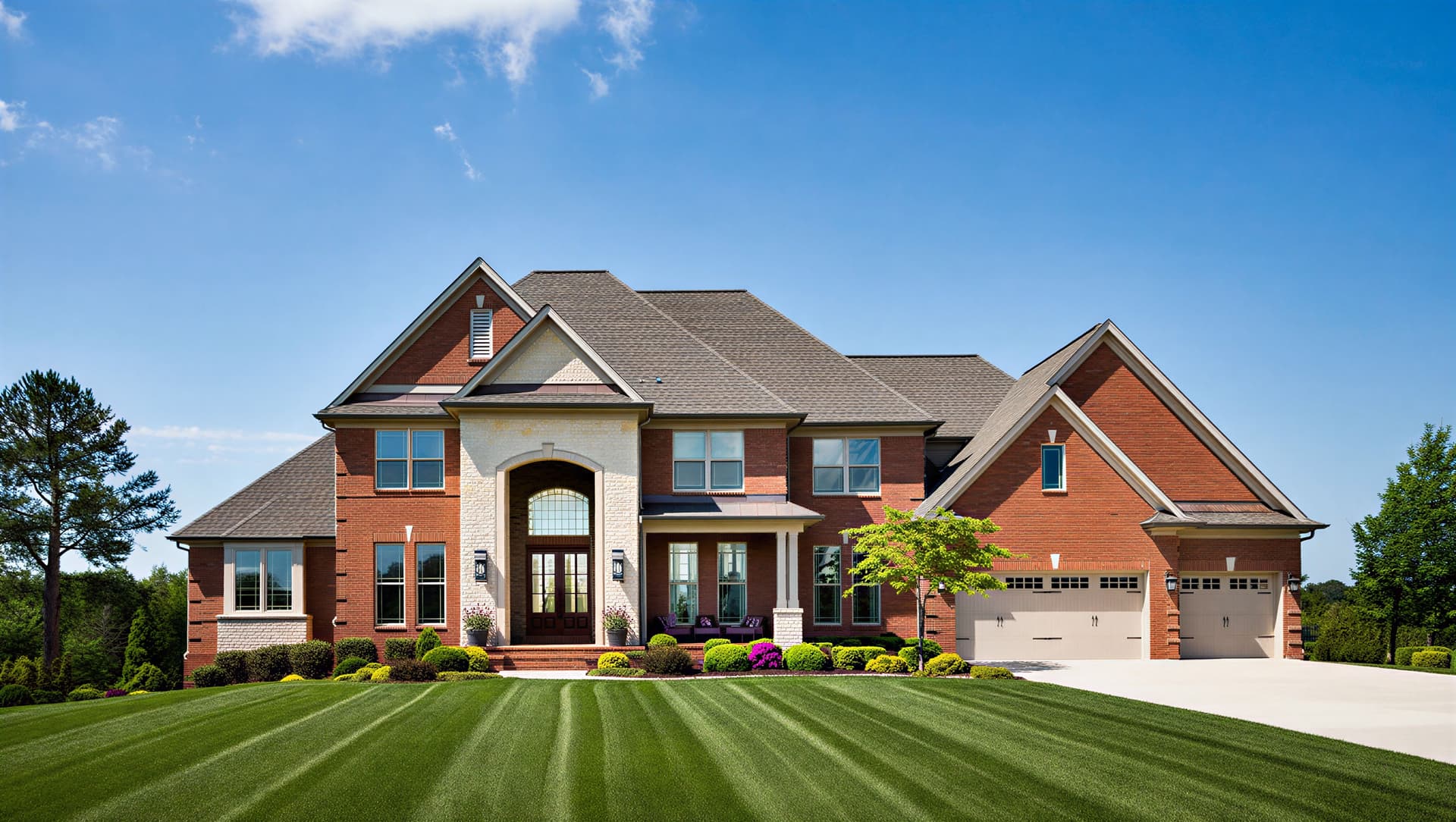
The American obsession with perfect green lawns isn't a natural desire—it was manufactured by the pesticide and lawn equipment industries after World War II. Before the 1950s, most Americans had functional yards with vegetables, flowers, and mixed grasses. The pristine monoculture lawn you see today? That's a multibillion-dollar marketing campaign.
The modern lawn concept came from English and French aristocracy, where massive estates kept expansive grass fields as status symbols to show they had enough land and wealth that they didn't need to use it productively. Maintaining these lawns required armies of servants with scythes. It was pure conspicuous consumption.
After WWII, American suburbs exploded, and chemical companies that had been producing pesticides and herbicides for agriculture needed new customers. With the war over, they pivoted to homeowners. Companies like Scotts Miracle-Gro and Monsanto began aggressive marketing campaigns convincing Americans that a "proper" home required a perfect lawn.
They created an entirely new standard of what yards should look like. Mixed grasses, clover, wildflowers—things that had always grown naturally—were suddenly redefined as "weeds" that needed to be eliminated. The ideal became a single species of grass maintained at exactly the right height, requiring constant intervention to exist.
The industry tied this aesthetic to the American Dream. Advertisements positioned the perfect lawn as a marker of success, good citizenship, and family values. A pristine lawn meant you were a responsible homeowner who took pride in your property. An unkempt yard? You were lazy, lowering property values, and letting down your neighbors.
Homeowners' associations (HOAs) codified these manufactured standards into enforceable rules. By the 1970s and 80s, many HOAs could fine or even sue residents whose lawns didn't meet specific requirements for grass height, color, and uniformity. What started as marketing became quasi-legal obligation.
The environmental cost is staggering. Americans use 9 billion gallons of water per day on lawns—more water than is used by all of India. Lawn maintenance accounts for 5% of U.S. air pollution from gas-powered mowers and leaf blowers. And lawns require massive amounts of fertilizers and pesticides that run off into waterways.
Here's the absurdity: the grass species Americans obsess over—Kentucky bluegrass, Bermuda grass—aren't native and can't survive without constant chemical intervention and watering. Left alone, these lawns would die within weeks. We're spending billions annually maintaining an artificial ecosystem that actively works against nature.
The lawn care industry is now worth over $100 billion in the U.S. alone. Americans spend more on lawn care than the entire GDP of some countries—all to maintain a status symbol invented by aristocrats and sold to the masses by chemical companies. The "natural" suburban lawn is the most unnatural thing in your neighborhood.
So the next time you see someone meticulously manicuring their lawn, remember: they're not following tradition or nature—they're following a post-WWII marketing campaign that convinced them a chemically-dependent monoculture is the American Dream.