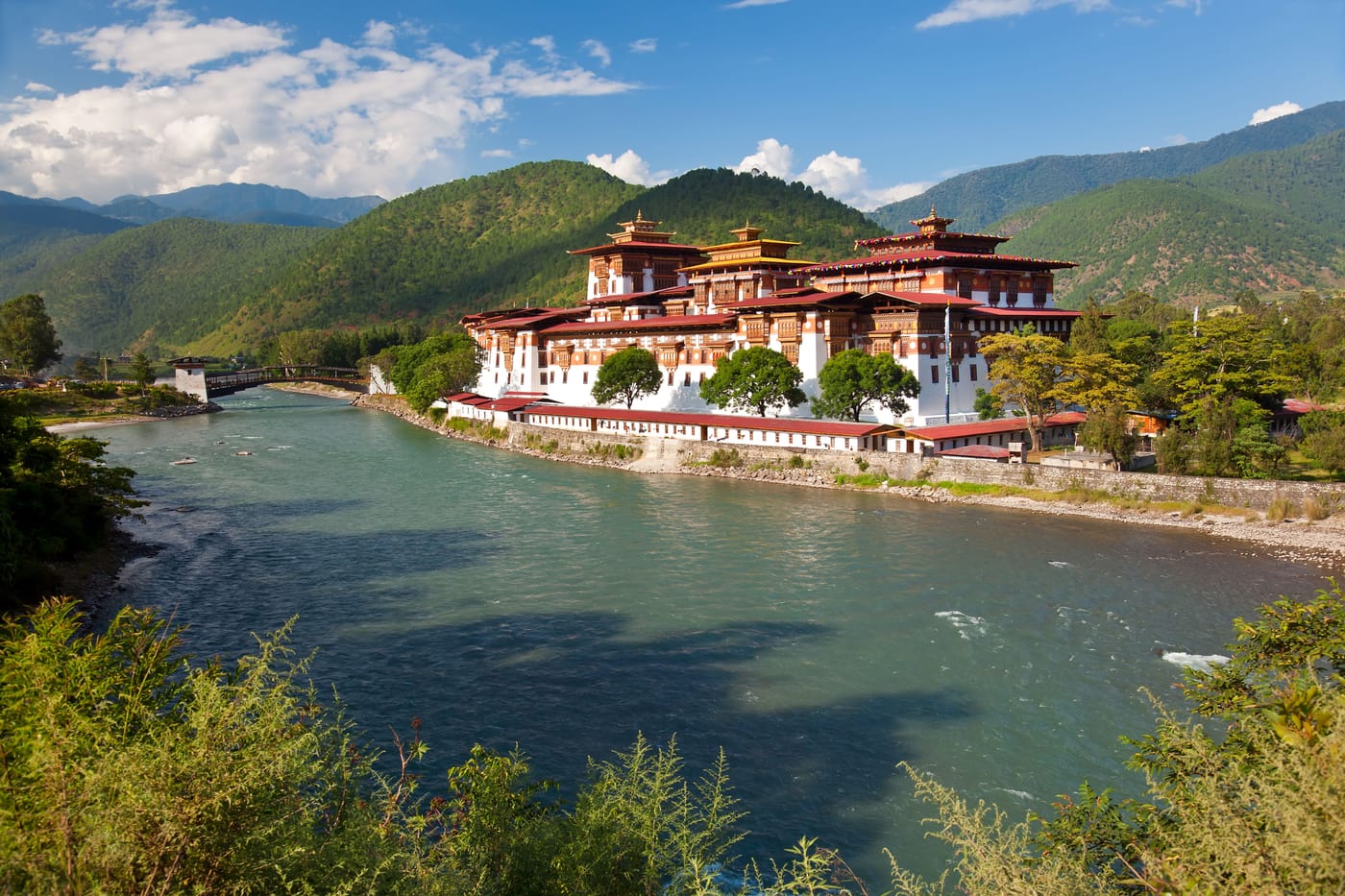
In the mid-1970s, Bhutan's young king — Jigme Singye Wangchuck, who took the throne at 17 — made a declaration that economists largely dismissed as charming nonsense: "Gross National Happiness is more important than Gross Domestic Product." He wasn't being poetic. He meant it as policy. Over the following decades, Bhutan built a governing framework around that idea — one that remains, to this day, the most serious attempt any country has ever made to run a national government around the explicit goal of making its citizens happy.
The Gross National Happiness index, formally adopted in Bhutan's constitution in 2008, measures national progress across nine domains: psychological wellbeing, health, education, time use, cultural diversity, good governance, community vitality, ecological diversity, and living standards. Each domain is tracked through 33 specific indicators, and the government recalculates the index every five years — using the results to set policy priorities, allocate resources, and evaluate whether government programs are actually improving lives rather than just growing the economy.
The policy decisions that followed were unusual. Bhutan capped the number of tourists allowed to enter the country each year — not to protect revenue, but to protect the cultural and environmental fabric that the GNH index identified as central to wellbeing. Every tourist is required to pay a substantial daily fee, limiting mass tourism in favor of low-volume, high-value visitors. The country banned the sale of tobacco in 2004. Television wasn't permitted until 1999 — and when it was introduced, the government monitored its cultural impact as part of the GNH framework. Meditation is a standard part of the school day.
The idea that happiness could serve as a governing principle didn't come from nowhere. Bhutan's 1729 legal code — written nearly 300 years ago — states that "the purpose of the government is to provide happiness to its people. If it cannot provide happiness, there is no reason for the government to exist." That sentence is still effectively written into the country's modern constitution. The GNH framework is less a new idea than a formalization of a principle Bhutan has been working with for centuries.
The results have been measurable in some areas and complicated in others. Since GNH was adopted as the main measure of national progress, nearly 100% of Bhutanese children are now enrolled in school, and the country has almost doubled its life expectancy. Bhutan is one of the few countries in the world that is carbon negative — it absorbs more carbon dioxide than it produces, a direct result of the ecological diversity provisions in the GNH framework. The 2022 GNH Index found that 48% of citizens qualified as "happy" — up from 41% in 2010.
But the picture isn't uniformly positive. Independent research has found that despite the GNH framework, Bhutan scores relatively low on psychological wellbeing compared to other nations — suggesting that structuring a government around happiness doesn't automatically produce it. The country has also faced criticism for human rights issues, including the treatment of its Nepali-speaking minority population. Happiness, it turns out, is considerably harder to engineer than the index makes it sound.
The broader influence of Bhutan's experiment has been significant. The UN adopted wellbeing as a development indicator in 2012, citing Bhutan's GNH framework as a model. The UAE appointed a Minister of State for Happiness in 2016. The OECD launched its Better Life Index. Economists who spent decades dismissing GNH as a clever play on words have spent the last two decades trying to incorporate its principles into mainstream economic modeling. The small Himalayan kingdom that Western economists once patronized for prioritizing happiness over growth turned out to be asking a question the rest of the world eventually had to answer.
Whether Bhutan has succeeded depends entirely on what you think success means — which, somewhat appropriately, is exactly the question the country has been asking the world to reconsider for fifty years.