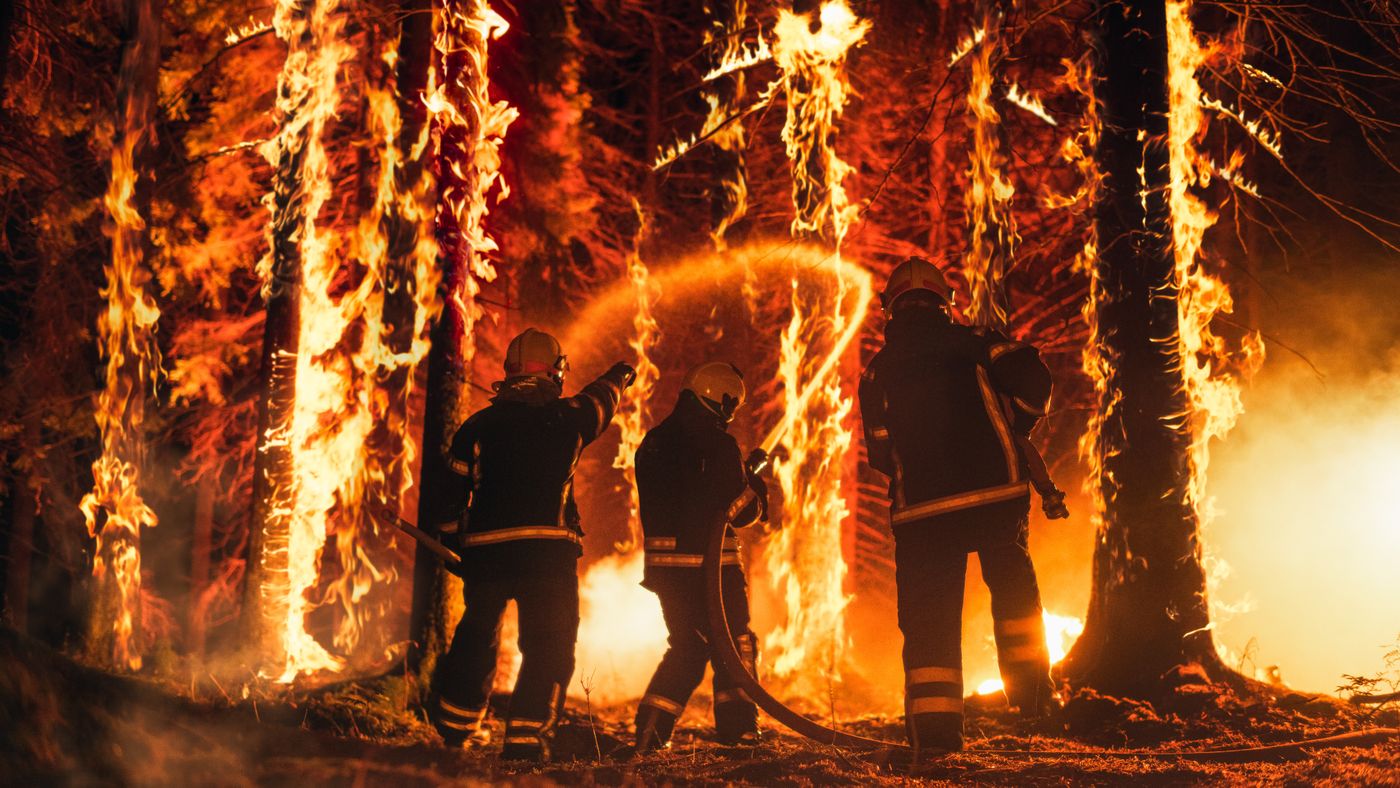
When a massive wildfire is barreling toward a town, one of the most effective tools firefighters can use isn't water or chemical retardant. It's another fire, deliberately set in the wildfire's own path.
The tactic is called a backfire, or backburning. Firefighters intentionally ignite the grass, brush, and trees directly in front of an approaching wildfire, burning up all the available fuel before the real fire ever arrives.
The logic comes down to basic fire science. Fire needs fuel to keep spreading, so if that fuel is already gone by the time the wildfire reaches it, the fire has nowhere left to go and either stalls out completely or gets forced into a different direction.
Timing this is far more delicate than it sounds. Firefighters typically wait until they can feel the wind blowing from the wildfire's direction, then launch the backfire so it burns toward the main fire rather than away from it, using the wildfire's own airflow against itself.
This isn't a low-risk move. An improperly timed or placed backfire can spread out of control and merge with the very wildfire it was meant to stop, effectively adding fuel to the disaster instead of preventing it.
Because of that risk, crews use specialized tools to control exactly how and where the fire starts. Drip torches, flare guns, and even aerial ignition devices are used to precisely place backfires along a planned line, rather than lighting fires randomly across open land.
Despite the danger, this tactic has become one of the most reliable ways to protect towns from fast-moving wildfires. When conditions are right, a well-placed backfire can stop a fire that water and aircraft alone couldn't contain.