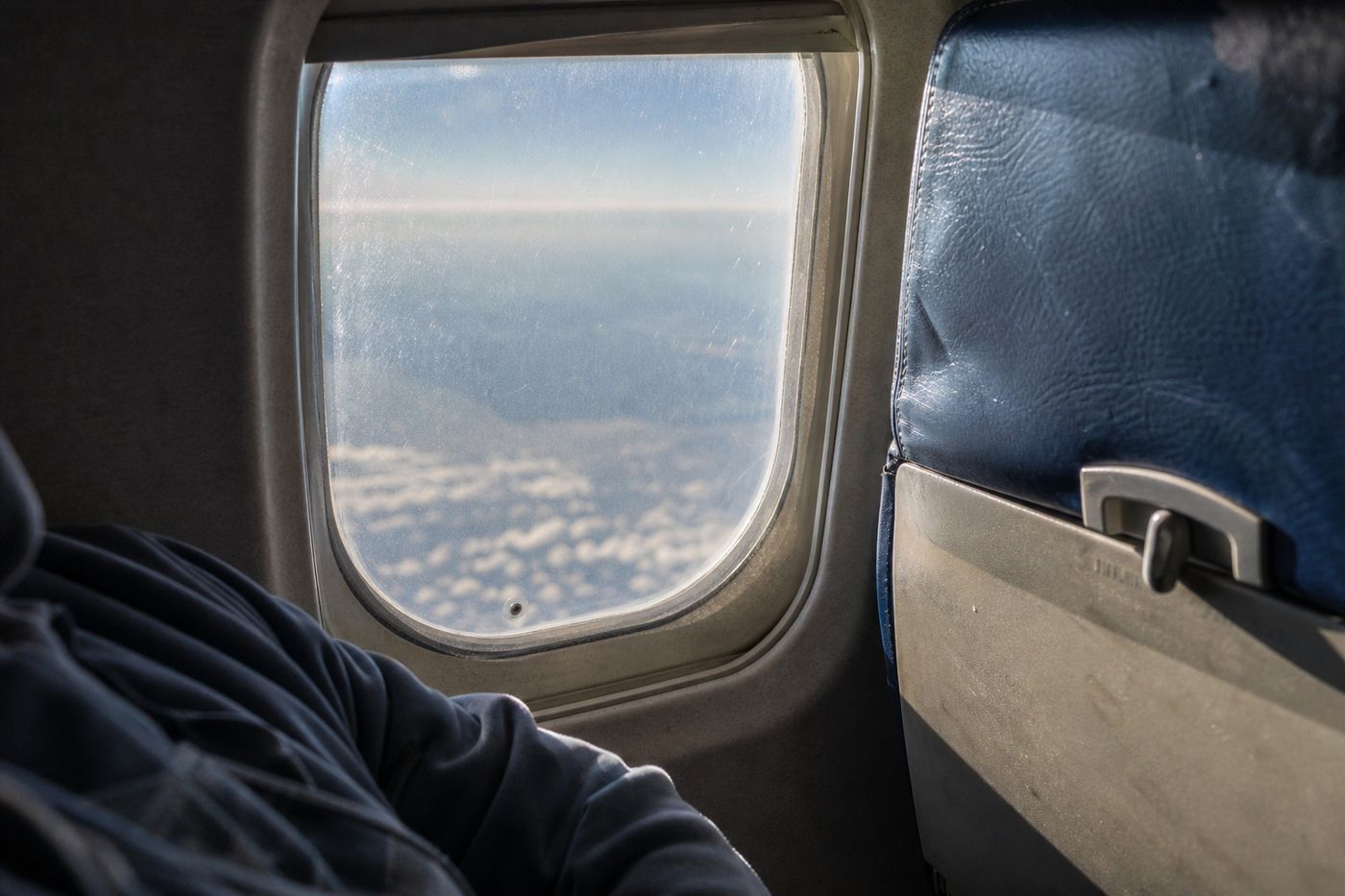
Window seat passengers have stared at it for decades: a pinprick hole drilled into the plastic near the bottom corner of every airplane window. Most assume it's a manufacturing defect or just wear and tear from years of use. It's neither, and it's been engineered into every commercial jet window on purpose.
Airplane windows aren't single panes of glass or plastic. They're actually built from three separate acrylic layers stacked together, and the tiny hole only appears in the middle one. That placement alone hints that something more deliberate is going on beneath the surface.
At cruising altitude, roughly 35,000 feet, the air outside the cabin is dangerously thin. Inside, the cabin is artificially pressurized to keep passengers breathing comfortably, which means the window has to withstand a massive pressure difference between inside and out.
That pressure difference pushes outward on the window with serious force during every single flight. Engineers needed a way to manage that stress without adding weight or bulk to an already heavy aircraft structure.
The solution was that small hole, officially called a bleed hole, and it does something surprisingly clever. It allows air to pass between the outer and middle panes, equalizing pressure so the outer pane bears almost all the load while the middle pane stays relatively stress-free.
That design choice means if the outer pane were ever to crack or fail entirely, the middle pane instantly becomes the primary barrier, already positioned and ready to hold full cabin pressure on its own. The bleed hole essentially builds a backup plan into the glass itself.
It's also why that little hole slowly fogs up window edges on humid flights, a side effect passengers notice far more often than the actual engineering reason behind it. A hole meant to look like a flaw is actually one of the window's most important safety features.