Trending Now

Viagra Facts: A Heart Drug, Blue Vision and Hamsters

Viagra Facts: A Heart Drug, Blue Vision and Hamsters

Why Viagra began as a heart drug, how it can tint your vision blue and why the FAA cares, and the hamster jet lag study that won an Ig Nobel Prize.

Read more
Tattoos: The Iceman, Ink in Your Nodes (+1 More)

Tattoos: The Iceman, Ink in Your Nodes (+1 More)

Ötzi's 5,300-year-old tattoos, where your tattoo ink really travels in your body, and the company that frames a dead loved one's actual tattooed skin.

Read more
The Taboo Word That Broke Through Ad Breaks

The Taboo Word That Broke Through Ad Breaks

One of these claims about a taboo word in a 1980s TV commercial is true, and one is completely made up. Can you guess which one really happened?

Read more
Why a Marathon Is Exactly 26.2 Miles Long

Why a Marathon Is Exactly 26.2 Miles Long

The odd number behind every marathon traces back to one summer day in London. Here's how it happened.

Read more
Starbucks Secrets: Pequod, the CIA and Fecal Ice

Starbucks Secrets: Pequod, the CIA and Fecal Ice

The Moby-Dick name Starbucks almost used, the secret store inside CIA headquarters and the 2017 UK investigation that found fecal bacteria in coffee shop ice.

Read more
See All Content
logo
  • Sports

  • History

  • Language

  • Food

  • Tech

  • Animals

  • Sports
  • History
  • Language
  • Food
  • Tech
  • Animals
  • ​
Food FactsFun Facts

Why Some of the World's Most Normal Foods Are Illegal

Variety of international foods

Every country has a list of foods its government has decided you shouldn't eat. Some of those decisions are reasonable. Some are rooted in genuine safety concerns that have been reliably proven. And some reveal something more interesting — the way food regulation intersects with politics, lobbying, cultural history, and the occasionally bizarre logic of bureaucracies that made a decision decades ago and never revisited it. Here are some of the most surprising examples of foods that are completely normal in one part of the world and illegal in another.

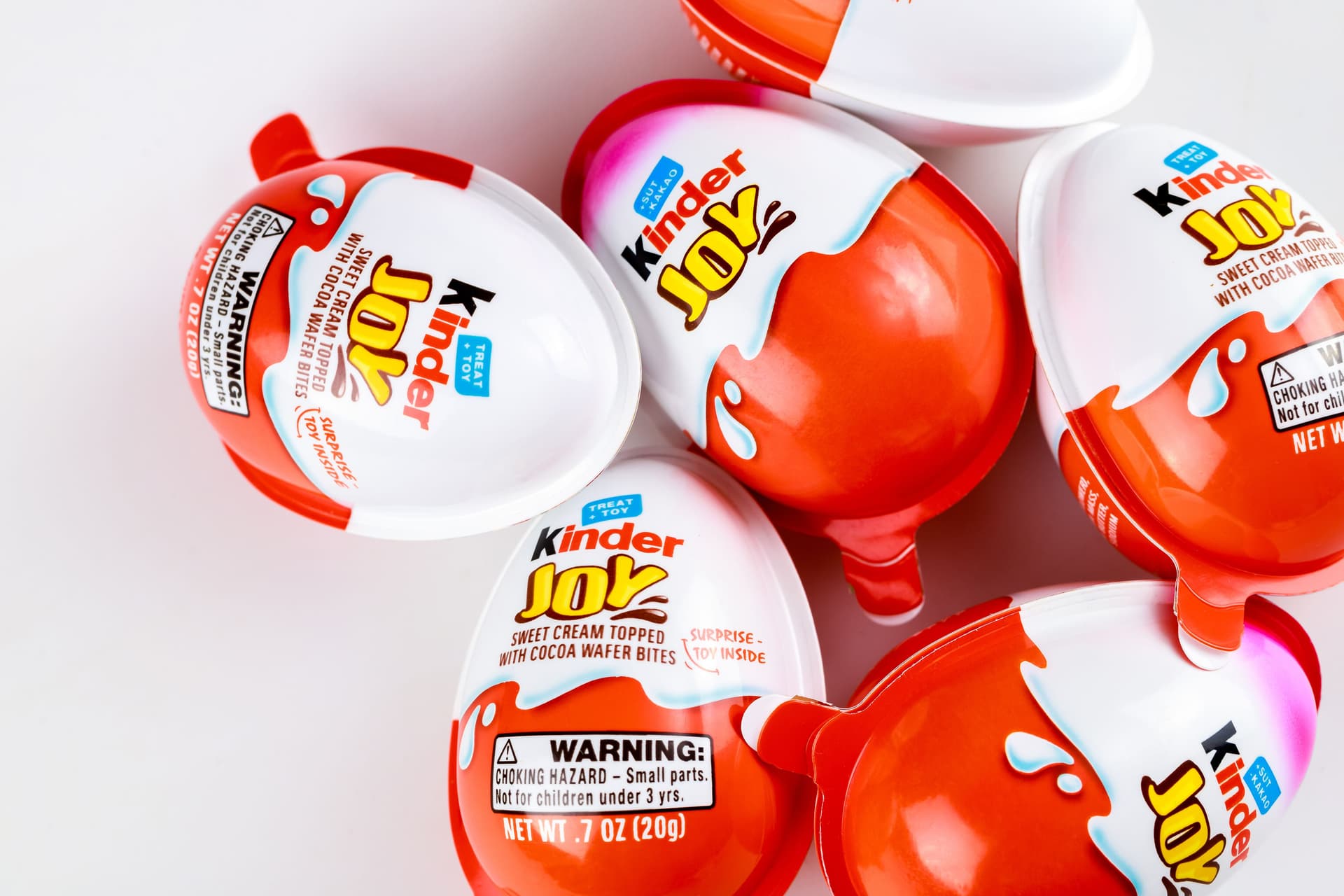
Kinder Eggs — banned in the United States since 1938. The beloved chocolate eggs containing a small toy inside have been illegal in the U.S. for decades, thanks to a Federal Food, Drug, and Cosmetic Act provision that prohibits non-food items from being completely enclosed in confections. The stated concern is choking hazards. The rest of the world has largely managed fine. The ban has been taken seriously enough that U.S. Customs agents actively confiscate them at the border — seizing over 60,000 smuggled eggs in 2011 alone. People caught bringing them across have been charged thousands of dollars in fines, per egg. A modified version called Kinder Joy, where the toy and chocolate are separated into two halves, was eventually permitted in the U.S. in 2018.

Haggis — banned in the U.S. since 1971. Scotland's national dish — a blend of sheep liver, heart, and lung mixed with oatmeal, spices, and stock — has been illegal to import into the United States for over 50 years. The reason is a single ingredient: sheep lung. The USDA ruled that no food product sold in the U.S. can contain animal lung tissue, citing concerns about potential contamination with stomach contents during slaughter. Scottish Americans craving authentic haggis have had to make do with modified versions that substitute the lung with other ingredients — something traditional haggis purists argue isn't really haggis at all.

Raw almonds — not actually raw. If you've bought a bag of "raw" almonds in the United States, you haven't actually eaten a raw almond. Following a salmonella outbreak traced to raw almonds in 2004, the USDA mandated that all commercially sold almonds in the U.S. be pasteurized — either through steam treatment or chemical fumigation. They're still labeled "raw" because they haven't been roasted, but they've been heat-treated in a process that can take up to nine hours. If you want a truly raw almond, you'd need to buy it directly from a small farm or travel to a country without the same requirement.

Raw milk cheeses — partially banned in the U.S. France's most celebrated cheeses — authentic Camembert, Roquefort, and Brie — are made with raw, unpasteurized milk, and many cannot legally be sold in the United States. The FDA requires that cheeses made from raw milk be aged for a minimum of 60 days before sale, a threshold that eliminates a significant portion of traditional European soft cheeses whose flavor and texture depend on shorter aging periods. Cheese enthusiasts argue that pasteurization strips the complex flavors and beneficial cultures that make these cheeses what they are. The FDA's position is that the bacterial risks aren't worth it.

Tonka beans — banned in the U.S. since 1954. This wrinkled South American legume has a flavor profile that sounds almost too good to be true: notes of vanilla, almond, cinnamon, and cherry all at once. It became popular in high-end European cooking and has been a staple of French pastry for centuries. It's been illegal in the United States since 1954 because it contains coumarin, a compound linked to liver damage in very high doses. The same compound also appears in cinnamon. The EU permits tonka beans in food with concentration limits. The U.S. banned them outright, and the ban has never been revisited.

Chewing gum — banned in Singapore. The restriction runs in the other direction too. Singapore effectively banned the sale and import of chewing gum in 1992 — not for health reasons, but because maintenance workers kept finding it jammed in the door sensors of the country's metro system. The ban covers recreational gum entirely, though medical gum like nicotine patches received an exemption in 2004. Tourists who bring it into the country can face fines, and anyone caught selling it faces far steeper penalties.

The broader picture these bans paint is less about objective danger and more about the specific moment in history when a decision got made, who was in the room, and whether anyone ever went back to check if it still made sense. The tonka bean ban is older than the interstate highway system. The haggis ban has outlasted the Cold War. Food safety regulations, once written, have a way of becoming permanent — regardless of whether the original reasoning still holds.
Related Content

History Facts

Fun Facts

10 November 2026

Post

Viagra Facts: A Heart Drug, Blue Vision and Hamsters

Why Viagra began as a heart drug, how it can tint your vision blue and why the FAA cares, and the hamster jet lag study that won an Ig Nobel Prize....

History Facts

Fun Facts

08 November 2026

Post

Tattoos: The Iceman, Ink in Your Nodes (+1 More)

Ötzi's 5,300-year-old tattoos, where your tattoo ink really travels in your body, and the company that frames a dead loved one's actual tattooed skin....

History Facts

Fun Facts

07 November 2026

Post

The Taboo Word That Broke Through Ad Breaks

One of these claims about a taboo word in a 1980s TV commercial is true, and one is completely made up. Can you guess which one really happened?...

Sports Facts

Fun Facts

07 November 2026

Post

Why a Marathon Is Exactly 26.2 Miles Long

The odd number behind every marathon traces back to one summer day in London. Here's how it happened....

History Facts

Fun Facts

07 November 2026

Post

Starbucks Secrets: Pequod, the CIA and Fecal Ice

The Moby-Dick name Starbucks almost used, the secret store inside CIA headquarters and the 2017 UK investigation that found fecal bacteria in coffee shop ice....

History Facts

Fun Facts

06 November 2026

Post

Lobotomies: 3 True Stories That Sound Made Up

How lobotomies won a Nobel Prize, why a 12-year-old was operated on for being a kid, and the secret Kennedy family surgery that was hidden for decades....

Food

Fun Facts

06 November 2026

Post

The Curious Case of How Spam Got Its Name

One of these claims about how Spam got its name is true, and one is completely made up. Can you guess which one really happened?...

Language Facts

Fun Facts

06 November 2026

Post

A Frustrated Author, a Word List, and a Hat

A famous children's book began as a publisher's headache. The author hated the assignment....

Food

Fun Facts

05 November 2026

Post

The Sweet Secret Behind a Sitcom Kitchen Table

One of these claims about a famous sitcom's kitchen-table dessert is true, and one isn't. Can you guess which behind-the-scenes story really happened?...

History Facts

Fun Facts

05 November 2026

Post

The Lottery Was Rigged: 3 Wild True Stories

A fortune cookie that picked 110 winners, a live TV drawing rigged to hit 666 and the security director who rigged jackpots: three true lottery scandals....

Sports Facts

Fun Facts

05 November 2026

Post

The Olympic Continent That Waited 130 Years

The world's biggest sporting event skipped an entire continent for over a century. Why so long?...

Humor

Fun Facts

Quotes

04 November 2026

Post

Martha Stewart's Shocking Halloween Costume Apology…

The backlash was immediate. One person on X called Stewart "tone deaf and totally out of touch"....

History Facts

Fun Facts

04 November 2026

Post

The Election Day That Was Chosen for Farmers

Why does America vote on a Tuesday in November? The answer is rooted in horses, harvests, and church....

Animal Facts

Fun Facts

04 November 2026

Post

Can Earwax Detect Cancer? (And 2 More Things in Your Ears)

Scientists are testing earwax as a way to spot cancer. Plus why cleaning your ears can make you cough and the cotton swab warning almost everyone ignores....

History

Fun Facts

Quotes

04 November 2026

Post

24-Year-Old Runner Dies After Collapsing During NYC Marathon

Rachel Apa, 24, collapsed near Mile 24 of the NYC Marathon and later died. Here's what we know about what happened and who she was....
Terms and ConditionsDo Not Sell or Share My Personal InformationPrivacy PolicyPrivacy NoticeAccessibility NoticeUnsubscribe
Copyright © 2026 Fun Fact Feed