The pineapple pizza debate has generated more heat than almost any other food argument in recent history. What almost nobody on either side of it knows is that there's a straightforward scientific explanation for why pineapple behaves the way it does on pizza — and once you understand it, the debate gets considerably more interesting.
Pineapple contains an enzyme called bromelain — a protease, meaning it breaks down proteins. Bromelain is one of the more aggressive protein-dissolving enzymes found in any common food. It's the reason fresh pineapple tingles or burns slightly on your tongue: it's literally beginning to digest the proteins in the soft tissue of your mouth. It's the reason pineapple juice is used as a meat tenderizer — bromelain breaks down the tough muscle fibers and connective tissue in meat the same way your stomach's digestive enzymes do, just from the outside. And it's the reason you can never make a gelatin dessert with fresh pineapple: bromelain dissolves the protein structure that makes gelatin set.
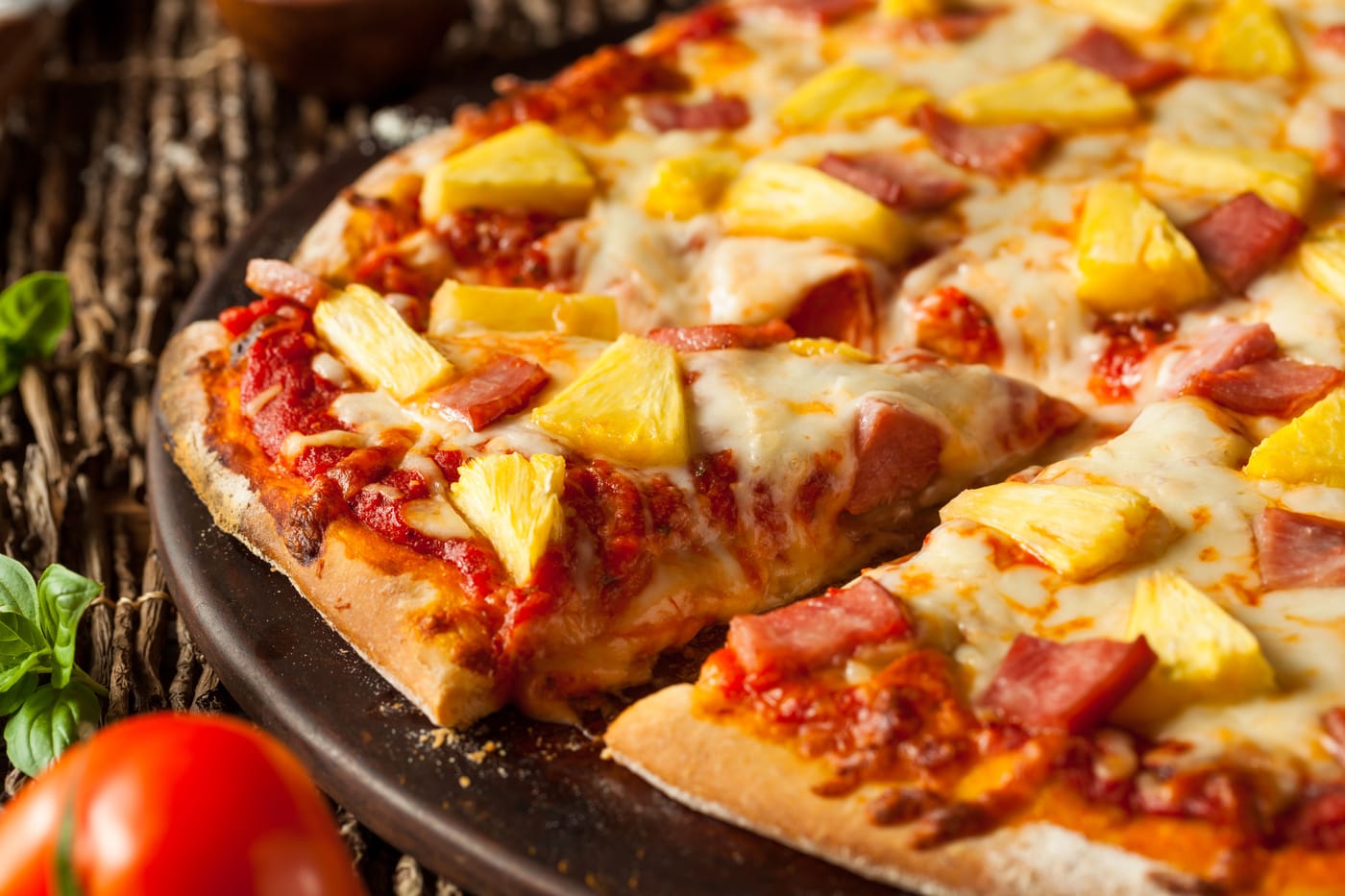
On a pizza, bromelain does something specific and somewhat divisive. It begins breaking down the proteins in the mozzarella cheese. This is why pizzas with fresh pineapple can become watery and structurally compromised — the enzyme is actively digesting the cheese while the pizza sits. The longer fresh pineapple sits on cheese, the more pronounced the effect. For people who hate pineapple on pizza, this is often what they're actually objecting to — not the sweetness, but the textural breakdown that bromelain causes.
Here's where it gets interesting. The pineapple on virtually every commercial pizza — from major chains to most restaurants — isn't fresh pineapple. It's canned pineapple. And canned pineapple is a fundamentally different ingredient. The canning process requires heating the pineapple to high temperatures, and bromelain is heat-sensitive: it denatures and becomes inactive at around 158°F. By the time pineapple has been processed and canned, the bromelain is gone. Canned pineapple won't tenderize meat, won't prevent gelatin from setting, and won't digest the cheese on your pizza. It's essentially just sweet, soft fruit.
This means the pineapple pizza most people are eating — and most people are arguing about — has already had its most chemically interesting property neutralized before it ever reached the pizza. The debate about whether pineapple belongs on pizza is largely a debate about canned pineapple, which is sweet and acidic but otherwise chemically inert. The real argument — whether fresh, enzyme-active pineapple belongs on pizza — is a much smaller and more interesting conversation that almost nobody is actually having.
The sweetness and acidity question is separate from the enzyme question, and it's where the flavor science gets genuinely compelling. The combination of sweet, acidic fruit with salty, fatty, savory ingredients is a well-documented flavor principle — the same logic behind cranberry sauce with turkey, apple with pork, or mango in spicy dishes. The contrast between the pineapple's brightness and the richness of cheese and cured meat follows the same rules that make those combinations work. Chefs who use pineapple intentionally aren't ignoring the science — they're applying it.
The most famous advocate for pineapple pizza, for what it's worth, is the man who invented it. Sam Panopoulos, a Greek-Canadian restaurant owner, added canned pineapple to a pizza in 1962 at his restaurant in Chatham, Ontario, on a whim — inspired by the sweet-and-savory combinations he'd encountered in Chinese food. He spent the rest of his life cheerfully defending the decision before his death in 2017, largely baffled that it had become so contentious. He was not a food scientist. He just liked how it tasted.
The science doesn't declare a winner in the debate. What it does is make the debate considerably more specific than most people realize. Fresh pineapple and canned pineapple are not the same ingredient. Bromelain is a real and measurable force. And the reason pineapple divides people so sharply probably has less to do with sweetness and more to do with an enzyme that's been quietly dissolving things long before anyone started arguing about it.