
You've probably heard the advice a hundred times: watch for shifty eyes, nervous fidgeting, or a person who can't hold eye contact. Seems reasonable, right? Here's the problem — decades of scientific research have shown that virtually everything most people "know" about spotting liars is wrong.
In a landmark analysis of over 200 studies, psychologist Aldert Vrij found that the average person detects lies at roughly 54% accuracy — barely better than a coin flip. Even more unsettling? Training people on popular "tells" like eye movement or crossed arms doesn't improve their accuracy. It actually makes them worse.
The idea that liars avoid eye contact is one of the most persistent myths in human psychology. In reality, practiced liars often maintain unusually steady eye contact precisely because they know people will be watching for it. What looks like confidence is actually a calculated performance.
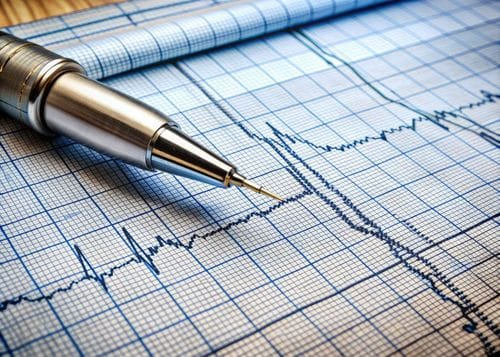
Then there's the polygraph — the machine that governments, employers, and TV dramas treat as the gold standard of truth detection. The American Psychological Association has stated clearly that polygraphs cannot reliably detect lies. They measure stress responses, not deception. An innocent person who's simply nervous can fail. A calm, practiced liar can pass without breaking a sweat.
So why are we so bad at this? Part of the problem is something psychologists call the "truth bias." Humans are wired to assume other people are being honest by default — it's a social necessity that makes everyday life function. Without it, every conversation would grind to a paranoid halt.
There's also the issue of "Othello's Error," named after Shakespeare's famously wrong-headed jealous general. We routinely misread genuine emotional distress — fear, nerves, sadness — as signs of guilt. Innocent people under interrogation often look exactly like guilty ones because being accused of something you didn't do is terrifying.
The groups we'd most trust to catch liars — police officers, judges, customs officials — perform no better than the general public in controlled studies. One famous study found that U.S. Secret Service agents were the only professional group to perform meaningfully above chance, and even they weren't dramatically better.
The uncomfortable truth is that humans evolved to live in cooperative communities where honesty was the default. We were never under much evolutionary pressure to become expert lie detectors — which means most of us are walking around completely confident in an ability we don't actually have. The liars in your life are probably grateful for that.