Fun Facts

Trending Now

The Accidental Invention Behind Beaded Ice Cream

The Accidental Invention Behind Beaded Ice Cream

One of these claims about a famous beaded ice cream's strange origin is true, and one isn't. Can you guess which one really happened?

Read more
A Command Sent Today Won't Land Until Tomorrow

A Command Sent Today Won't Land Until Tomorrow

A NASA probe is about to hit a milestone no other human-made object has reached.

Read more

The Wild Story of a Broken Tour de France Bike

One of these claims about an early Tour de France mishap is true, and one isn't. Can you guess which story really happened? Find out inside.

Read more
The Year America Served Two Thanksgivings

The Year America Served Two Thanksgivings

In 1939, families argued over which Thursday was the real one. A retailer's pitch started it all.

Read more
A Siberian Tomb Just Failed a 2,800-Year-Old Drug Test

A Siberian Tomb Just Failed a 2,800-Year-Old Drug Test

Researchers tested a princely tomb in southern Siberia and found something surprising in the hair.

Read more
See All Content
logo
  • Sports

  • History

  • Language

  • Food

  • Tech

  • Animals

  • Sports
  • History
  • Language
  • Food
  • Tech
  • Animals
  • ​

Nothing in a Grocery Store Is Where It Is by Accident

Grocery store aisle with colorful products

You walked in for three things. You left with eleven. And somewhere between the entrance and the checkout, a series of decisions were made for you — by behavioral economists, retail psychologists, and store architects who have spent decades studying exactly how to separate you from your money. Nothing in a grocery store is where it is by accident. Every single element has been engineered.

Start with the entrance. Almost every major grocery store routes you through the produce section first — a deliberate choice. Filling your cart with fresh, virtuous produce at the start of a shop triggers what psychologists call "licensing" — the brain rewards itself for making healthy choices and then grants permission to make worse ones later. The salad at the beginning is what buys the cookies at the end.

The milk is at the back. This one most people have noticed — and assumed the reason is simple convenience or storage. The real reason is that milk is a staple item almost everyone needs, so placing it as far from the entrance as possible guarantees maximum exposure to everything else in the store. Every step toward the milk is a step past products you didn't come in for.

The floors matter too. Stores that sell premium products often install slightly uneven tiles in certain aisles. The subtle vibration of a cart on uneven flooring causes shoppers to slow down unconsciously — and the slower you move through an aisle, the more you buy. In smooth-floored aisles where speed is commercially preferable, the floors are perfectly flat.

Shelf height is a financial transaction. The products at eye level are not there because they're the best or most popular — they're there because brands paid a premium for that placement. Eye-level shelving is the most valuable real estate in a grocery store. Generic and store-brand products are almost always placed on the lowest shelves, where they require effort to find — because making them easy to find is not in anyone's commercial interest except yours.

The music is calibrated. Studies have consistently shown that slower music causes shoppers to move more slowly and spend more money. Supermarkets adjust their playlists by time of day — faster music during busy periods to move people through, slower music during quieter periods to maximize spending per customer. The soundtrack to your grocery run is not ambient background noise. It's a carefully managed financial instrument.

Even the smell is manufactured. Many stores pump artificially generated bakery scents through their ventilation systems regardless of whether anything is actually baking. The smell of fresh bread triggers hunger and comfort responses that measurably increase spending — particularly on impulse purchases. The bread smell and the cookies at checkout are working in coordination.

None of this is secret — it's an entire industry, taught in business schools and refined through decades of consumer research. The average supermarket employs more behavioral psychology per square foot than almost any other environment you'll ever walk through. You were never just shopping. You were always the product being managed.


Related Content

History Facts

Fun Facts

10 November 2026

Post

A Hostage Waits at the Palace Whenever the King Visits

Every year, a politician is held at a palace so the monarch comes home safe. Here's why....

History Facts

Fun Facts

10 November 2026

Post

The Strange Story of Gunpowder and Pigeon Droppings

One of these claims about England's old gunpowder-and-pigeon-dung business is true, and one isn't. Can you guess which one really happened?...

History Facts

Fun Facts

10 November 2026

Post

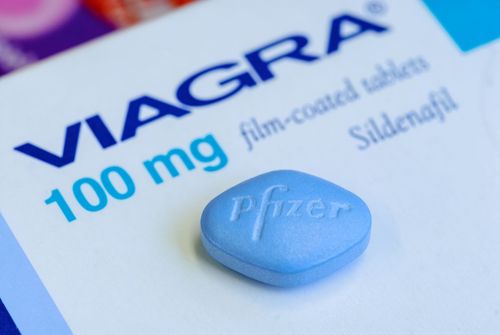
Viagra Facts: A Heart Drug, Blue Vision and Hamsters

Why Viagra began as a heart drug, how it can tint your vision blue and why the FAA cares, and the hamster jet lag study that won an Ig Nobel Prize....

History Facts

Fun Facts

09 November 2026

Post

Cannibalism: 3 True Stories You Won't Believe

Which state bans cannibalism, why the CDC warned about placenta pills, and how a tribe's funeral ritual may have left a gene that fights brain disease....

History Facts

Fun Facts

09 November 2026

Post

The Laughing Sickness That Shut Down Schools

In 1962, three schoolgirls started laughing and a whole region couldn't stop. Nobody was joking....

History Facts

Fun Facts

09 November 2026

Post

The Surprising Origin of the Movie Trailer

One of these claims about the first movie trailer is true, and one is completely made up. Can you guess which one really happened?...

Language Facts

Fun Facts

08 November 2026

Post

Your Latte Art Is Named After a Monk's Hood

A Sunday coffee order shares its name with a monk's wardrobe and a monkey. Here's the link....

Tech Facts

Fun Facts

08 November 2026

Post

How NASA Sends Tools to Astronauts in Orbit

One of these claims about NASA and tools for astronauts is true, and one is completely made up. Can you guess which one really happened?...

History Facts

Fun Facts

08 November 2026

Post

Tattoos: The Iceman, Ink in Your Nodes (+1 More)

Ötzi's 5,300-year-old tattoos, where your tattoo ink really travels in your body, and the company that frames a dead loved one's actual tattooed skin....

History Facts

Fun Facts

07 November 2026

Post

The Taboo Word That Broke Through Ad Breaks

One of these claims about a taboo word in a 1980s TV commercial is true, and one is completely made up. Can you guess which one really happened?...

Sports Facts

Fun Facts

07 November 2026

Post

Why a Marathon Is Exactly 26.2 Miles Long

The odd number behind every marathon traces back to one summer day in London. Here's how it happened....

History Facts

Fun Facts

07 November 2026

Post

Starbucks Secrets: Pequod, the CIA and Fecal Ice

The Moby-Dick name Starbucks almost used, the secret store inside CIA headquarters and the 2017 UK investigation that found fecal bacteria in coffee shop ice....

History Facts

Fun Facts

06 November 2026

Post

Lobotomies: 3 True Stories That Sound Made Up

How lobotomies won a Nobel Prize, why a 12-year-old was operated on for being a kid, and the secret Kennedy family surgery that was hidden for decades....

Food

Fun Facts

06 November 2026

Post

The Curious Case of How Spam Got Its Name

One of these claims about how Spam got its name is true, and one is completely made up. Can you guess which one really happened?...

Language Facts

Fun Facts

06 November 2026

Post

A Frustrated Author, a Word List, and a Hat

A famous children's book began as a publisher's headache. The author hated the assignment....
Terms and ConditionsDo Not Sell or Share My Personal InformationPrivacy PolicyPrivacy NoticeAccessibility NoticeUnsubscribe
Copyright © 2026 Fun Fact Feed