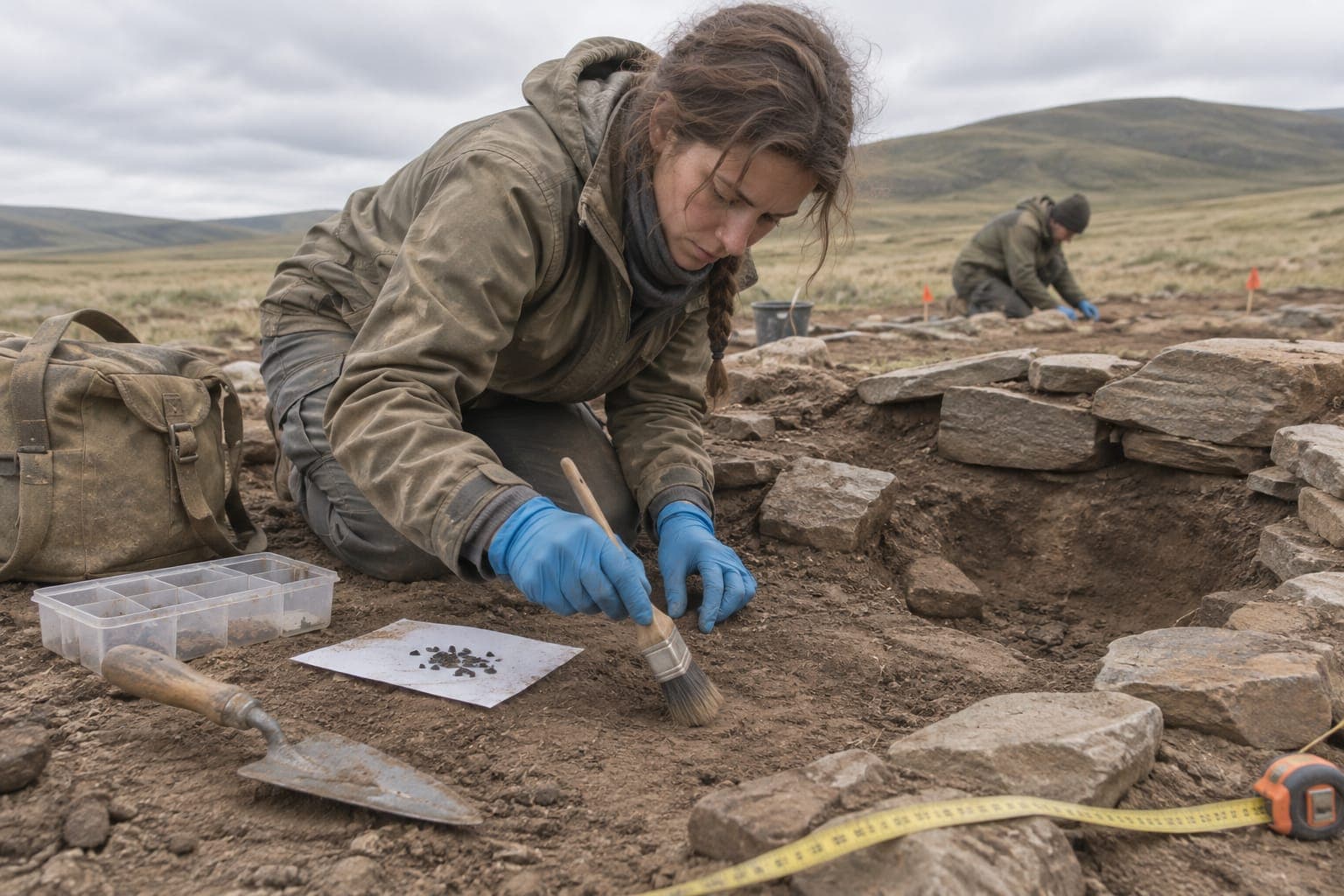
In Tyva, in southern Siberia, an international team opened a princely tomb built by the Scythians, a horse-riding culture that roamed the Eurasian steppe nearly 3,000 years ago.
The burial belonged to high-ranking members of that society. Inside, researchers found something small and easy to overlook: about 1,000 cannabis seeds, per the University of Bern.
Six of those seeds were radiocarbon dated directly, rather than guessed at from the surrounding soil. The results placed them in the early eighth century B.C., making them roughly 2,800 years old.
Then came the hair. The team, led by Dr. Gino Caspari of Bern and the Max Planck Institute of Geoanthropology, found molecular traces of psychoactive cannabis compounds in human hair from the tomb.
The researchers call it the oldest directly dated evidence of cannabis being used to get high. Caspari put it this way: "It's only so often as an archaeologist that you do get to drug test a person that's been dead for almost 3,000 years."
There are real limits. The seeds probably came from wild plants, so nobody can say whether people deliberately grew them for their effects, and neither dose nor method of use can be known.
Not everyone is convinced, either. One forensic toxicologist reportedly argues the hair data are too weak to be conclusive, so this ancient mystery is still open to debate.