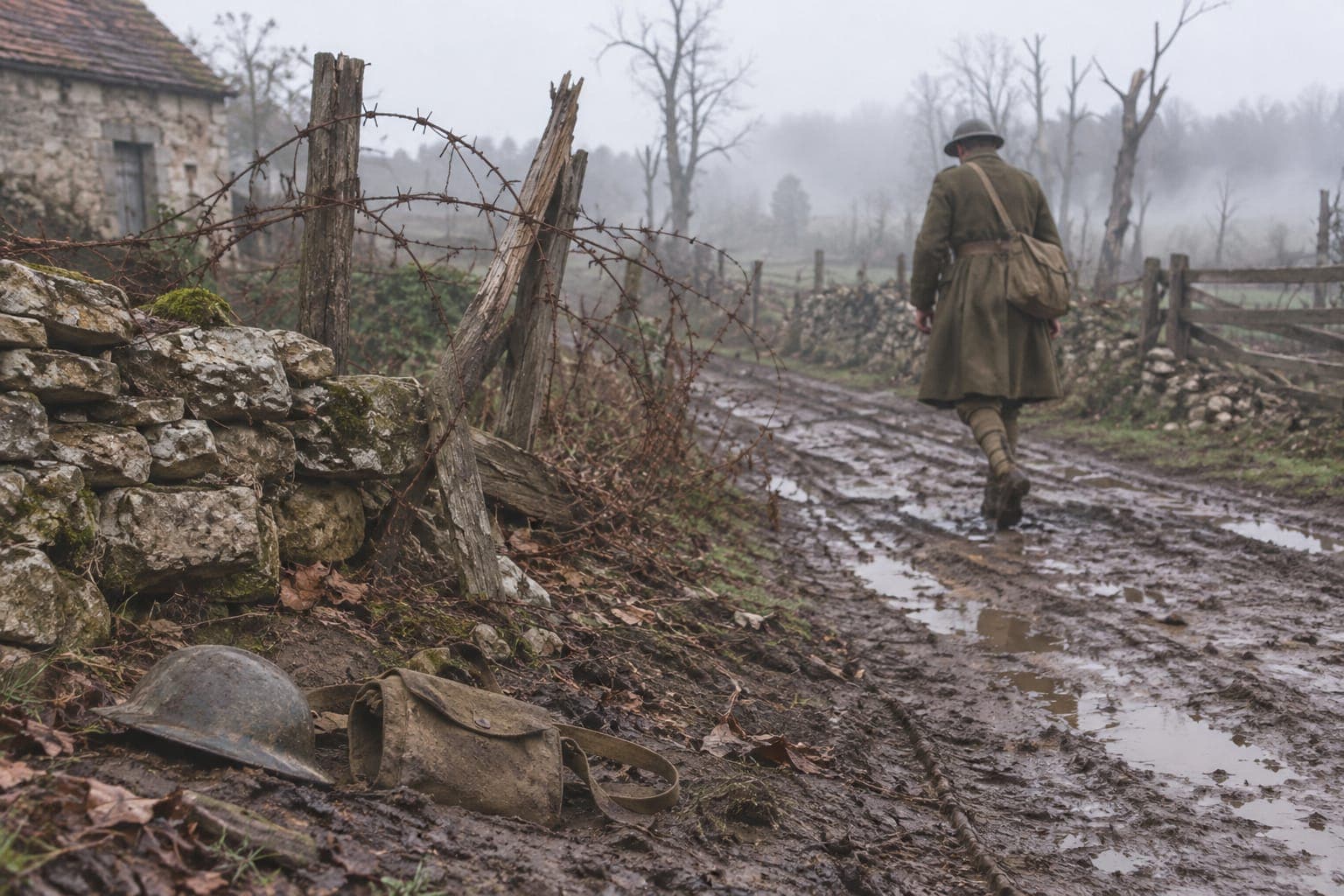
Henry Gunther was a 23-year-old bank clerk from Baltimore. He was drafted in September 1917, and by most accounts he was a reluctant soldier who never wanted to be there.
At some point he wrote home about the miserable conditions at the front. The Army postal censor intercepted the letter, and Gunther was demoted from sergeant to private for it.
The Armistice was signed at 5:45 a.m. on November 11, 1918, but it would not take effect until 11:00. For more than five hours, commanders on both sides kept the war going.
That morning, Gunther's unit came upon a German roadblock near the village of Chaumont-devant-Damvillers. Gunther got up and ran at the enemy with his bayonet fixed, and the German machine gunners had already stopped firing.
Accounts say the Germans waved him off and tried to warn him back several times. Those details come from secondary retellings. He kept coming, and a burst of fire hit him at 10:59 a.m. That was one minute before the war ended.
General Pershing's Order of the Day named him the last American killed in the war. The Army later restored his sergeant's rank and awarded him the Distinguished Service Cross.
Why he charged remains unknown. Some say he wanted to redeem himself, but that is interpretation, not fact. He may not even have been the last soldier killed overall, since some French and Commonwealth deaths came minutes earlier.