Fun Facts

Trending Now

Viagra Facts: A Heart Drug, Blue Vision and Hamsters

Viagra Facts: A Heart Drug, Blue Vision and Hamsters

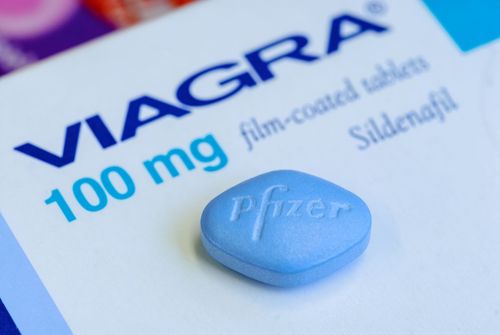
Why Viagra began as a heart drug, how it can tint your vision blue and why the FAA cares, and the hamster jet lag study that won an Ig Nobel Prize.

Read more
Tattoos: The Iceman, Ink in Your Nodes (+1 More)

Tattoos: The Iceman, Ink in Your Nodes (+1 More)

Ötzi's 5,300-year-old tattoos, where your tattoo ink really travels in your body, and the company that frames a dead loved one's actual tattooed skin.

Read more
The Taboo Word That Broke Through Ad Breaks

The Taboo Word That Broke Through Ad Breaks

One of these claims about a taboo word in a 1980s TV commercial is true, and one is completely made up. Can you guess which one really happened?

Read more
Why a Marathon Is Exactly 26.2 Miles Long

Why a Marathon Is Exactly 26.2 Miles Long

The odd number behind every marathon traces back to one summer day in London. Here's how it happened.

Read more
Starbucks Secrets: Pequod, the CIA and Fecal Ice

Starbucks Secrets: Pequod, the CIA and Fecal Ice

The Moby-Dick name Starbucks almost used, the secret store inside CIA headquarters and the 2017 UK investigation that found fecal bacteria in coffee shop ice.

Read more
See All Content
logo
  • Sports

  • History

  • Language

  • Food

  • Tech

  • Animals

  • Sports
  • History
  • Language
  • Food
  • Tech
  • Animals
  • ​

Why Your Brain Won't Let You Forget Embarrassing Moments

Person cringing with hands over face

It's 2am. You're trying to sleep. And suddenly, completely unprompted, your brain serves up a memory of something embarrassing you did in 2011. You feel the flush of shame as vividly as if it just happened. You haven't thought about this in months. Your brain retrieved it anyway, with perfect emotional clarity, for no apparent reason. This isn't a quirk. It's a deeply embedded feature of how human memory works — and it has a name.

Psychologists call it the "spotlight effect" combined with emotional memory consolidation. The brain doesn't store all memories equally — it prioritizes experiences with strong emotional content, and few emotions are stronger than the acute social pain of embarrassment. From an evolutionary standpoint, this makes sense. Humans are deeply social animals for whom reputation and group standing were matters of survival. A memory that reminds you what went wrong socially is a memory worth keeping.

The amygdala — the brain's emotional processing center — plays a central role here. When something emotionally significant happens, the amygdala signals the hippocampus to encode the memory more deeply than usual. The more intensely you felt something, the more thoroughly your brain archived it. Embarrassing moments, with their cocktail of shame, self-consciousness, and social anxiety, get flagged as high-priority memories almost automatically.

What makes this particularly cruel is something researchers call "involuntary autobiographical memory" — the phenomenon of memories surfacing without any conscious attempt to retrieve them. Your brain runs background processes constantly, scanning stored experiences for patterns and unresolved emotional threads. An embarrassing memory, especially one tied to unresolved shame, gets flagged as unfinished business and resurfaces repeatedly as the brain tries to process it.

There's also a phenomenon called "rehearsal." Every time a memory surfaces — even involuntarily — the act of re-experiencing it strengthens the neural pathway associated with it. The more your brain replays an embarrassing moment, the more deeply encoded it becomes. Trying to suppress it actively makes this worse: research consistently shows that thought suppression causes the suppressed thought to rebound with greater frequency and intensity. The harder you try to forget, the more your brain remembers.

What your brain is almost certainly getting wrong, however, is the spotlight effect itself. Research consistently shows that people dramatically overestimate how much others noticed, remembered, or cared about their embarrassing moments. The audience for your most cringe-worthy memories is almost entirely yourself — the other people involved have, in most cases, forgotten completely.

The person you said something awkward to at a party in 2009? They don't remember. The presentation where you stumbled over your words? Your colleagues moved on within minutes. Your brain archived these moments as socially catastrophic. Everyone else's brain treated them as forgettable background noise. The asymmetry is almost universal — and almost universally ignored by the brain doing the remembering.

The brain that won't let you forget your most embarrassing moments is the same brain that kept your ancestors alert to social threats, maintained their standing in the group, and helped them survive. It's working exactly as designed. It just hasn't figured out yet that the stakes are considerably lower than they used to be.

Related Content

History Facts

Fun Facts

10 November 2026

Post

Viagra Facts: A Heart Drug, Blue Vision and Hamsters

Why Viagra began as a heart drug, how it can tint your vision blue and why the FAA cares, and the hamster jet lag study that won an Ig Nobel Prize....

History Facts

Fun Facts

08 November 2026

Post

Tattoos: The Iceman, Ink in Your Nodes (+1 More)

Ötzi's 5,300-year-old tattoos, where your tattoo ink really travels in your body, and the company that frames a dead loved one's actual tattooed skin....

History Facts

Fun Facts

07 November 2026

Post

The Taboo Word That Broke Through Ad Breaks

One of these claims about a taboo word in a 1980s TV commercial is true, and one is completely made up. Can you guess which one really happened?...

Sports Facts

Fun Facts

07 November 2026

Post

Why a Marathon Is Exactly 26.2 Miles Long

The odd number behind every marathon traces back to one summer day in London. Here's how it happened....

History Facts

Fun Facts

07 November 2026

Post

Starbucks Secrets: Pequod, the CIA and Fecal Ice

The Moby-Dick name Starbucks almost used, the secret store inside CIA headquarters and the 2017 UK investigation that found fecal bacteria in coffee shop ice....

History Facts

Fun Facts

06 November 2026

Post

Lobotomies: 3 True Stories That Sound Made Up

How lobotomies won a Nobel Prize, why a 12-year-old was operated on for being a kid, and the secret Kennedy family surgery that was hidden for decades....

Food

Fun Facts

06 November 2026

Post

The Curious Case of How Spam Got Its Name

One of these claims about how Spam got its name is true, and one is completely made up. Can you guess which one really happened?...

Language Facts

Fun Facts

06 November 2026

Post

A Frustrated Author, a Word List, and a Hat

A famous children's book began as a publisher's headache. The author hated the assignment....

Food

Fun Facts

05 November 2026

Post

The Sweet Secret Behind a Sitcom Kitchen Table

One of these claims about a famous sitcom's kitchen-table dessert is true, and one isn't. Can you guess which behind-the-scenes story really happened?...

History Facts

Fun Facts

05 November 2026

Post

The Lottery Was Rigged: 3 Wild True Stories

A fortune cookie that picked 110 winners, a live TV drawing rigged to hit 666 and the security director who rigged jackpots: three true lottery scandals....

Sports Facts

Fun Facts

05 November 2026

Post

The Olympic Continent That Waited 130 Years

The world's biggest sporting event skipped an entire continent for over a century. Why so long?...

Humor

Fun Facts

Quotes

04 November 2026

Post

Martha Stewart's Shocking Halloween Costume Apology…

The backlash was immediate. One person on X called Stewart "tone deaf and totally out of touch"....

History Facts

Fun Facts

04 November 2026

Post

The Election Day That Was Chosen for Farmers

Why does America vote on a Tuesday in November? The answer is rooted in horses, harvests, and church....

Animal Facts

Fun Facts

04 November 2026

Post

Can Earwax Detect Cancer? (And 2 More Things in Your Ears)

Scientists are testing earwax as a way to spot cancer. Plus why cleaning your ears can make you cough and the cotton swab warning almost everyone ignores....

History

Fun Facts

Quotes

04 November 2026

Post

24-Year-Old Runner Dies After Collapsing During NYC Marathon

Rachel Apa, 24, collapsed near Mile 24 of the NYC Marathon and later died. Here's what we know about what happened and who she was....
Terms and ConditionsDo Not Sell or Share My Personal InformationPrivacy PolicyPrivacy NoticeAccessibility NoticeUnsubscribe
Copyright © 2026 Fun Fact Feed