Fun Facts

Trending Now

The Galápagos Bird With a Taste for Blood

The Galápagos Bird With a Taste for Blood

On a remote island, a tiny songbird has picked up a habit that sounds like pure fiction.

Read more
The Squirrel Brain Stat That Gets Repeated Everywhere

The Squirrel Brain Stat That Gets Repeated Everywhere

A popular claim says squirrel brains swell every fall. The real story has a few twists.

Read more
The Government's Plan to Rename Halloween

The Government's Plan to Rename Halloween

One of these claims about a 1950s plan to rename Halloween is true, and one isn't. Can you guess which one really happened?

Read more
Your Hormones Keep a Calendar and Fall Is Peak Season

Your Hormones Keep a Calendar and Fall Is Peak Season

A hormone in your body seems to follow the seasons. Autumn may be when it hits its high.

Read more
Where Was the First Kiss in History?

Where Was the First Kiss in History?

The oldest kiss on record is 4,500 years old. Plus what one kiss really swaps and the year a king made kissing illegal

Read more
See All Content
logo
  • Sports

  • History

  • Language

  • Food

  • Tech

  • Animals

  • Sports
  • History
  • Language
  • Food
  • Tech
  • Animals
  • ​

Why Some People Feel Pain Completely Differently Than Others

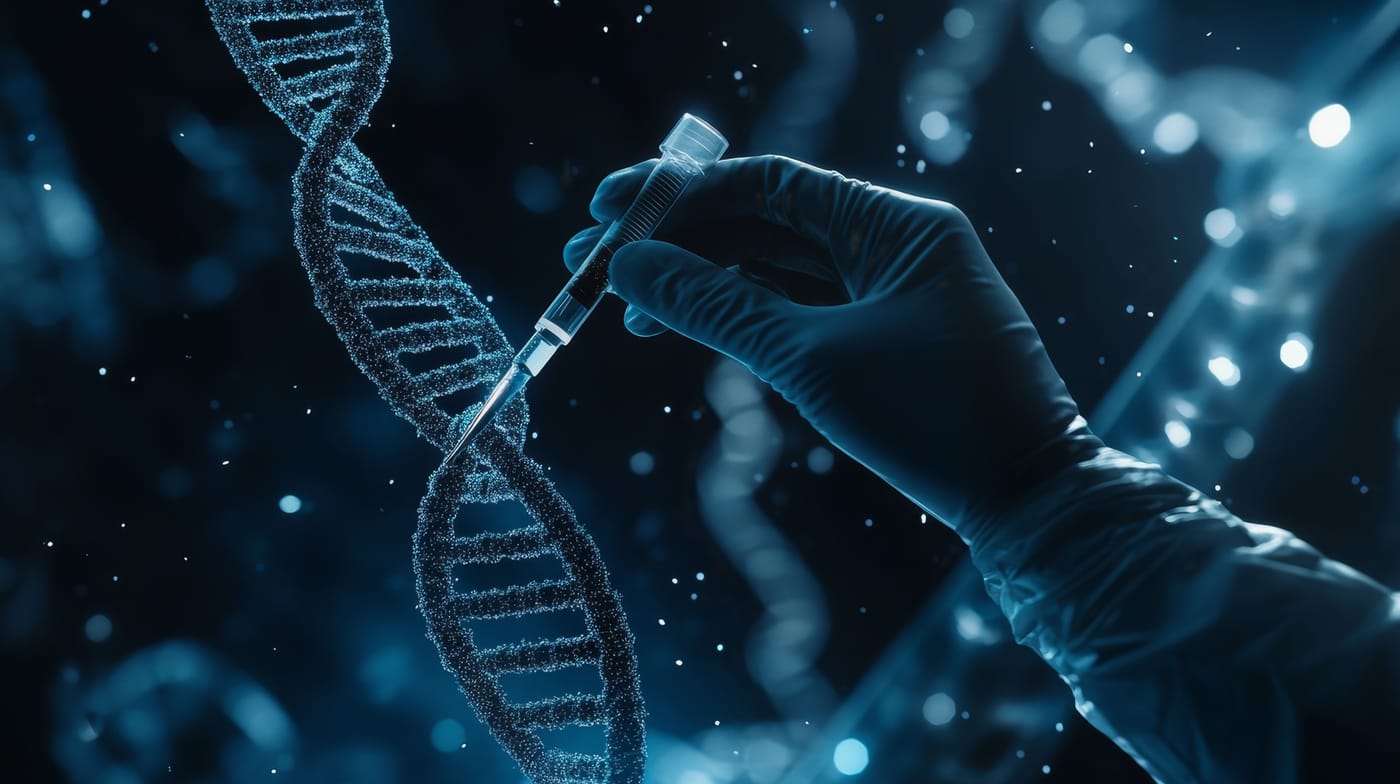
DNA strand pain genetics concept

Pain tolerance is one of those things people tend to treat as a personality trait — something you either have or you don't, a measure of toughness or willpower. Research tells a different story. How much pain you feel in response to a given stimulus is significantly determined by your genetics, varies measurably from person to person, and has nothing to do with how tough you are. Two people can have the exact same injury and experience two completely different levels of pain — and neither one is exaggerating.

One of the most studied genes in pain research is COMT — short for catechol-O-methyltransferase. The COMT gene regulates the breakdown of dopamine and other neurotransmitters in the brain, and a specific variant of it directly affects how intensely pain signals are processed. People who carry one version of the variant break down these neurotransmitters more slowly, leaving higher levels circulating in the brain — which amplifies pain perception. People with a different version process them faster, resulting in lower pain sensitivity. The difference between these two groups, measured in controlled experiments, is significant and consistent.

COMT isn't the only gene involved. Researchers have identified variants in the OPRM1 gene — which encodes the brain's main receptor for opioids — that affect both how intensely people feel pain and how well they respond to pain medication. People with certain OPRM1 variants need significantly higher doses of morphine to achieve the same pain relief as people without them. In a 2008 study of cancer patients receiving morphine for pain management, OPRM1 variants reliably predicted how much medication a patient would require — a finding that has direct implications for how doctors should be dosing painkillers.

The redhead connection is one of the most striking examples of genetic pain sensitivity in action. People with red hair carry variants in the MC1R gene — the gene responsible for their hair and skin pigmentation — that also affect how their nervous system processes pain. Multiple studies have found that redheads require significantly more anesthesia during surgery than non-redheads — on average, about 20% more — and are more sensitive to certain types of pain, particularly thermal pain. Anesthesiologists have known about this for years, and it's now a standard consideration in surgical planning for redheaded patients.

Beyond specific gene variants, pain perception is also influenced by the overall density of nerve fibers in a given person's skin. Some people simply have more pain-sensing nerve endings per square centimeter than others — a difference that's measurable under a microscope and that has nothing to do with psychology or attitude. Areas of the body with higher nerve density, like the fingertips and face, are universally more sensitive than areas like the back — but the baseline density varies person to person in ways that compound everything else.

The practical consequences of ignoring this extend well beyond surgery. Pain that goes undertreated because a doctor assumes a patient is being dramatic is a documented medical problem — one that disproportionately affects women, who studies consistently show are more likely to have their pain dismissed or undertreated compared to men reporting equivalent symptoms. The genetic basis of pain sensitivity adds an important layer to that conversation: not only is undertreated pain a bias problem, it may also reflect a failure to account for real, measurable biological differences.

The field of pain genetics is still relatively young, but it's already beginning to reshape clinical practice. Some hospitals are now using genetic screening to help predict how patients will respond to pain medication before surgery, allowing anesthesiologists to adjust doses preemptively rather than reactively. The idea that pain is purely subjective — that it exists only in the mind and can be willed away — is becoming increasingly difficult to defend. Your pain tolerance was partly decided before you were born.


Related Content

Fun Facts

18 August 2026

Post

The Tiny Hole in Airplane Windows Isn't a Flaw

That little hole in your airplane window seat has a job most flyers never learn about....

Fun Facts

16 August 2026

Post

The Word You Just Learned Is Everywhere

Learn a new word and suddenly hear it everywhere? That loop has a name, and it's a weird one....

Fun Facts

15 August 2026

Post

Every Lowercase 'i' Is Hiding a Secret Name

That tiny dot above the letter i isn't decoration. It actually has an official name....

Fun Facts

14 August 2026

Post

The Button Millions Push That Secretly Does Nothing

That crosswalk button you always press? It might not be connected to anything at all....

Fun Facts

28 July 2026

Post

The Painting So Valuable It's Never Been Insured

The Louvre's crown jewels weren't insured when they were stolen, and its most famous painting has never been insured either....

Fun Facts

26 July 2026

Post

A Forklift Carried This Escapee to Freedom

A convicted killer escaped a maximum-security federal prison by sealing himself inside a pallet of mailbags and shipping himself out....

Fun Facts

24 July 2026

Post

How Your Hiccups Could Be the Result of Ancient Frogs

Hiccups may be a leftover reflex from ancient amphibian ancestors, and the theory explains something modern medicine still can't fully answer....

Fun Facts

22 July 2026

Post

The Fire Fighters Set on Purpose

Firefighters deliberately start new fires to fight wildfires, a real tactic where risking one fire can prevent a far bigger one....

Fun Facts

18 July 2026

Post

It's Not International Waters Putting You At Risk on a Cruise

Disney's cruise ships fly foreign flags on purpose, letting them dodge U.S. minimum wage and labor law entirely....

Fun Facts

13 July 2026

Post

The Lie Detector Loophole No Court Will Touch

Courts won't accept polygraph results as evidence, yet the CIA, FBI, and other federal agencies still require them to get hired. ...

Fun Facts

12 July 2026

Post

What's Really Hiding in Your Boarding Pass Barcode

That barcode holds far more than your seat number, and researchers have proven it can be decoded from a single photo. ...

Fun Facts

11 July 2026

Post

The Invisible Line That Sets Your Insurance Price

Two drivers with identical records can pay wildly different premiums based on nothing but their zip code. ...

Fun Facts

10 July 2026

Post

Who Really Gets Paid When a Song Blows Up

A handful of companies own the rights behind most songs on the radio, meaning artists who seem like rivals often pay the same parent company....

Fun Facts

09 July 2026

Post

Why Lottery Jackpots Aren't the Real Payout

That flashing jackpot number isn't actual cash. It's a 30-year projection, and taxes take a big bite before winners see a dime....

Fun Facts

08 July 2026

Post

The Great Legal Debate Over What's a Sandwich

Courts and tax agencies have spent real time and money deciding if a burrito, taco, or hot dog legally counts as a sandwich....
Terms and ConditionsDo Not Sell or Share My Personal InformationPrivacy PolicyPrivacy NoticeAccessibility NoticeUnsubscribe
Copyright © 2026 Fun Fact Feed