Fun Facts

Trending Now

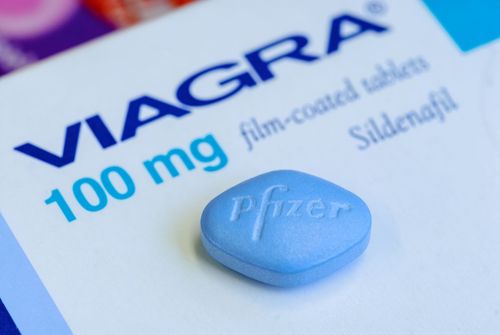
Viagra Facts: A Heart Drug, Blue Vision and Hamsters

Viagra Facts: A Heart Drug, Blue Vision and Hamsters

Why Viagra began as a heart drug, how it can tint your vision blue and why the FAA cares, and the hamster jet lag study that won an Ig Nobel Prize.

Read more
Tattoos: The Iceman, Ink in Your Nodes (+1 More)

Tattoos: The Iceman, Ink in Your Nodes (+1 More)

Ötzi's 5,300-year-old tattoos, where your tattoo ink really travels in your body, and the company that frames a dead loved one's actual tattooed skin.

Read more
The Taboo Word That Broke Through Ad Breaks

The Taboo Word That Broke Through Ad Breaks

One of these claims about a taboo word in a 1980s TV commercial is true, and one is completely made up. Can you guess which one really happened?

Read more
Why a Marathon Is Exactly 26.2 Miles Long

Why a Marathon Is Exactly 26.2 Miles Long

The odd number behind every marathon traces back to one summer day in London. Here's how it happened.

Read more
Starbucks Secrets: Pequod, the CIA and Fecal Ice

Starbucks Secrets: Pequod, the CIA and Fecal Ice

The Moby-Dick name Starbucks almost used, the secret store inside CIA headquarters and the 2017 UK investigation that found fecal bacteria in coffee shop ice.

Read more
See All Content
logo
  • Sports

  • History

  • Language

  • Food

  • Tech

  • Animals

  • Sports
  • History
  • Language
  • Food
  • Tech
  • Animals
  • ​

What Happens When You Never Sleep (It's Worse Than You Think)

Person awake in dark room surrounded by clocks

Scientists have known for over a century that sleep deprivation kills. What they couldn't figure out — and what kept some of the world's best researchers up at night for decades — was why. The answer, when it finally came, was not what anyone expected. And it changed everything we thought we understood about what sleep is actually doing.

The first systematic experiments on sleep deprivation were conducted in 1894 by a Russian scientist named Marie de Manacéine. She kept puppies in constant motion, depriving them of sleep entirely. Within five days, every single one of them was dead. Autopsies revealed severe hemorrhaging in the brain. The conclusion was stark: total sleep deprivation kills faster than starvation.

For decades after, researchers struggled to study sleep deprivation rigorously because keeping animals awake required physical stress — constant handling, electrical shocks, forced movement — that contaminated the results. You couldn't tell if the animals were dying from lack of sleep or from the methods being used to prevent it. The true effects of sleeplessness alone remained frustratingly unclear.

In the 1980s, a sleep researcher at the University of Chicago named Allan Rechtschaffen devised an elegant solution. He built a rotating platform suspended over a shallow pool of water, shared by two rats. Whenever the sleep-deprived rat began to doze, the platform spun — waking both animals equally. The control rat could sleep whenever its partner was awake. The experimental rat could not sleep at all. Same environment. Same stress. Only one variable: sleep.

The results were unambiguous and deeply unsettling. The sleep-deprived rats began deteriorating rapidly — losing weight despite eating two to three times their normal food intake, developing sores, losing the ability to regulate their body temperature. Within two to three weeks, they were dead. The control rats, living in identical conditions, were fine.

Then Rechtschaffen's team did the autopsies. And found almost nothing. No consistent anatomical cause of death. No clear organ failure. No obvious explanation for why these animals had died. Sleep deprivation had killed them — that was certain — but the mechanism remained a complete mystery. "No anatomical cause of death was identified," the researchers concluded, in one of the more haunting lines in scientific literature.

More recent research has begun to fill in the picture. Scientists have found that during sleep, the brain activates a kind of biological waste-removal system — flushing out toxic proteins that accumulate during waking hours. One of those proteins is beta-amyloid, the same substance that builds up in the brains of Alzheimer's patients. Every night of sleep is, in part, your brain cleaning itself. Every night without it, the waste accumulates.

We still don't have a complete answer to the question Rechtschaffen spent his career asking. Sleep occupies roughly a third of every human life, renders us unconscious and vulnerable for hours at a time, and we still cannot fully explain why. What we do know is that without it, the body falls apart in ways that even the best science struggles to explain — and that whatever sleep is doing, it is doing something absolutely essential. Something that nothing else can replace.

Related Content

History Facts

Fun Facts

10 November 2026

Post

Viagra Facts: A Heart Drug, Blue Vision and Hamsters

Why Viagra began as a heart drug, how it can tint your vision blue and why the FAA cares, and the hamster jet lag study that won an Ig Nobel Prize....

History Facts

Fun Facts

08 November 2026

Post

Tattoos: The Iceman, Ink in Your Nodes (+1 More)

Ötzi's 5,300-year-old tattoos, where your tattoo ink really travels in your body, and the company that frames a dead loved one's actual tattooed skin....

History Facts

Fun Facts

07 November 2026

Post

The Taboo Word That Broke Through Ad Breaks

One of these claims about a taboo word in a 1980s TV commercial is true, and one is completely made up. Can you guess which one really happened?...

Sports Facts

Fun Facts

07 November 2026

Post

Why a Marathon Is Exactly 26.2 Miles Long

The odd number behind every marathon traces back to one summer day in London. Here's how it happened....

History Facts

Fun Facts

07 November 2026

Post

Starbucks Secrets: Pequod, the CIA and Fecal Ice

The Moby-Dick name Starbucks almost used, the secret store inside CIA headquarters and the 2017 UK investigation that found fecal bacteria in coffee shop ice....

History Facts

Fun Facts

06 November 2026

Post

Lobotomies: 3 True Stories That Sound Made Up

How lobotomies won a Nobel Prize, why a 12-year-old was operated on for being a kid, and the secret Kennedy family surgery that was hidden for decades....

Food

Fun Facts

06 November 2026

Post

The Curious Case of How Spam Got Its Name

One of these claims about how Spam got its name is true, and one is completely made up. Can you guess which one really happened?...

Language Facts

Fun Facts

06 November 2026

Post

A Frustrated Author, a Word List, and a Hat

A famous children's book began as a publisher's headache. The author hated the assignment....

Food

Fun Facts

05 November 2026

Post

The Sweet Secret Behind a Sitcom Kitchen Table

One of these claims about a famous sitcom's kitchen-table dessert is true, and one isn't. Can you guess which behind-the-scenes story really happened?...

History Facts

Fun Facts

05 November 2026

Post

The Lottery Was Rigged: 3 Wild True Stories

A fortune cookie that picked 110 winners, a live TV drawing rigged to hit 666 and the security director who rigged jackpots: three true lottery scandals....

Sports Facts

Fun Facts

05 November 2026

Post

The Olympic Continent That Waited 130 Years

The world's biggest sporting event skipped an entire continent for over a century. Why so long?...

Humor

Fun Facts

Quotes

04 November 2026

Post

Martha Stewart's Shocking Halloween Costume Apology…

The backlash was immediate. One person on X called Stewart "tone deaf and totally out of touch"....

History Facts

Fun Facts

04 November 2026

Post

The Election Day That Was Chosen for Farmers

Why does America vote on a Tuesday in November? The answer is rooted in horses, harvests, and church....

Animal Facts

Fun Facts

04 November 2026

Post

Can Earwax Detect Cancer? (And 2 More Things in Your Ears)

Scientists are testing earwax as a way to spot cancer. Plus why cleaning your ears can make you cough and the cotton swab warning almost everyone ignores....

History

Fun Facts

Quotes

04 November 2026

Post

24-Year-Old Runner Dies After Collapsing During NYC Marathon

Rachel Apa, 24, collapsed near Mile 24 of the NYC Marathon and later died. Here's what we know about what happened and who she was....
Terms and ConditionsDo Not Sell or Share My Personal InformationPrivacy PolicyPrivacy NoticeAccessibility NoticeUnsubscribe
Copyright © 2026 Fun Fact Feed