Fun Facts

Trending Now

The Odd Medical Fix for Victorian 'Hysteria'

The Odd Medical Fix for Victorian 'Hysteria'

One of these Victorian hysteria treatment claims is true, the other is made up. Find out which one really happened.

Read more
The Island Where Forgetting a Birthday Breaks the Law

The Island Where Forgetting a Birthday Breaks the Law

One country wrote a very specific marriage rule into its actual legal code.

Read more
The Toothache That Ended in a Small Explosion

The Toothache That Ended in a Small Explosion

One 19th-century toothache didn't just hurt. It ended with a bang nobody saw coming.

Read more
Rome's Smile Secret Was Hiding in a Mouse Skull

Rome's Smile Secret Was Hiding in a Mouse Skull

Ancient Rome had strong opinions about oral hygiene, and one ingredient will stop you cold.

Read more
The Bizarre Plague of 1962

The Bizarre Plague of 1962

One is true, one is made up. Did a laughing epidemic really shut down schools in 1962? Find out which claim is real.

Read more
See All Content
logo
  • Sports

  • History

  • Language

  • Food

  • Tech

  • Animals

  • Sports
  • History
  • Language
  • Food
  • Tech
  • Animals
  • ​

The Underwater Graveyards Nobody Is Talking About

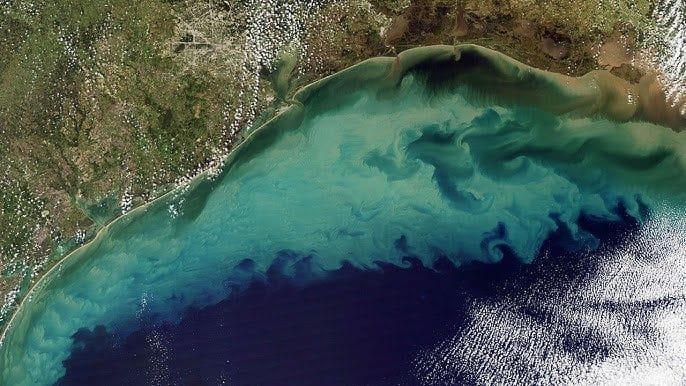
Ocean dead zone aerial view

Right now, there are areas of the ocean — hundreds of them — where the water contains so little oxygen that almost nothing can survive. Fish flee if they can. Everything else — crabs, oysters, clams, bottom-dwelling creatures that can't move fast enough — suffocates. The seafloor in these zones is largely barren. Scientists call them dead zones, and most people have never heard of them, despite the fact that they've quadrupled in size since 1950 and show no signs of slowing down.

The technical term is hypoxia — water with oxygen levels too low to support marine life. A dead zone doesn't form because something toxic was dumped into the water. It forms because of too many nutrients. Nitrogen and phosphorus — primarily from agricultural fertilizers — wash off farmland into rivers, which carry them into coastal waters. Once there, those nutrients trigger massive blooms of algae. The algae grows rapidly, dies, sinks, and decomposes. The decomposition process consumes enormous quantities of oxygen, stripping it from the surrounding water faster than it can be replenished. What's left is water that can't support life.

The most prominent example in the United States sits at the mouth of the Mississippi River in the Gulf of Mexico. Every summer, nutrient-laden water draining from Midwestern farms flows down the Mississippi and out into the Gulf, triggering an algae bloom that creates one of the largest recurring dead zones in the world. In 2021, it covered approximately 6,334 square miles — nearly the size of New Jersey. It forms reliably every year. The shrimp and fishing industries that depend on those waters have been dealing with the consequences for decades.

The scale globally is harder to grasp. In 1950, fewer than 50 dead zones had been identified in coastal waters worldwide. Today there are over 500. In the open ocean, low-oxygen zones have expanded by millions of square kilometers since the mid-20th century. The Baltic Sea — one of the worst affected — has dead zones covering more than 70,000 square kilometers, roughly one-sixth of the global total. The Chesapeake Bay, once one of the most productive estuaries in North America, now experiences hypoxia across more than 40% of its waters during peak summer months.

Climate change is making it worse in a specific and measurable way. Warmer water holds less dissolved oxygen than cold water — a basic physical property that means every degree the ocean warms reduces its oxygen-carrying capacity. As surface temperatures rise, less oxygen reaches deeper water. Meanwhile, warmer temperatures accelerate the growth of algae, increasing the frequency and severity of blooms. The two effects compound each other: more algae consuming more oxygen in water that was already holding less of it.

The ecological consequences extend beyond the dead zones themselves. Marine organisms forced out of hypoxic areas crowd into the remaining oxygenated water, disrupting food chains, increasing competition, and altering breeding patterns. Species that can't relocate die. Fish that do relocate often move into shallower, warmer water that makes them more vulnerable to fishing. The dead zones don't just kill what's inside them — they compress and destabilize the ecosystems around them.

There is some evidence that dead zones can recover. The Black Sea's dead zone collapsed in the early 1990s when the Soviet Union's agricultural subsidies ended and fertilizer use dropped dramatically — the zone largely disappeared within a decade. Sections of the Thames and Chesapeake Bay have also shown improvement where agricultural runoff has been reduced. The mechanism that creates dead zones is reversible. Whether the political and economic will to reverse it exists at the necessary scale is a different question.

The ocean is running out of oxygen in specific, measurable, expanding areas — and the primary driver is fertilizer washing off farms into rivers. It's a problem most people have never heard of, caused by something completely ordinary, and expanding steadily while most of the world looks elsewhere.


Related Content

Fun Facts

18 August 2026

Post

The Tiny Hole in Airplane Windows Isn't a Flaw

That little hole in your airplane window seat has a job most flyers never learn about....

Fun Facts

16 August 2026

Post

The Word You Just Learned Is Everywhere

Learn a new word and suddenly hear it everywhere? That loop has a name, and it's a weird one....

Fun Facts

15 August 2026

Post

Every Lowercase 'i' Is Hiding a Secret Name

That tiny dot above the letter i isn't decoration. It actually has an official name....

Fun Facts

14 August 2026

Post

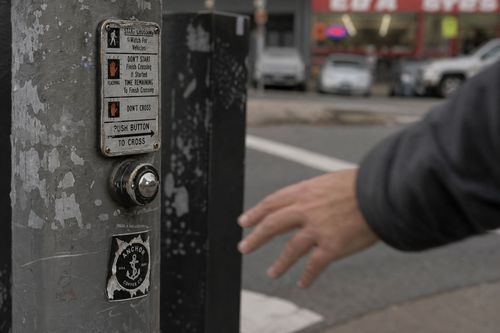
The Button Millions Push That Secretly Does Nothing

That crosswalk button you always press? It might not be connected to anything at all....

Fun Facts

28 July 2026

Post

The Painting So Valuable It's Never Been Insured

The Louvre's crown jewels weren't insured when they were stolen, and its most famous painting has never been insured either....

Fun Facts

26 July 2026

Post

A Forklift Carried This Escapee to Freedom

A convicted killer escaped a maximum-security federal prison by sealing himself inside a pallet of mailbags and shipping himself out....

Fun Facts

24 July 2026

Post

How Your Hiccups Could Be the Result of Ancient Frogs

Hiccups may be a leftover reflex from ancient amphibian ancestors, and the theory explains something modern medicine still can't fully answer....

Fun Facts

22 July 2026

Post

The Fire Fighters Set on Purpose

Firefighters deliberately start new fires to fight wildfires, a real tactic where risking one fire can prevent a far bigger one....

Fun Facts

18 July 2026

Post

It's Not International Waters Putting You At Risk on a Cruise

Disney's cruise ships fly foreign flags on purpose, letting them dodge U.S. minimum wage and labor law entirely....

Fun Facts

13 July 2026

Post

The Lie Detector Loophole No Court Will Touch

Courts won't accept polygraph results as evidence, yet the CIA, FBI, and other federal agencies still require them to get hired. ...

Fun Facts

12 July 2026

Post

What's Really Hiding in Your Boarding Pass Barcode

That barcode holds far more than your seat number, and researchers have proven it can be decoded from a single photo. ...

Fun Facts

11 July 2026

Post

The Invisible Line That Sets Your Insurance Price

Two drivers with identical records can pay wildly different premiums based on nothing but their zip code. ...

Fun Facts

10 July 2026

Post

Who Really Gets Paid When a Song Blows Up

A handful of companies own the rights behind most songs on the radio, meaning artists who seem like rivals often pay the same parent company....

Fun Facts

09 July 2026

Post

Why Lottery Jackpots Aren't the Real Payout

That flashing jackpot number isn't actual cash. It's a 30-year projection, and taxes take a big bite before winners see a dime....

Fun Facts

08 July 2026

Post

The Great Legal Debate Over What's a Sandwich

Courts and tax agencies have spent real time and money deciding if a burrito, taco, or hot dog legally counts as a sandwich....
Terms and ConditionsDo Not Sell or Share My Personal InformationPrivacy PolicyPrivacy NoticeAccessibility NoticeUnsubscribe
Copyright © 2026 Fun Fact Feed