In 1958, the U.S. Air Force secretly studied detonating a live nuclear bomb on the Moon's surface, hoping the flash would out-dazzle the Soviet Union's Sputnik triumph in the space race.
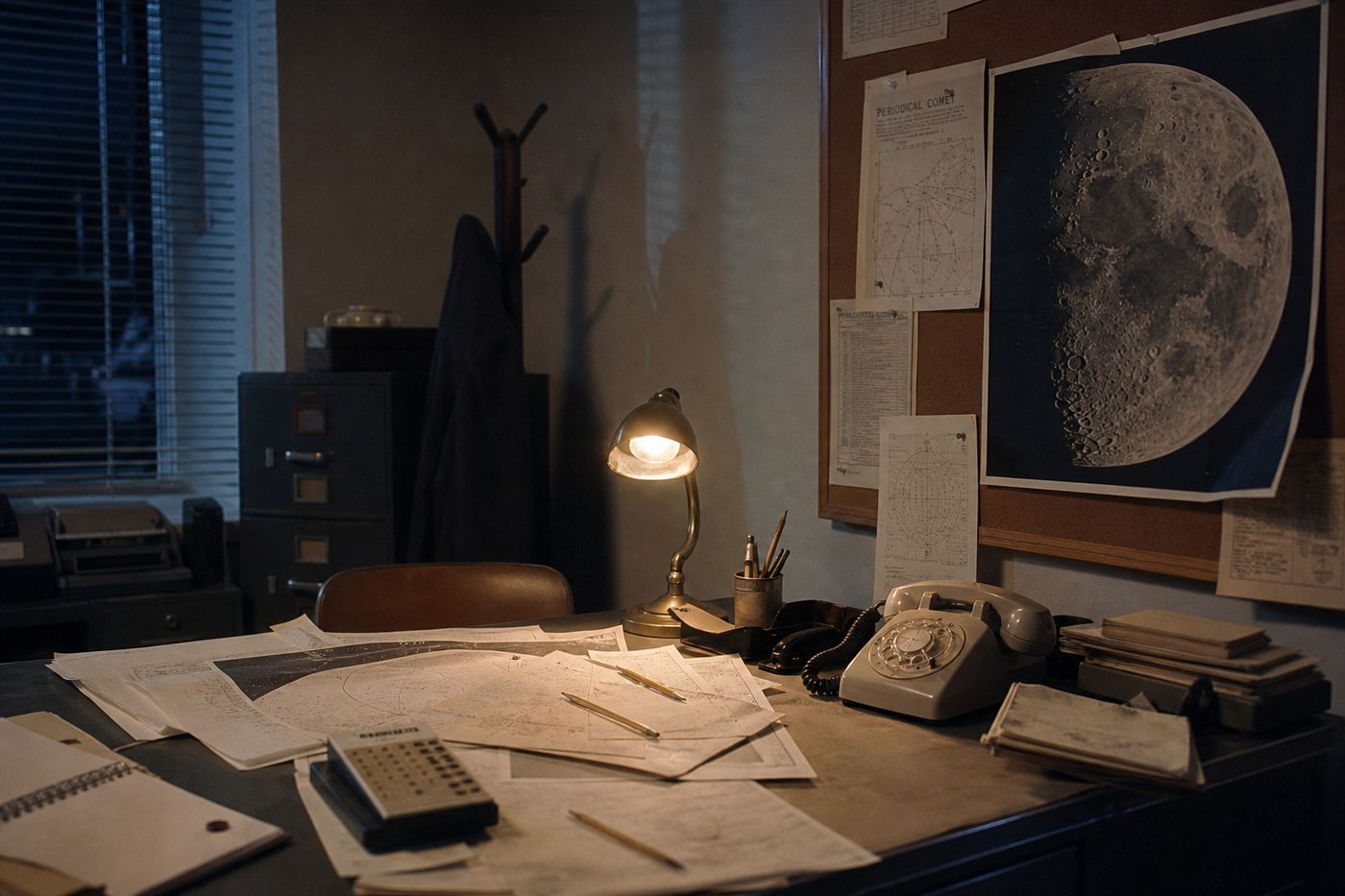
The mission carried a classified code name, Project A119, and tasked physicists with calculating exactly how visible a lunar blast would appear from Earth's night sky.
A young astronomer named Carl Sagan worked on the team, modeling how a mushroom cloud would spread across the Moon's near-vacuum atmosphere long before he became world-famous.
Officials wanted the explosion visible to the naked eye from Earth, proof that America's rockets could reach and strike another world entirely, no telescope required.
The plan was quietly shelved after scientists warned that a lunar mushroom cloud could contaminate future moon missions and outrage global public opinion worldwide.
Declassified decades later, the documents revealed how close the Cold War came to turning the Moon into a nuclear demonstration rather than humanity's first destination.
Today the Moon carries only footprints and flags, a quiet reminder that the same era dreaming of nuclear fireworks eventually chose exploration over destruction.