In the 1800s, doctors had no reliable way to confirm death. They checked for breath with mirrors and feathers, and mistakes were a real public worry across Europe and America.
Newspapers fed the panic with tales of coffins scratched on the inside. Whatever the true numbers, the fear was strong enough that people began paying for insurance against it.
In Germany, a physician named Christoph Hufeland pushed for a fix in the 1790s. Weimar opened a waiting mortuary in 1792, where bodies lay until decay proved death, and other German cities followed.
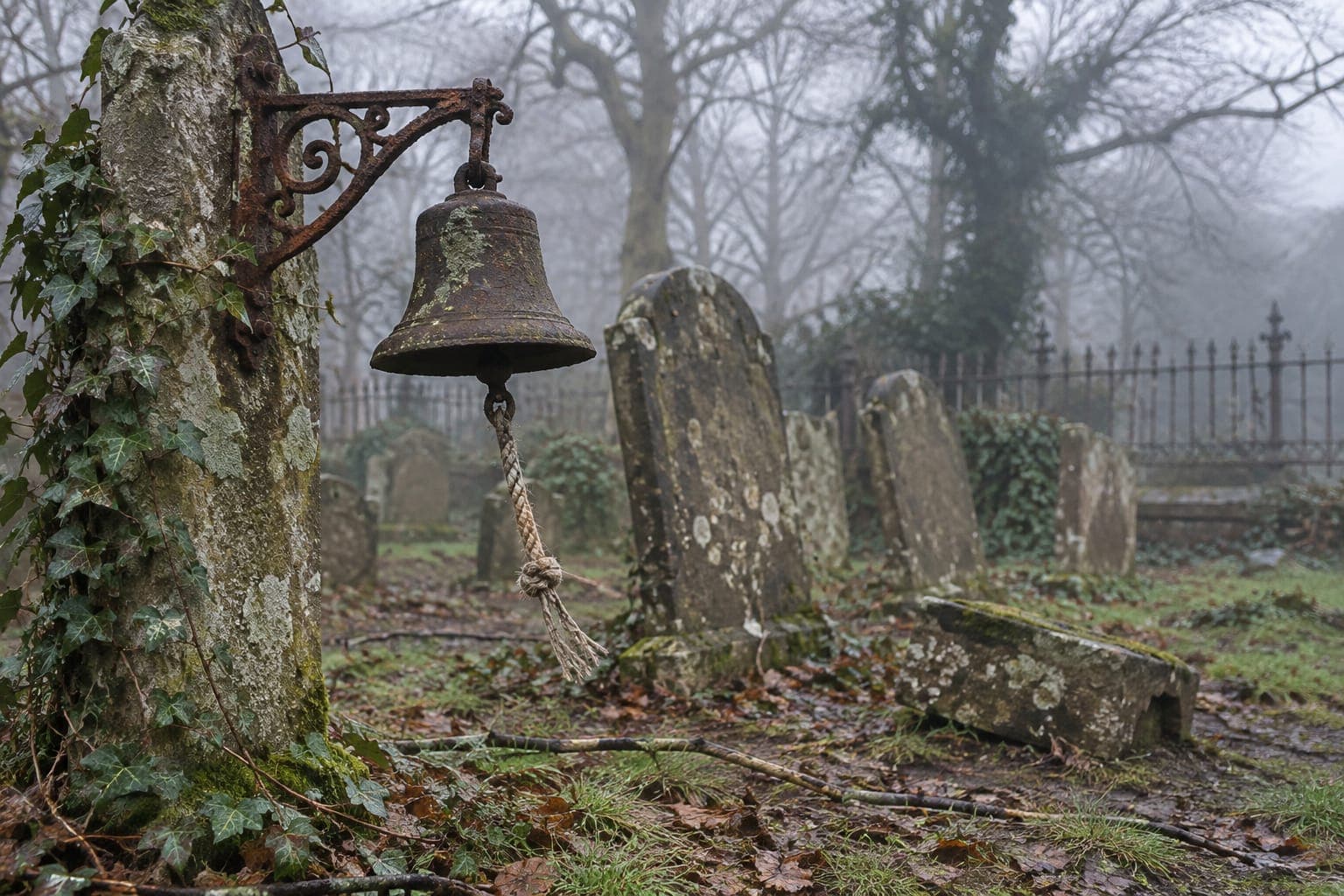
Inventors went further. Patents for "safety coffins" included tubes to the surface, flags that rose, and bells tied to the corpse's hand, so even a twitch could call for help.
In 1822, Dr. Adolf Gutsmuth designed a coffin with a tube and a bell. In 1868, Franz Vester patented a coffin with a ladder and a bell rope so the "deceased" could climb out and signal.
Some people wrote the fear into their wills. Hans Christian Andersen reportedly left a note by his bed asking to be checked, and others ordered a knife through the heart before burial.
The phrase "saved by the bell" is often tied to these coffins, but historians call that a myth. The real origin is boxing, though the coffin gadgets were real and the fear behind them was too.