Fun Facts

Trending Now

The Odd Medical Fix for Victorian 'Hysteria'

The Odd Medical Fix for Victorian 'Hysteria'

One of these Victorian hysteria treatment claims is true, the other is made up. Find out which one really happened.

Read more
The Island Where Forgetting a Birthday Breaks the Law

The Island Where Forgetting a Birthday Breaks the Law

One country wrote a very specific marriage rule into its actual legal code.

Read more
The Toothache That Ended in a Small Explosion

The Toothache That Ended in a Small Explosion

One 19th-century toothache didn't just hurt. It ended with a bang nobody saw coming.

Read more
Rome's Smile Secret Was Hiding in a Mouse Skull

Rome's Smile Secret Was Hiding in a Mouse Skull

Ancient Rome had strong opinions about oral hygiene, and one ingredient will stop you cold.

Read more
The Bizarre Plague of 1962

The Bizarre Plague of 1962

One is true, one is made up. Did a laughing epidemic really shut down schools in 1962? Find out which claim is real.

Read more
See All Content
logo
  • Sports

  • History

  • Language

  • Food

  • Tech

  • Animals

  • Sports
  • History
  • Language
  • Food
  • Tech
  • Animals
  • ​

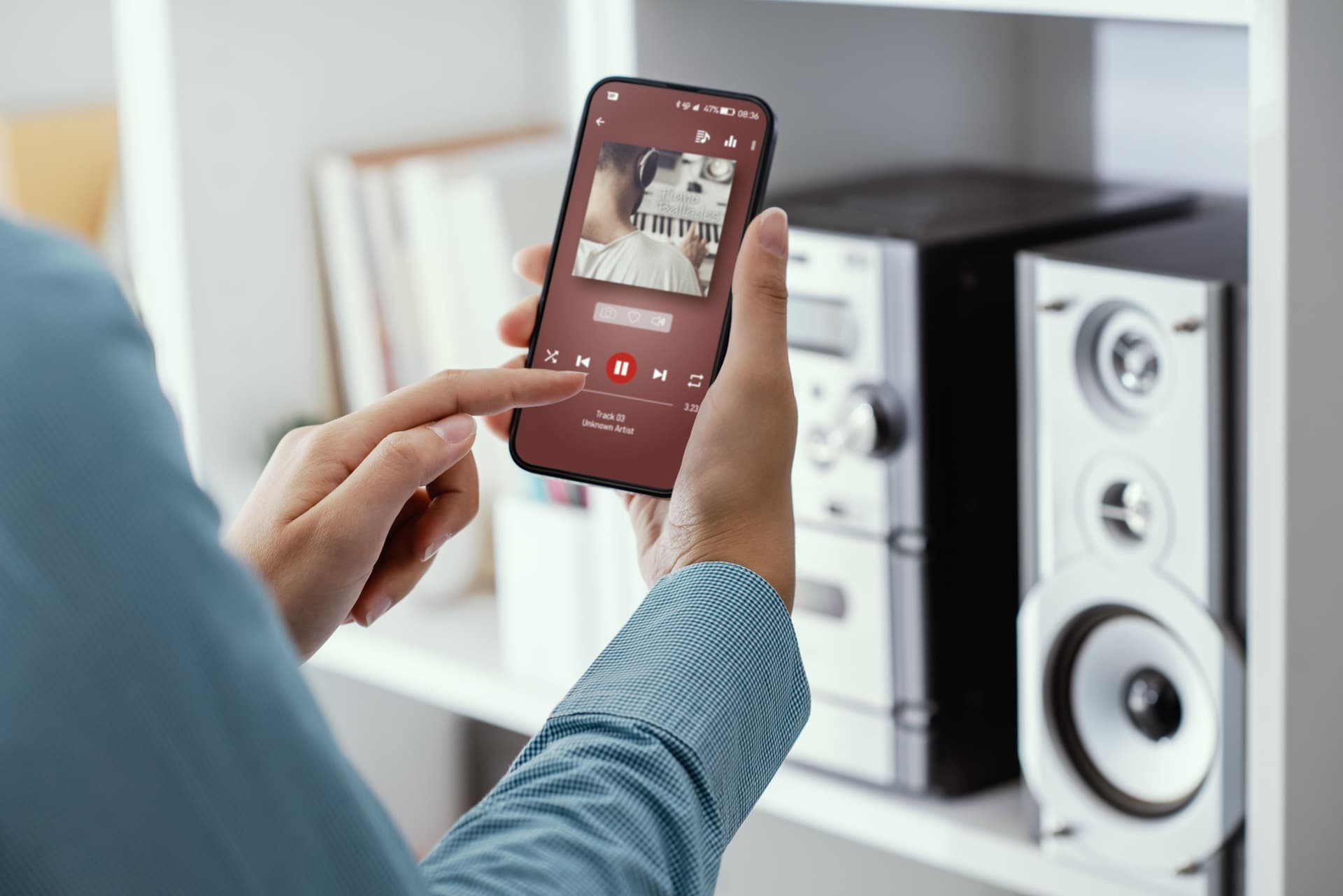
The Quiet Corporate Merger That Controls Your Music

Music streaming and record labels illustration

Every time you hit play on a song — any song — there's a very good chance the money flows to one of three companies. Not the artist. Not even a music label you've heard of. Universal Music Group, Sony Music Entertainment, and Warner Music Group collectively control over 85% of the recorded music industry in the United States. The rest of the world isn't far behind.

This didn't happen overnight. It happened across decades of carefully executed acquisitions, mergers, and buyouts — a slow corporate swallowing of virtually every independent label, music publisher, and catalog that ever built real value. Each time an indie label found success, one of the Big Three would simply buy it. The cycle has repeated itself for over 60 years.

Back in the 1950s, hundreds of independent labels competed for space on the radio dial. By the 1980s, global conglomerates with cash to burn had discovered that music rights were a gold mine. In 1987, Sony paid $2 billion for Columbia Records alone. Two years later, Dutch company PolyGram spent $500 million on A&M Records. The era of consolidation had fully arrived.

What makes the Big Three's grip uniquely powerful isn't just market share — it's copyright ownership that stretches back nearly 100 years and legally can't expire for decades more. The Beatles. Queen. Michael Jackson. Frank Sinatra. Virtually every song that shaped the 20th century sits in one of these three vaults, generating royalties forever.

For artists, the math has always been brutal. A new artist signed to a major label typically keeps only 10–16% of their recording revenue. The label pockets the rest — often 80–90% — while also retaining ownership of the master recordings. Meaning the label owns the song long after the artist stops seeing any money from it. Country legend Merle Haggard had 37 top-10 singles and 23 number-one hits, and never received a single royalty check from his major label until he left and signed with an indie.

Streaming was supposed to change things. Instead, it arguably tightened the grip. The major labels negotiated equity stakes in Spotify before it launched, ensuring that even the platform trying to disrupt them was partly owned by them. They also leverage their catalogs to force streaming platforms into favorable placement deals — ensuring their artists dominate the playlists you think are curated just for you.

Today, the Big Three still aren't done acquiring. Universal Music recently moved to purchase Downtown Music — a major services company for independent artists — for $775 million. European competition authorities launched an investigation, worried the deal would eliminate one of the last meaningful alternatives for artists trying to operate outside the Big Three's orbit.

The artists whose music moves you built their careers on their talent. But the corporations who own the rights to that music have made far more money from it than most of those artists ever will. The next time a song makes you feel something, know that the feeling was always free. The rights to it never were.


Related Content

Fun Facts

18 August 2026

Post

The Tiny Hole in Airplane Windows Isn't a Flaw

That little hole in your airplane window seat has a job most flyers never learn about....

Fun Facts

16 August 2026

Post

The Word You Just Learned Is Everywhere

Learn a new word and suddenly hear it everywhere? That loop has a name, and it's a weird one....

Fun Facts

15 August 2026

Post

Every Lowercase 'i' Is Hiding a Secret Name

That tiny dot above the letter i isn't decoration. It actually has an official name....

Fun Facts

14 August 2026

Post

The Button Millions Push That Secretly Does Nothing

That crosswalk button you always press? It might not be connected to anything at all....

Fun Facts

28 July 2026

Post

The Painting So Valuable It's Never Been Insured

The Louvre's crown jewels weren't insured when they were stolen, and its most famous painting has never been insured either....

Fun Facts

26 July 2026

Post

A Forklift Carried This Escapee to Freedom

A convicted killer escaped a maximum-security federal prison by sealing himself inside a pallet of mailbags and shipping himself out....

Fun Facts

24 July 2026

Post

How Your Hiccups Could Be the Result of Ancient Frogs

Hiccups may be a leftover reflex from ancient amphibian ancestors, and the theory explains something modern medicine still can't fully answer....

Fun Facts

22 July 2026

Post

The Fire Fighters Set on Purpose

Firefighters deliberately start new fires to fight wildfires, a real tactic where risking one fire can prevent a far bigger one....

Fun Facts

18 July 2026

Post

It's Not International Waters Putting You At Risk on a Cruise

Disney's cruise ships fly foreign flags on purpose, letting them dodge U.S. minimum wage and labor law entirely....

Fun Facts

13 July 2026

Post

The Lie Detector Loophole No Court Will Touch

Courts won't accept polygraph results as evidence, yet the CIA, FBI, and other federal agencies still require them to get hired. ...

Fun Facts

12 July 2026

Post

What's Really Hiding in Your Boarding Pass Barcode

That barcode holds far more than your seat number, and researchers have proven it can be decoded from a single photo. ...

Fun Facts

11 July 2026

Post

The Invisible Line That Sets Your Insurance Price

Two drivers with identical records can pay wildly different premiums based on nothing but their zip code. ...

Fun Facts

10 July 2026

Post

Who Really Gets Paid When a Song Blows Up

A handful of companies own the rights behind most songs on the radio, meaning artists who seem like rivals often pay the same parent company....

Fun Facts

09 July 2026

Post

Why Lottery Jackpots Aren't the Real Payout

That flashing jackpot number isn't actual cash. It's a 30-year projection, and taxes take a big bite before winners see a dime....

Fun Facts

08 July 2026

Post

The Great Legal Debate Over What's a Sandwich

Courts and tax agencies have spent real time and money deciding if a burrito, taco, or hot dog legally counts as a sandwich....
Terms and ConditionsDo Not Sell or Share My Personal InformationPrivacy PolicyPrivacy NoticeAccessibility NoticeUnsubscribe
Copyright © 2026 Fun Fact Feed