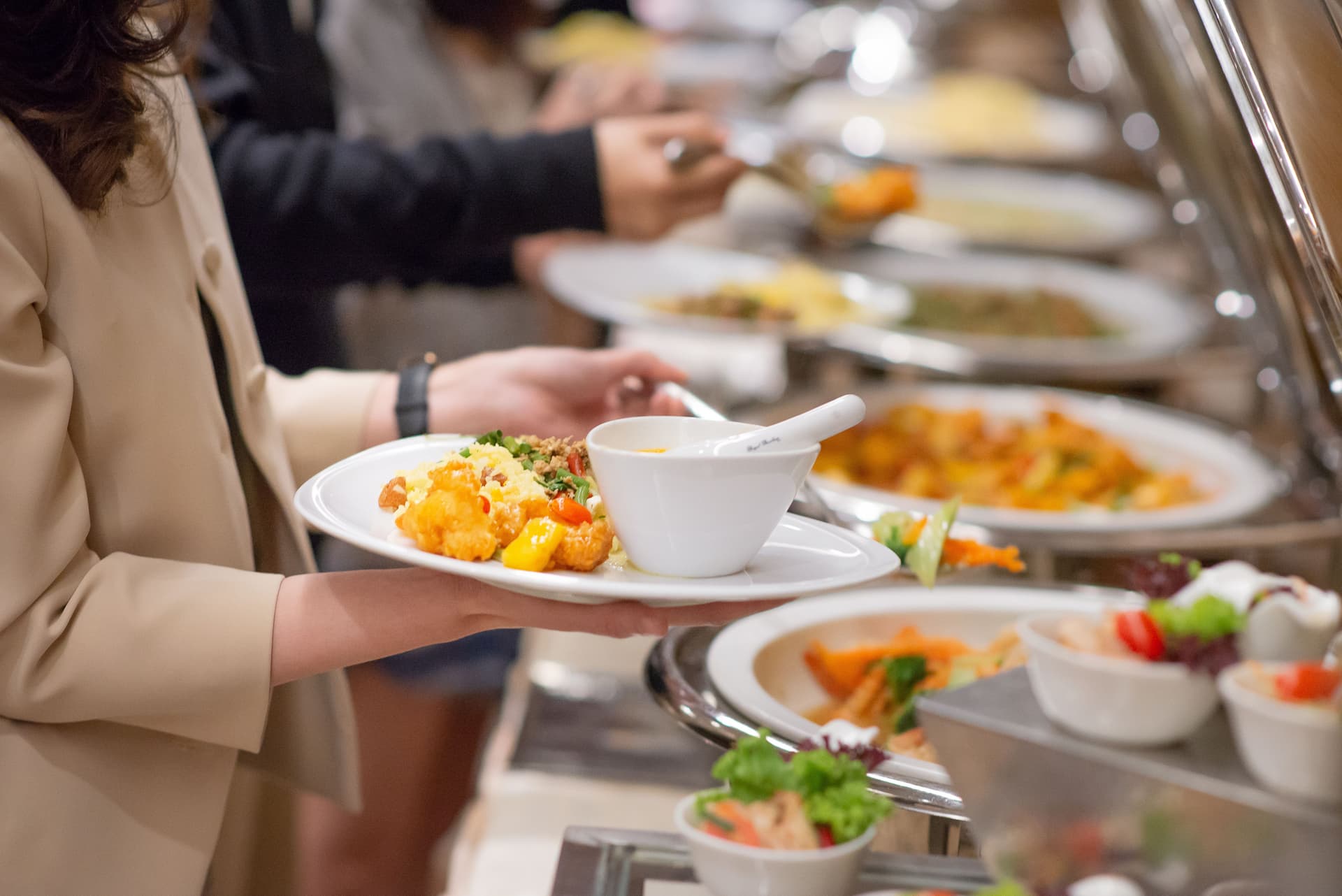
A buffet feels like the most honest dining experience there is. No menu, no upselling waiter, no portion sizes decided for you — just food, a plate, and your own choices. Except that almost every element of the environment you're standing in was designed by people who spent decades studying how to influence exactly what you eat, how much of it you take, and how long you stay.
Start with the food layout itself. Buffets place their cheapest, most filling items — bread, pasta, rice, salads — at the beginning of the line. By the time you reach the shrimp and the carved meat, your plate is already half full. This isn't accidental arrangement. Research confirms that guests are most likely to take food from the first items they encounter, with a significant portion simply taking the very first dish regardless of what it is. The buffet's opening act is doing the heavy lifting of the restaurant's food cost management.
The lighting matters more than most people realize. Bright lighting shortens meal times — people eat faster and leave sooner under harsh light. Dim, warm lighting encourages lingering, which means more trips to the food stations and more overall consumption. Buffets that want you to stay and eat more lean toward lower, warmer light. The ambiance isn't there to make you feel comfortable as a courtesy — it's there to keep you at the table longer.
Temperature is another invisible lever. Cooler room temperatures increase appetite — the body instinctively wants to consume more calories when it senses cold, a vestigial response from an era when cold meant scarcity. Buffets tend to run slightly cool, which nudges consumption upward without a single word being spoken.
Staff behavior is part of the architecture too. Attentive servers who quickly clear empty plates are trained to do so specifically because removing the evidence of what you've already eaten encourages you to go back for more. When the physical reminder of your previous portions disappears, so does your mental accounting of how much you've consumed. The table resets, and so does your perception of how much room you have left.
Color psychology plays a role at the table as well. Red and yellow — the colors of virtually every major fast food brand — are documented appetite stimulants. They increase hunger, speed up eating, and encourage spending. Meanwhile, research from Oxford's Charles Spence has found that the color of your plate and tableware affects both how much you eat and how food actually tastes — white plates enhance sweetness, angular black plates bring out savory notes, and red plates tend to reduce consumption.
The food itself is engineered too. Buffet staples are typically what food scientists call "hyperpalatable" — optimized combinations of fat, sugar, and salt that are specifically calibrated to be difficult to stop eating. These aren't happy accidents of cooking. They're formulas refined over decades to hit the brain's reward system as reliably as possible.
None of this means a buffet can't be a genuinely enjoyable meal. But the feeling of freedom and abundance that makes buffets appealing is, in large part, a designed experience. Every choice you think you're making independently has been anticipated, studied, and optimized by someone who ate dinner hours before you arrived.