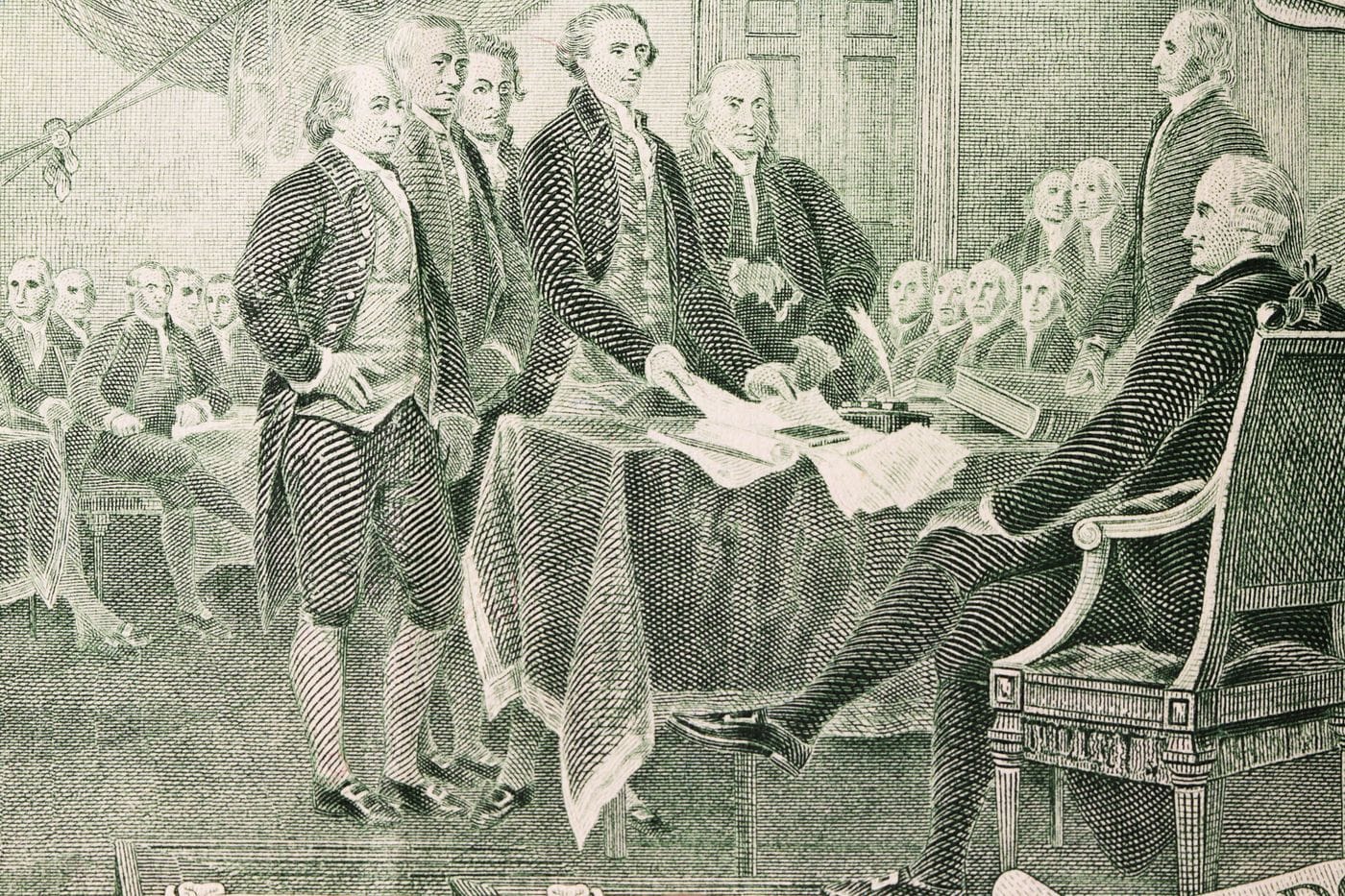
Every Fourth of July, Americans celebrate the day 56 delegates supposedly gathered and signed the Declaration of Independence. Almost none of that actually happened on July 4, 1776. What really occurred that day was a vote, not a signing ceremony.
On July 4, Congress only approved the text of the Declaration. The signed version most people picture didn't exist yet, because Congress hadn't even ordered a formal copy to be made. That order didn't come until July 19, more than two weeks later.
That formal copy, known as the engrossed version, had to be hand-copied onto parchment in large, careful lettering before anyone could sign it. The overwhelming majority of signatures were actually added on August 2, 1776, a full month after the date everyone celebrates.
Even August 2 wasn't the finish line. Several delegates weren't in Philadelphia that day and had to sign whenever they next showed up, some as late as the following November. One delegate, Matthew Thornton of New Hampshire, wasn't even elected to Congress until after July 4, yet still insisted on adding his name.
The very last signature is where things get strange. Historians believe Thomas McKean of Delaware may not have signed until sometime after January 1777, based on his name being left off an official printed list of signers distributed that same month.
So why does everyone remember July 4? Thomas Jefferson, Benjamin Franklin, and John Adams all later wrote, incorrectly, that the signing happened on the day the Declaration was adopted. Their accounts were widely trusted, and the mistaken date simply stuck.
It gets even messier. John Adams personally believed the real independence date should be July 2, the day Congress actually voted to break from Britain, and reportedly refused to celebrate on the 4th for the rest of his life out of principle.