


Fun Facts

Recent Content

The Secret Formula That Controls Your Financial Life

The Secret Formula That Controls Your Financial Life

A private company's secret algorithm decides if you get a house, a car, or a loan — and almost nobody knows exactly how it works.

Read more
This Country Had No Government for 589 Days — and Nobody Cared

This Country Had No Government for 589 Days — and Nobody Cared

Belgium went 589 days without an elected government — and life barely changed. No chaos, no collapse. Just street parties and free beer.

Read more
How Big Water Made Tap Water the Enemy

How Big Water Made Tap Water the Enemy

The bottled water industry spent billions convincing you tap water is dangerous. The truth about what's actually in that bottle will shock you.

Read more
The Dark and Bloody Origin of the Teddy Bear

The Dark and Bloody Origin of the Teddy Bear

The world's most beloved children's toy was born from a brutal hunting trip, a political cartoon, and a bear that was clubbed unconscious and tied to a tree.

Read more
The Disturbing Truth About How Memory Actually Works

The Disturbing Truth About How Memory Actually Works

Researchers have successfully implanted entirely false memories into real people's minds. The scary part? The subjects were completely convinced they were real.

Read more
See All Content

The Drug You've Been Taking Every Day Since Childhood

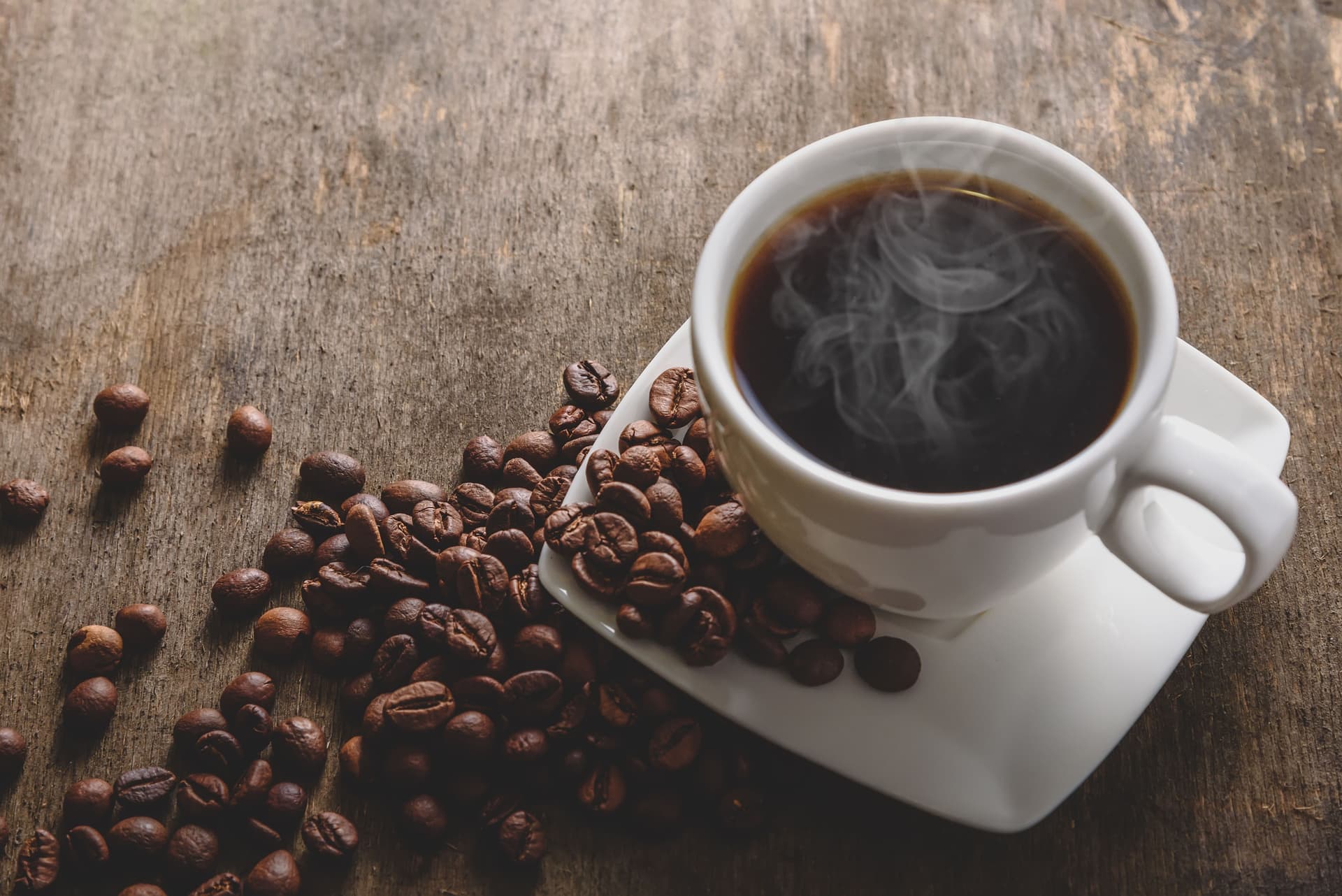
Close up of coffee cup with steam

Caffeine is the most widely consumed psychoactive drug on the planet. It alters brain chemistry, produces physical dependence, and causes a documented withdrawal syndrome when stopped. It is also freely available to children, sold in elementary school vending machines, and considered so normal that most people don't think of it as a drug at all. Which is exactly what makes it so fascinating.

Here's what caffeine is actually doing in your brain. Your body produces a molecule called adenosine throughout the day — a byproduct of cellular activity that gradually accumulates and binds to receptors in the brain, producing increasing feelings of tiredness. Caffeine works by physically blocking those receptors. It doesn't give you energy. It hides the signal that tells you you're tired — while the adenosine keeps building up behind the blockade.

When the caffeine wears off, all that accumulated adenosine floods the now-unblocked receptors at once. This is the crash. You're not more tired than you would have been without the coffee — you're experiencing the tiredness that was being masked, arriving all at once. The caffeine didn't restore your energy. It borrowed against it.

Regular caffeine consumption causes the brain to adapt by growing more adenosine receptors — a compensatory response to having so many of them blocked so often. This is why regular coffee drinkers need more caffeine over time just to feel normal, and why stopping feels so awful. Without caffeine, all those extra receptors are suddenly unblocked and flooded simultaneously. The headaches, fatigue, and irritability of caffeine withdrawal are a direct result of a brain that has physically restructured itself around the drug.

The American Psychiatric Association formally recognizes caffeine withdrawal as a clinical condition. Symptoms include severe headache, fatigue, difficulty concentrating, depressed mood, and flu-like symptoms — all of which typically peak within 20 to 51 hours of stopping and can last up to nine days. For a substance most people don't consider a drug, the withdrawal profile is remarkably consistent with ones that are.

What makes this particularly interesting is the question of tolerance. A non-caffeine user who drinks a single cup of coffee will experience a significant stimulant effect. A regular drinker consuming the same amount experiences almost none — they're simply offsetting withdrawal. The entire perceived "boost" that most daily coffee drinkers feel in the morning is largely the relief of dependence, not the enhancement of baseline function.

None of this means caffeine is dangerous — the research on moderate consumption is generally positive, with links to reduced risk of several diseases. But there's a meaningful difference between a substance being relatively safe and a substance not being a drug. Caffeine is genuinely psychoactive, genuinely addictive by any clinical definition, and genuinely capable of producing physical dependence in regular users.

The morning coffee that feels like it "wakes you up" is, for most daily drinkers, doing something far more specific: it's relieving the withdrawal from yesterday's coffee. The energy was never really there. You were just paying back a debt you didn't know you'd taken out.


Related Content

Fun Facts

05 March 2026

Post

This Country Had No Government for 589 Days — and Nobody Cared

Belgium went 589 days without an elected government — and life barely changed. No chaos, no collapse. Just street parties and free beer....

Fun Facts

06 March 2026

Post

How Big Water Made Tap Water the Enemy

The bottled water industry spent billions convincing you tap water is dangerous. The truth about what's actually in that bottle will shock you....

Fun Facts

08 March 2026

Post

The Disturbing Truth About How Memory Actually Works

Researchers have successfully implanted entirely false memories into real people's minds. The scary part? The subjects were completely convinced they were real....

Fun Facts

09 March 2026

Post

Why You Always Wake Up Before You Hit the Ground

That falling dream that jolts you awake every time? Your brain is doing something fascinating — and scientists have finally figured out why....

Fun Facts

10 March 2026

Post

Humans Are the Only Animals That Blush — and Nobody Knows Why

Darwin spent his entire career trying to explain why humans blush. He failed. Scientists today still can't fully explain it — and that mystery goes deep....

Fun Facts

11 March 2026

Post

Why You're Probably Terrible at Spotting Lies

The "tells" you rely on to catch liars? Science says they're mostly myths — and your lie-detection ability is barely better than a coin flip....

Fun Facts

13 March 2026

Post

The Island Where Visitors Are Legally Allowed to Be Killed

North Sentinel Island's inhabitants have rejected outside contact for 60,000 years — and the government made it legal for them to kill anyone who tries....

Fun Facts

14 March 2026

Post

Why Your Nose Runs When You Cry (Your Face Is Weirder Than You Think)

When you cry, your nose runs — but it's not what you think. Your eyes and nose share a drainage system, and the explanation is genuinely bizarre....

Fun Facts

15 March 2026

Post

How Napster Broke the Music Industry — Then Accidentally Saved It

Napster nearly destroyed the music industry. But the chaos it caused forced a digital transformation that made the industry more money than it ever made before....

Fun Facts

16 March 2026

Post

Why You Can't Remember Being a Baby (And Why the Answer Is Stranger Than You Think)

You were learning constantly as a baby — so why can't you remember any of it? The neuroscience behind childhood amnesia is far stranger than you'd expect....

Fun Facts

25 March 2026

Post

Why Eyewitness Testimony Is Basically Junk Science

Eyewitness testimony is the most persuasive evidence in court — and one of the least reliable. Science has known this for decades....

Fun Facts

26 March 2026

Post

Why Only 10% of People Are Left-Handed

Left-handers have been exactly 10% of the population for 5,000 years. The evolutionary reason why involves combat, language, and the brain....

Fun Facts

24 March 2026

Post

What Happens When You Never Sleep (It's Worse Than You Think)

Scientists have known sleep deprivation kills for over a century. What they couldn't explain was why — and that search changed neuroscience....

Fun Facts

22 March 2026

Post

The Factory Where Dozens Got Sick From Absolutely Nothing

In 1962, factory workers collapsed with real symptoms and no physical cause. What happened reveals something remarkable about the human mind....

Fun Facts

21 March 2026

Post

Why Your Brain Can't Stop Doomscrolling (And Who's Exploiting It)

Doomscrolling isn't a willpower problem. Your brain's survival instincts are being deliberately exploited — and the people behind it knew it....
Terms and ConditionsDo Not Sell or Share My Personal InformationPrivacy PolicyPrivacy NoticeAccessibility NoticeUnsubscribe
Copyright © 2026 Fun Fact Feed