Fun Facts

Trending Now

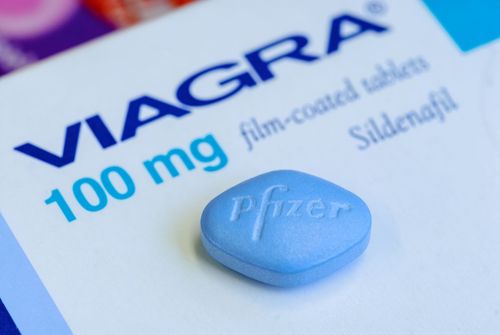
Viagra Facts: A Heart Drug, Blue Vision and Hamsters

Viagra Facts: A Heart Drug, Blue Vision and Hamsters

Why Viagra began as a heart drug, how it can tint your vision blue and why the FAA cares, and the hamster jet lag study that won an Ig Nobel Prize.

Read more
Cannibalism: 3 True Stories You Won't Believe

Cannibalism: 3 True Stories You Won't Believe

Which state bans cannibalism, why the CDC warned about placenta pills, and how a tribe's funeral ritual may have left a gene that fights brain disease.

Read more
The Laughing Sickness That Shut Down Schools

The Laughing Sickness That Shut Down Schools

In 1962, three schoolgirls started laughing and a whole region couldn't stop. Nobody was joking.

Read more
The Surprising Origin of the Movie Trailer

The Surprising Origin of the Movie Trailer

One of these claims about the first movie trailer is true, and one is completely made up. Can you guess which one really happened?

Read more
Your Latte Art Is Named After a Monk's Hood

Your Latte Art Is Named After a Monk's Hood

A Sunday coffee order shares its name with a monk's wardrobe and a monkey. Here's the link.

Read more
See All Content
logo
  • Sports

  • History

  • Language

  • Food

  • Tech

  • Animals

  • Sports
  • History
  • Language
  • Food
  • Tech
  • Animals
  • ​

The Brain Parasite That Half the World is Carrying

You might be walking around right now with a microscopic hitchhiker in your brain—and you'd never know it. Toxoplasma gondii is a single-celled parasite that infects an estimated 30-50% of the global population, and it doesn't just sit quietly in your system. This tiny organism has the ability to literally rewire mammalian brains to serve its own reproductive agenda.

Here's where it gets disturbing: T. gondii can only sexually reproduce inside cats, so when it infects rodents, it hijacks their neural pathways and removes their natural fear of cats. Infected mice are actually attracted to cat urine—essentially programming them to walk straight into the jaws of predators. The parasite achieves this by forming microscopic cysts in the brain's amygdala, the region responsible for processing fear and emotion.

Once the mouse is eaten, the parasite completes its lifecycle inside the cat and spreads through feces, starting the cycle again. It's one of nature's most sophisticated examples of parasitic mind control. But what about humans? You can contract T. gondii from changing cat litter, eating undercooked meat, or even gardening in contaminated soil.

Once it's in your system, it migrates to your brain and forms permanent cysts that your immune system can't eliminate. Studies have found correlations between T. gondii infection and measurable personality changes, including increased risk-taking behavior, slower reaction times, and even altered perceptions of danger. 

Research published in the journal Proceedings of the Royal Society B found that infected men showed reduced fear responses and infected women demonstrated increased warmth and outgoing behavior. Some research suggests infected people rate the smell of cat urine as less unpleasant than uninfected individuals.

The implications get even more unsettling. Multiple studies have found significantly higher rates of T. gondii infection in people diagnosed with schizophrenia, and some researchers believe the parasite may contribute to mood disorders, increased anxiety, and even suicidal behavior. A 2015 study found that women infected with T. gondii were 1.5 times more likely to attempt suicide compared to uninfected women.

While most healthy people show no obvious symptoms, scientists continue to discover new ways this parasite influences human neurology. The parasite produces an enzyme that increases dopamine production in the brain, potentially explaining some of these behavioral changes. Perhaps most disturbing of all? Once you're infected, you're infected for life.

The cysts remain dormant in your brain indefinitely, and there's currently no cure that can eliminate them completely. For people with healthy immune systems, the parasite usually remains dormant—but if your immune system becomes compromised, those cysts can reactivate with potentially fatal consequences. The question isn't whether it affects human behavior—it's how much, and whether we're only beginning to understand its influence.

Related Content

History Facts

Fun Facts

10 November 2026

Post

Viagra Facts: A Heart Drug, Blue Vision and Hamsters

Why Viagra began as a heart drug, how it can tint your vision blue and why the FAA cares, and the hamster jet lag study that won an Ig Nobel Prize....

History Facts

Fun Facts

09 November 2026

Post

Cannibalism: 3 True Stories You Won't Believe

Which state bans cannibalism, why the CDC warned about placenta pills, and how a tribe's funeral ritual may have left a gene that fights brain disease....

History Facts

Fun Facts

09 November 2026

Post

The Laughing Sickness That Shut Down Schools

In 1962, three schoolgirls started laughing and a whole region couldn't stop. Nobody was joking....

History Facts

Fun Facts

09 November 2026

Post

The Surprising Origin of the Movie Trailer

One of these claims about the first movie trailer is true, and one is completely made up. Can you guess which one really happened?...

Language Facts

Fun Facts

08 November 2026

Post

Your Latte Art Is Named After a Monk's Hood

A Sunday coffee order shares its name with a monk's wardrobe and a monkey. Here's the link....

Tech Facts

Fun Facts

08 November 2026

Post

How NASA Sends Tools to Astronauts in Orbit

One of these claims about NASA and tools for astronauts is true, and one is completely made up. Can you guess which one really happened?...

History Facts

Fun Facts

08 November 2026

Post

Tattoos: The Iceman, Ink in Your Nodes (+1 More)

Ötzi's 5,300-year-old tattoos, where your tattoo ink really travels in your body, and the company that frames a dead loved one's actual tattooed skin....

History Facts

Fun Facts

07 November 2026

Post

The Taboo Word That Broke Through Ad Breaks

One of these claims about a taboo word in a 1980s TV commercial is true, and one is completely made up. Can you guess which one really happened?...

Sports Facts

Fun Facts

07 November 2026

Post

Why a Marathon Is Exactly 26.2 Miles Long

The odd number behind every marathon traces back to one summer day in London. Here's how it happened....

History Facts

Fun Facts

07 November 2026

Post

Starbucks Secrets: Pequod, the CIA and Fecal Ice

The Moby-Dick name Starbucks almost used, the secret store inside CIA headquarters and the 2017 UK investigation that found fecal bacteria in coffee shop ice....

History Facts

Fun Facts

06 November 2026

Post

Lobotomies: 3 True Stories That Sound Made Up

How lobotomies won a Nobel Prize, why a 12-year-old was operated on for being a kid, and the secret Kennedy family surgery that was hidden for decades....

Food

Fun Facts

06 November 2026

Post

The Curious Case of How Spam Got Its Name

One of these claims about how Spam got its name is true, and one is completely made up. Can you guess which one really happened?...

Language Facts

Fun Facts

06 November 2026

Post

A Frustrated Author, a Word List, and a Hat

A famous children's book began as a publisher's headache. The author hated the assignment....

Food

Fun Facts

05 November 2026

Post

The Sweet Secret Behind a Sitcom Kitchen Table

One of these claims about a famous sitcom's kitchen-table dessert is true, and one isn't. Can you guess which behind-the-scenes story really happened?...

History Facts

Fun Facts

05 November 2026

Post

The Lottery Was Rigged: 3 Wild True Stories

A fortune cookie that picked 110 winners, a live TV drawing rigged to hit 666 and the security director who rigged jackpots: three true lottery scandals....
Terms and ConditionsDo Not Sell or Share My Personal InformationPrivacy PolicyPrivacy NoticeAccessibility NoticeUnsubscribe
Copyright © 2026 Fun Fact Feed