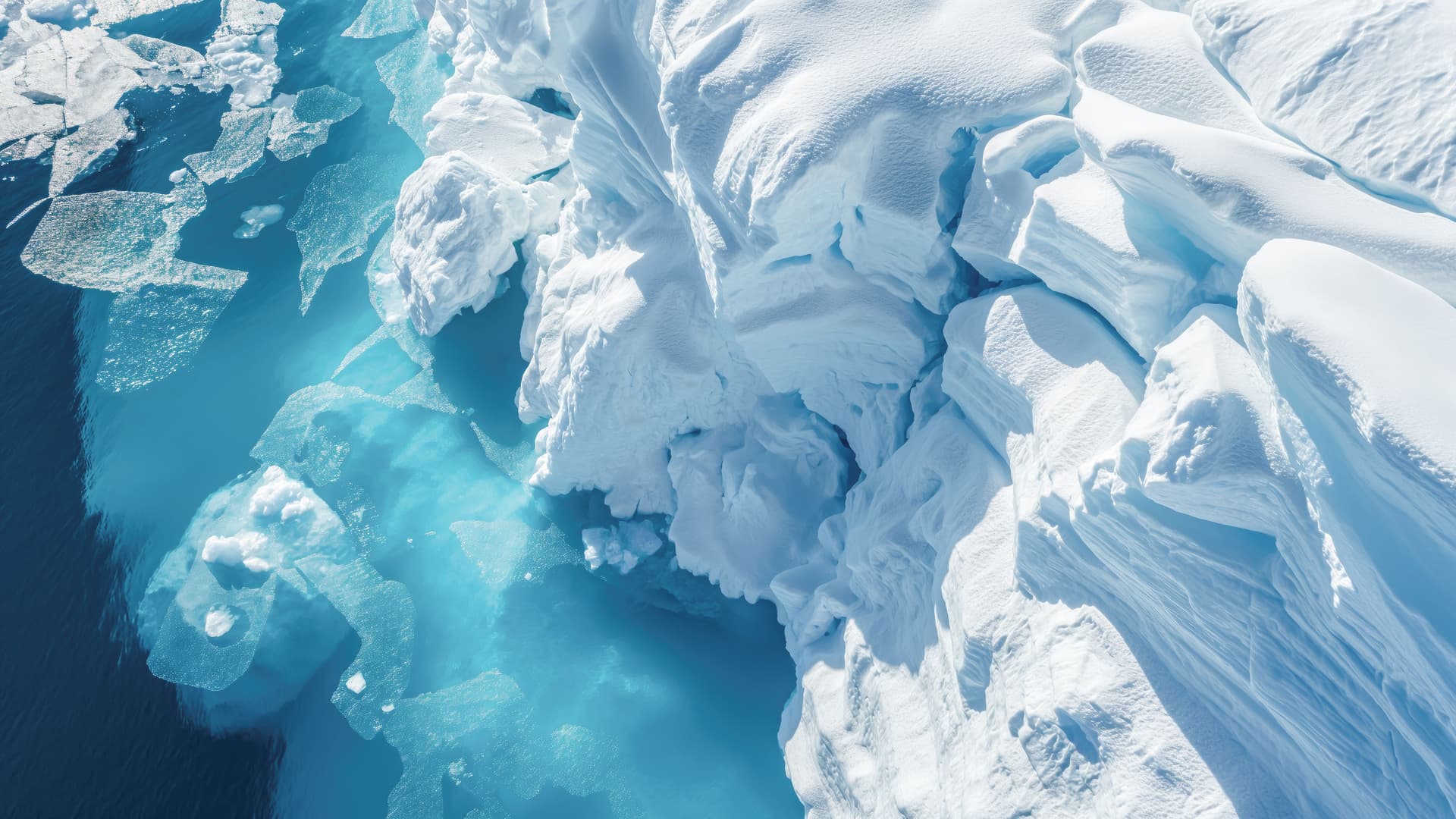
Antarctica is the fifth-largest continent on Earth. It contains roughly 70% of the world's fresh water. It sits on top of mineral deposits that haven't been fully mapped. And it belongs, legally, to no one — governed instead by one of the most unusual international agreements ever written, which is now showing signs of strain for the first time in its history.
Seven countries — Argentina, Australia, Chile, France, New Zealand, Norway, and the United Kingdom — had active territorial claims to parts of Antarctica before 1959. Several of those claims overlapped, creating competing assertions over the same ice. Britain, Argentina, and Chile all claimed the same peninsula simultaneously. In 1952, Argentine soldiers fired warning shots at a group of British personnel. A war over Antarctica was not an unreasonable thing to fear.
The Antarctic Treaty of 1959 was the solution — and it was a genuinely remarkable piece of diplomacy. Twelve nations, including Cold War adversaries the United States and Soviet Union, agreed to set aside all territorial claims and designate Antarctica as a zone for peaceful scientific research only. No military activity. No nuclear testing. No resource extraction. No new territorial claims. The existing claims weren't canceled — they were simply frozen, suspended indefinitely while the treaty remained in force.
For over sixty years, it worked. Antarctica became one of the most cooperative places on Earth — a continent where scientists from rival nations share data, share facilities, and work alongside each other in conditions that require collaboration to survive. The treaty has been called the first arms control agreement of the Cold War, and one of the most successful international agreements ever negotiated.
But the world that produced the treaty in 1959 no longer exists. China, which wasn't part of the original agreement, has quietly become one of the most active presences on the continent — building research stations, expanding operations, and accumulating the kind of established presence that, historically, has preceded territorial claims. China has not made any claim. It doesn't need to yet.
Meanwhile, climate change is transforming Antarctica itself. As ice retreats, previously inaccessible areas are opening up — and with them, questions about what lies beneath. The treaty prohibits resource extraction, but that prohibition was always understood to be temporary. A 1991 protocol extended the mining ban for fifty years, meaning it comes up for review in 2048. What happens when the ice that made extraction impractical starts to disappear?
Tourism is adding another layer of pressure. Nearly 80,000 visitors traveled to Antarctica in the 2019-2020 season — a number that has grown dramatically and brings with it environmental risks the treaty was never designed to manage. The original twelve signatories are now fifty-four parties, many with competing interests and no shared sense of obligation to the original framework.
The Antarctic Treaty remains in force and the continent remains at peace. But the conditions that made the agreement possible — the Cold War framework, the technological barriers to resource extraction, the remoteness that kept most of the world indifferent — are quietly disappearing. Antarctica is still governed by a 1959 agreement between twelve nations about a continent that now has fifty-four parties, significant resources, and a warming climate. The ice isn't the only thing that's starting to melt.