Animal Facts

Recent Content

The Secret Formula That Controls Your Financial Life

The Secret Formula That Controls Your Financial Life

A private company's secret algorithm decides if you get a house, a car, or a loan — and almost nobody knows exactly how it works.

Read more
This Country Had No Government for 589 Days — and Nobody Cared

This Country Had No Government for 589 Days — and Nobody Cared

Belgium went 589 days without an elected government — and life barely changed. No chaos, no collapse. Just street parties and free beer.

Read more
How Big Water Made Tap Water the Enemy

How Big Water Made Tap Water the Enemy

The bottled water industry spent billions convincing you tap water is dangerous. The truth about what's actually in that bottle will shock you.

Read more
The Dark and Bloody Origin of the Teddy Bear

The Dark and Bloody Origin of the Teddy Bear

The world's most beloved children's toy was born from a brutal hunting trip, a political cartoon, and a bear that was clubbed unconscious and tied to a tree.

Read more
The Disturbing Truth About How Memory Actually Works

The Disturbing Truth About How Memory Actually Works

Researchers have successfully implanted entirely false memories into real people's minds. The scary part? The subjects were completely convinced they were real.

Read more
See All Content

Why Horses Sleep Standing Up — And What Happens When They Can't

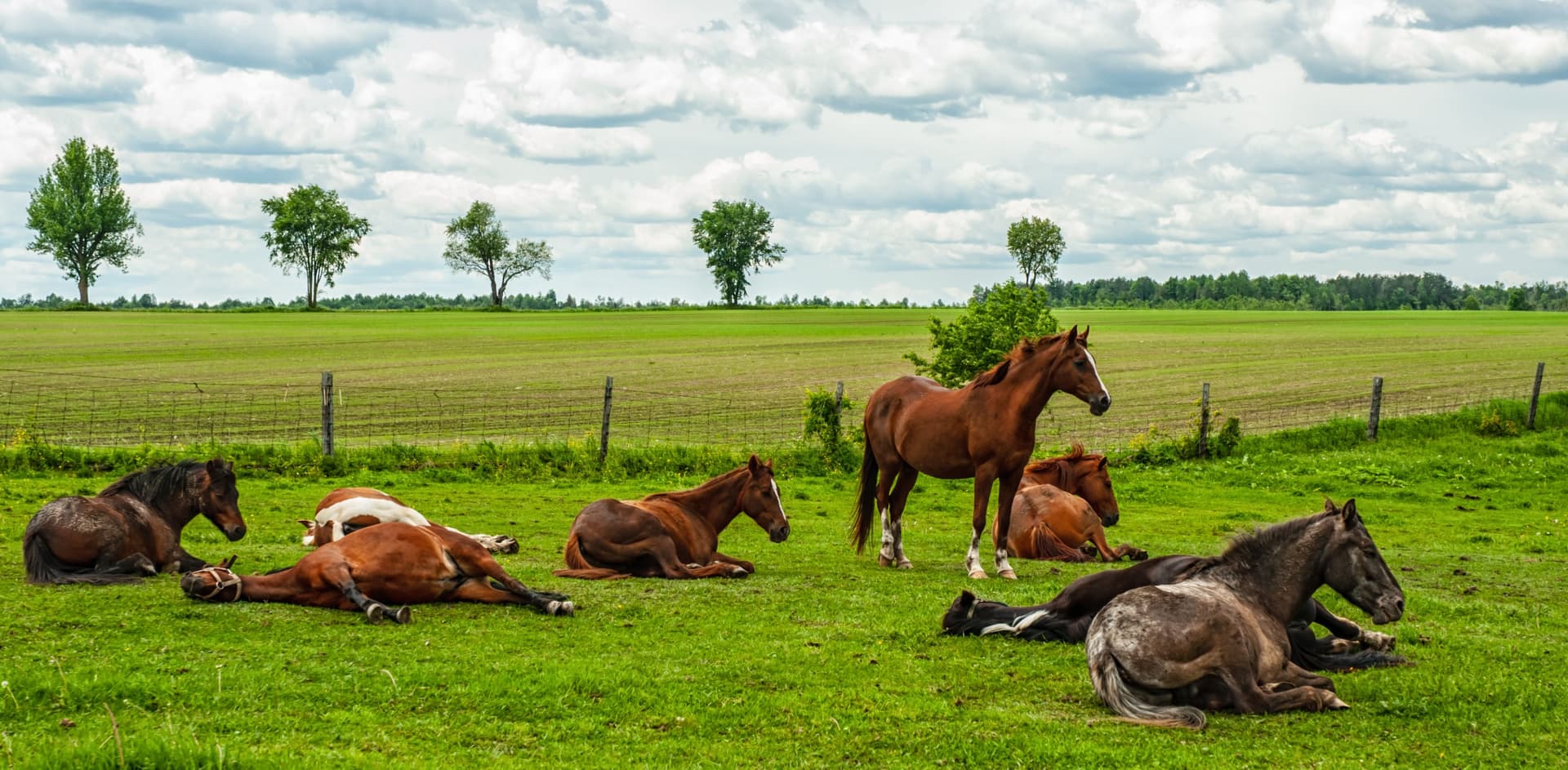
Horse resting in a field

Most people know that horses can sleep standing up. Fewer people know why — and almost nobody knows what happens when a horse doesn't get to lie down. That second part is where things get interesting.

The standing sleep is made possible by something called the stay apparatus — a system of tendons and ligaments in a horse's legs that can essentially lock the joints in place. When a horse relaxes its muscles, the stay apparatus takes over, holding the leg stable with almost no muscular effort. The horse can doze without any risk of its legs buckling. It's a passive mechanical system, not an active one — the horse isn't working to stay upright. The anatomy just holds.

This evolved for an obvious reason. Horses are prey animals. Getting up from the ground takes time — time a predator could use. Being able to rest on their feet means a horse is always just a startled second away from a full gallop. Lying down is a luxury they can only afford under the right conditions.

Here's the catch: the stay apparatus only works for light sleep. For deep, restorative REM sleep — the stage where the brain consolidates memory, repairs itself, and does the work that keeps an animal healthy — horses have to lie down completely. During REM, muscle tone disappears entirely. The stay apparatus can't compensate for that. A horse in full REM sleep is essentially paralyzed, which means it physically cannot remain standing.

So how do horses manage it? They take turns. In a herd, some horses will lie down for REM sleep while others remain standing and alert. The standing horses act as sentinels — watching for threats while the lying ones get the deep rest they need. Then they rotate. It's not random. Horses are sensitive enough to their social environment that many won't lie down at all unless they feel safe — and feeling safe often means having at least one trusted herd member standing nearby.

Horses kept in isolation, or in new and unfamiliar environments, frequently refuse to lie down. The result is a horse that gets only light sleep for days or weeks at a time — and the consequences eventually catch up. Chronic REM deprivation in horses leads to impaired performance, behavioral changes, and a genuinely alarming endpoint: a horse that is so exhausted it falls into REM sleep involuntarily while standing. When that happens, the stay apparatus can't hold against full muscle paralysis, and the horse collapses.

Horses typically need only about two to three hours of lying-down sleep per day, accumulated in short stretches of around 20 minutes each. It's a small window — but it's non-negotiable. The rest of their sleep happens upright, in light dozes scattered throughout the day and night. They are polyphasic sleepers, meaning they never consolidate their rest into one long stretch the way humans do.

The whole system is a remarkably precise solution to a very specific problem: how do you rest when resting makes you vulnerable? Horses figured it out over millions of years of evolution — a mechanical lock for light sleep, a social rotation system for deep sleep, and just enough trust in their herd to close their eyes at all.
Related Content

Animal Facts

03 April 2026

Post

This Fish Can Recognize Your Face — And Science Can't Fully Explain It

Archerfish identify human faces with 81% accuracy — despite having no neocortex and no evolutionary reason to tell humans apart....

Animal Facts

15 April 2026

Post

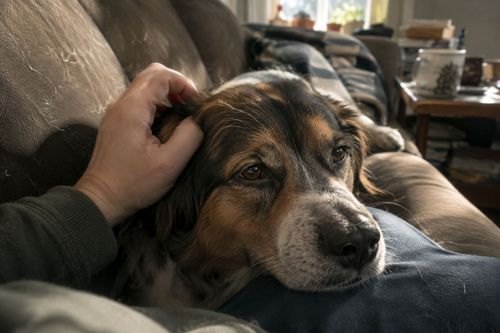
Why Dogs Tilt Their Heads

That adorable head tilt your dog does isn't just cute — science shows it's a surprisingly sophisticated act of focus, vision, and cognition....

Animal Facts

24 April 2026

Post

The Ocean's Smallest Solution to the Loneliest Problem

Sea otters floating together, paws clasped while they sleep, isn't just adorable — it's one of the most practical survival strategies in the ocean....

Animal Facts

27 April 2026

Post

The Jellyfish That Figured Out How to Cheat Death

There's a jellyfish the size of a pinky nail that can reverse its own aging and restart its life cycle. Scientists think it may never die of old age....

Animal Facts

28 April 2026

Post

Crows Remember Your Face — And They're Telling Everyone

Crows can recognize individual human faces, hold grudges for up to 17 years, and pass that information to crows who've never even met you....

Animal Facts

19 April 2026

Post

Cows Have Best Friends — and Science Can Prove It

Cows form genuine bonds with specific companions — and when those bonds are broken, the data tells a surprisingly emotional story....

Animal Facts

28 January 2026

Post

Why Dolphins Sleep with One Eye Open

Dolphins shut down half their brain at a time to sleep while staying alert. One eye stays open to watch for danger since they'd drown if fully unconscious....

Animal Facts

25 January 2026

Post

Why Horses Can't Vomit (And Why It Can Kill Them)

Horses physically cannot vomit due to a one-way valve in their stomach, and this biological quirk is one of the leading causes of death in domestic horses....

Animal Facts

23 January 2026

Post

The Immortal Lobster Myth

Lobsters don't age like other animals, leading to the myth they're immortal. They do die—but the reason is far stranger than regular aging....

Animal Facts

20 January 2026

Post

Why Crows Hold Funerals for Dead Crows

Crows gather around dead crows in what looks like funerals. Scientists discovered the real reason, and it reveals how intelligent crows actually are....

Animal Facts

18 January 2026

Post

The Strange Truth About Koala Brains

Koalas have smooth brains and can't recognize eucalyptus leaves if they're not on branches. The reason why reveals something fascinating about evolution....

Animal Facts

16 January 2026

Post

Why Woodpeckers Don't Get Concussions

Woodpeckers slam their heads at 1,200 g's without concussions. Scientists spent decades studying them for helmet designs—then discovered the shocking truth....

Animal Facts

16 December 2025

Post

Why Hippos Are Technically Airborne When They Run

2024 research revealed hippos spend 15% of their stride completely off the ground. These 4,000-pound animals are literally flying with every step....

Animal Facts

10 December 2025

Post

Why Humans Get Frostbite Easier Than Most Animals

Humans get frostbite faster than cold-adapted animals because we never evolved counter-current heat exchange systems—we're tropical animals in cold climates....

Animal Facts

13 October 2025

Post

Koalas Have Fingerprints That Could Fool Forensic Experts

Koalas have fingerprints so similar to humans that forensic experts can't tell them apart under a microscope. Here's the bizarre evolutionary reason why....
Terms and ConditionsDo Not Sell or Share My Personal InformationPrivacy PolicyPrivacy NoticeAccessibility NoticeUnsubscribe
Copyright © 2026 Fun Fact Feed