In the spring of 1933, the United States was in its fourth year of the Great Depression. Unemployment had hit 25%. Breadlines stretched around city blocks. Families across the country were going to bed hungry. And the federal government was paying farmers to destroy their food.
The program was called the Agricultural Adjustment Act, signed into law by President Franklin D. Roosevelt on May 12, 1933. The logic behind it was straightforward, if brutal: food prices had collapsed because there was too much supply and not enough people who could afford to buy it. The solution, as the government saw it, was to artificially reduce supply until prices recovered and farmers could stay solvent. What followed was one of the most politically damaging spectacles of the New Deal era.
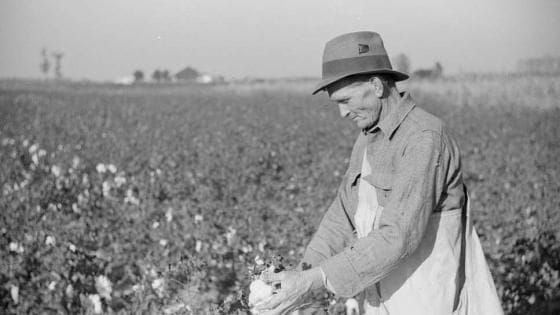
Across the South, one million farmers were paid to plow under 10.4 million acres of already-planted cotton. Fields that had been tended for months were destroyed before harvest. In Nebraska alone, the government bought and killed nearly 470,000 cattle and 438,000 pigs. Nationwide, the number of hogs slaughtered under the program reached six million. Thousands were shot and buried in massive pits. The meat, in most cases, was wasted.
The public reaction was immediate and volcanic. Newspapers ran photographs of piglets being buried while families in the same state went without food. Critics accused Roosevelt of manufacturing scarcity in the middle of a humanitarian crisis. Secretary of Agriculture Henry Wallace, who oversaw the program, later called it "a shocking commentary on our civilization" — though he had designed and implemented it himself. He defended it as a necessary evil, a cleanup of the economic wreckage left by decades of overproduction.
The optics were so catastrophic that the program was almost immediately forced to change course. By the fall of 1933, the government established the Federal Surplus Relief Corporation, which shifted the approach: instead of destroying excess food, the government would purchase it and distribute it directly to the hungry. It was a grudging acknowledgment that the original policy had been morally untenable.
The outrage didn't stop there. The contradiction at the heart of the program — a government destroying food while its citizens starved — created sustained political pressure that lawmakers couldn't ignore. By 1939, that pressure had produced the first federal food stamp program, which allowed low-income Americans to purchase surplus food at subsidized prices. The program fed 20 million people before it was discontinued in 1943, and was revived permanently in the 1960s.
The agricultural economics behind the AAA were not entirely wrong. Farm income did increase. Cotton prices doubled within three years. Farmers who had been facing bankruptcy were stabilized. But the program achieved its economic goals by deliberately creating hunger in a country that was already starving — and the government knew it while it was happening.
The food stamp program that exists today — now called SNAP, serving over 40 million Americans — traces its direct origin to the political fallout from six million dead pigs and ten million plowed-under acres. The largest food assistance program in American history was born specifically because the government's solution to an economic crisis was to destroy food while people went hungry — and enough people were angry enough about it that something eventually had to change.