
Fun Facts

Trending Now

The Galápagos Bird With a Taste for Blood

The Galápagos Bird With a Taste for Blood

On a remote island, a tiny songbird has picked up a habit that sounds like pure fiction.

Read more
Belleville Has a Halloween Age Limit, and Teens Are Wanted

Belleville Has a Halloween Age Limit, and Teens Are Wanted

One Illinois city wrote a Halloween rule that targets kids past a certain grade. Here's the catch.

Read more
The Poltergeist Pool Scene's Spooky Secret

The Poltergeist Pool Scene's Spooky Secret

One of these claims about the famous Poltergeist pool scene is true, and one isn't. Can you guess which behind-the-scenes story really happened?

Read more
Why Do Some People Sneeze at the Sun? (And 2 Wilder Facts)

Why Do Some People Sneeze at the Sun? (And 2 Wilder Facts)

The oldest kiss on record is 4,500 years old. Plus what one kiss really swaps and the year a king made kissing illegal.

Read more
The Squirrel Brain Stat That Gets Repeated Everywhere

The Squirrel Brain Stat That Gets Repeated Everywhere

A popular claim says squirrel brains swell every fall. The real story has a few twists.

Read more
See All Content
logo
  • Sports

  • History

  • Language

  • Food

  • Tech

  • Animals

  • Sports
  • History
  • Language
  • Food
  • Tech
  • Animals
  • ​

The Science Behind Why Rain Smells So Good

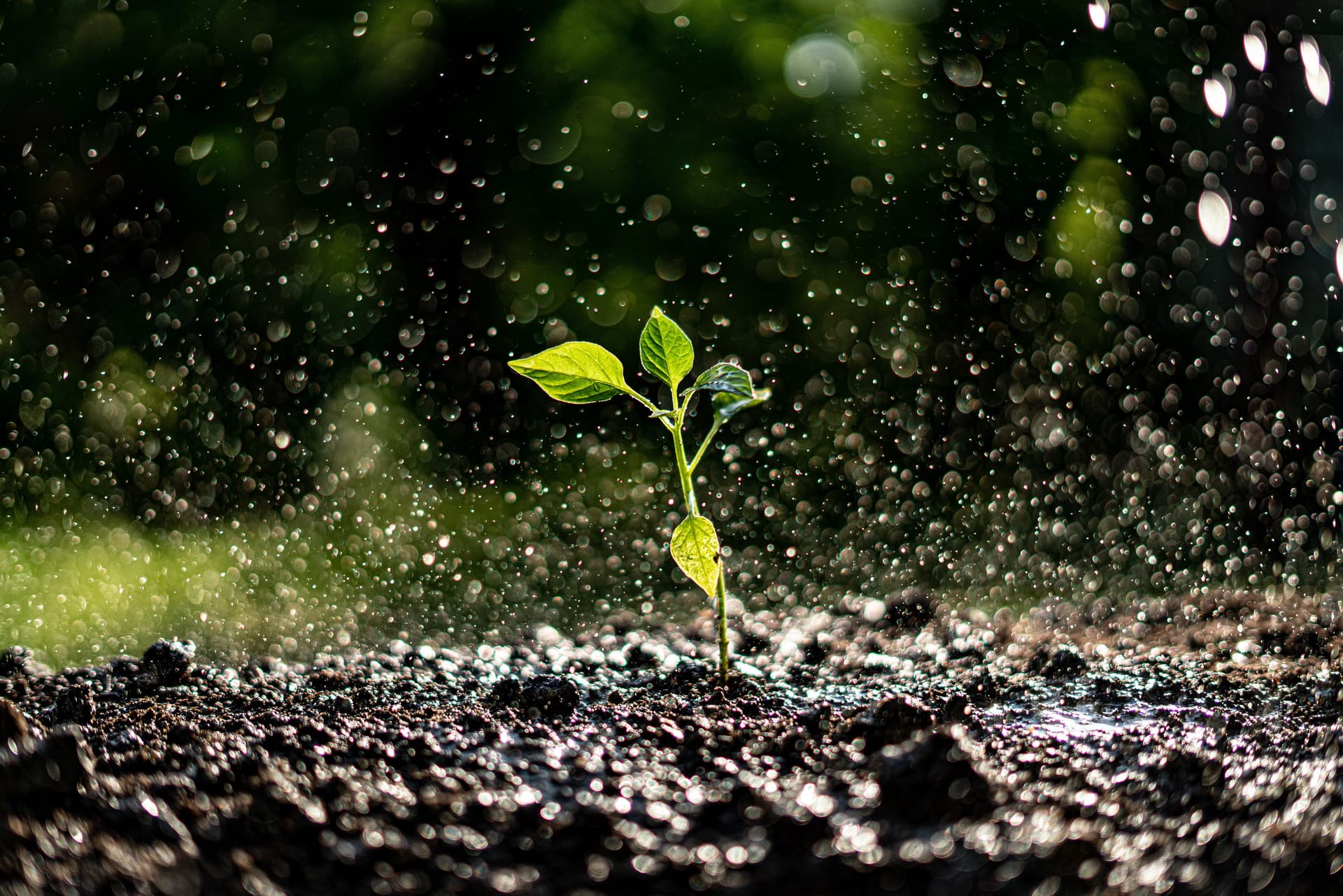
Rain falling on dry earth close up

There is a specific smell that arrives just before or just after rain — earthy, clean, and almost universally loved. Most people have experienced it hundreds of times without knowing what it's called, where it comes from, or why their brain responds to it the way it does. The answers to all three questions turn out to be far more interesting than the smell itself.

The scent is called petrichor — a word coined in 1964 by two Australian researchers, combining the Greek words for "stone" and "ichor," the fluid said to flow through the veins of the gods. Its primary chemical component is a compound called geosmin, produced by a common genus of soil bacteria called Streptomyces. These bacteria live in dirt everywhere on Earth, quietly breaking down organic matter. When rain hits dry soil and disturbs it, geosmin gets released into the air — and your nose picks it up almost immediately.

How immediately is the remarkable part. Humans can detect geosmin at concentrations as low as five parts per trillion — making it one of the most potent sensory triggers in the human olfactory system. For context, that's roughly equivalent to detecting a single drop in twenty Olympic swimming pools. We are extraordinarily sensitive to this smell in a way that suggests it wasn't accidental.

For decades, scientists couldn't explain why Streptomyces produced geosmin at all. Every member of the genus makes it — which strongly suggested an evolutionary purpose — but nobody could identify what that purpose was. The answer, published in 2020, turned out to involve a relationship half a billion years in the making.

Researchers discovered that geosmin specifically attracts tiny soil-dwelling arthropods called springtails. The springtails are drawn to Streptomyces as a food source — and when they arrive and feed, they pick up the bacteria's spores on their bodies and in their digestive tracts, then carry them to new locations as they move through the soil. The bacteria produce geosmin as a chemical signal to attract their own delivery service. The smell of rain is, at its core, bacterial advertising — a 500-million-year-old system for spreading spores.

This explains why petrichor is strongest when the first rain hits dry earth, and weakest in prolonged wet conditions. As soil dries out, the bacteria go dormant and release a flush of geosmin — a signal that essentially says "we're here, come find us" to anything that might help distribute their spores. The rain activating that signal is almost incidental. The message was already waiting.

The human sensitivity to geosmin likely has its own evolutionary story. The leading theory is that our ancestors used the scent of rain on dry earth as a signal for approaching water and fertile soil — a survival cue that our brains still respond to today, long after we stopped needing to locate water sources by smell. It may explain why the smell feels so instinctively good. It once meant something urgent.

There's one final twist. We love the smell of geosmin in the air — but we find it repulsive in water. The same compound that makes a rainy day smell like relief is the primary cause of the musty, "tastes like a lake" quality of contaminated drinking water. The brain treats it as a warning when it's dissolved in something we're about to drink, and as a pleasure when it's drifting through the air. The exact same molecule. Completely opposite reactions. Which says something interesting about how much of what we experience as aesthetic is really just ancient survival logic wearing a different coat.


Related Content

Fun Facts

18 August 2026

Post

The Tiny Hole in Airplane Windows Isn't a Flaw

That little hole in your airplane window seat has a job most flyers never learn about....

Fun Facts

16 August 2026

Post

The Word You Just Learned Is Everywhere

Learn a new word and suddenly hear it everywhere? That loop has a name, and it's a weird one....

Fun Facts

15 August 2026

Post

Every Lowercase 'i' Is Hiding a Secret Name

That tiny dot above the letter i isn't decoration. It actually has an official name....

Fun Facts

14 August 2026

Post

The Button Millions Push That Secretly Does Nothing

That crosswalk button you always press? It might not be connected to anything at all....

Fun Facts

28 July 2026

Post

The Painting So Valuable It's Never Been Insured

The Louvre's crown jewels weren't insured when they were stolen, and its most famous painting has never been insured either....

Fun Facts

26 July 2026

Post

A Forklift Carried This Escapee to Freedom

A convicted killer escaped a maximum-security federal prison by sealing himself inside a pallet of mailbags and shipping himself out....

Fun Facts

24 July 2026

Post

How Your Hiccups Could Be the Result of Ancient Frogs

Hiccups may be a leftover reflex from ancient amphibian ancestors, and the theory explains something modern medicine still can't fully answer....

Fun Facts

22 July 2026

Post

The Fire Fighters Set on Purpose

Firefighters deliberately start new fires to fight wildfires, a real tactic where risking one fire can prevent a far bigger one....

Fun Facts

18 July 2026

Post

It's Not International Waters Putting You At Risk on a Cruise

Disney's cruise ships fly foreign flags on purpose, letting them dodge U.S. minimum wage and labor law entirely....

Fun Facts

13 July 2026

Post

The Lie Detector Loophole No Court Will Touch

Courts won't accept polygraph results as evidence, yet the CIA, FBI, and other federal agencies still require them to get hired. ...

Fun Facts

12 July 2026

Post

What's Really Hiding in Your Boarding Pass Barcode

That barcode holds far more than your seat number, and researchers have proven it can be decoded from a single photo. ...

Fun Facts

11 July 2026

Post

The Invisible Line That Sets Your Insurance Price

Two drivers with identical records can pay wildly different premiums based on nothing but their zip code. ...

Fun Facts

10 July 2026

Post

Who Really Gets Paid When a Song Blows Up

A handful of companies own the rights behind most songs on the radio, meaning artists who seem like rivals often pay the same parent company....

Fun Facts

09 July 2026

Post

Why Lottery Jackpots Aren't the Real Payout

That flashing jackpot number isn't actual cash. It's a 30-year projection, and taxes take a big bite before winners see a dime....

Fun Facts

08 July 2026

Post

The Great Legal Debate Over What's a Sandwich

Courts and tax agencies have spent real time and money deciding if a burrito, taco, or hot dog legally counts as a sandwich....
Terms and ConditionsDo Not Sell or Share My Personal InformationPrivacy PolicyPrivacy NoticeAccessibility NoticeUnsubscribe
Copyright © 2026 Fun Fact Feed