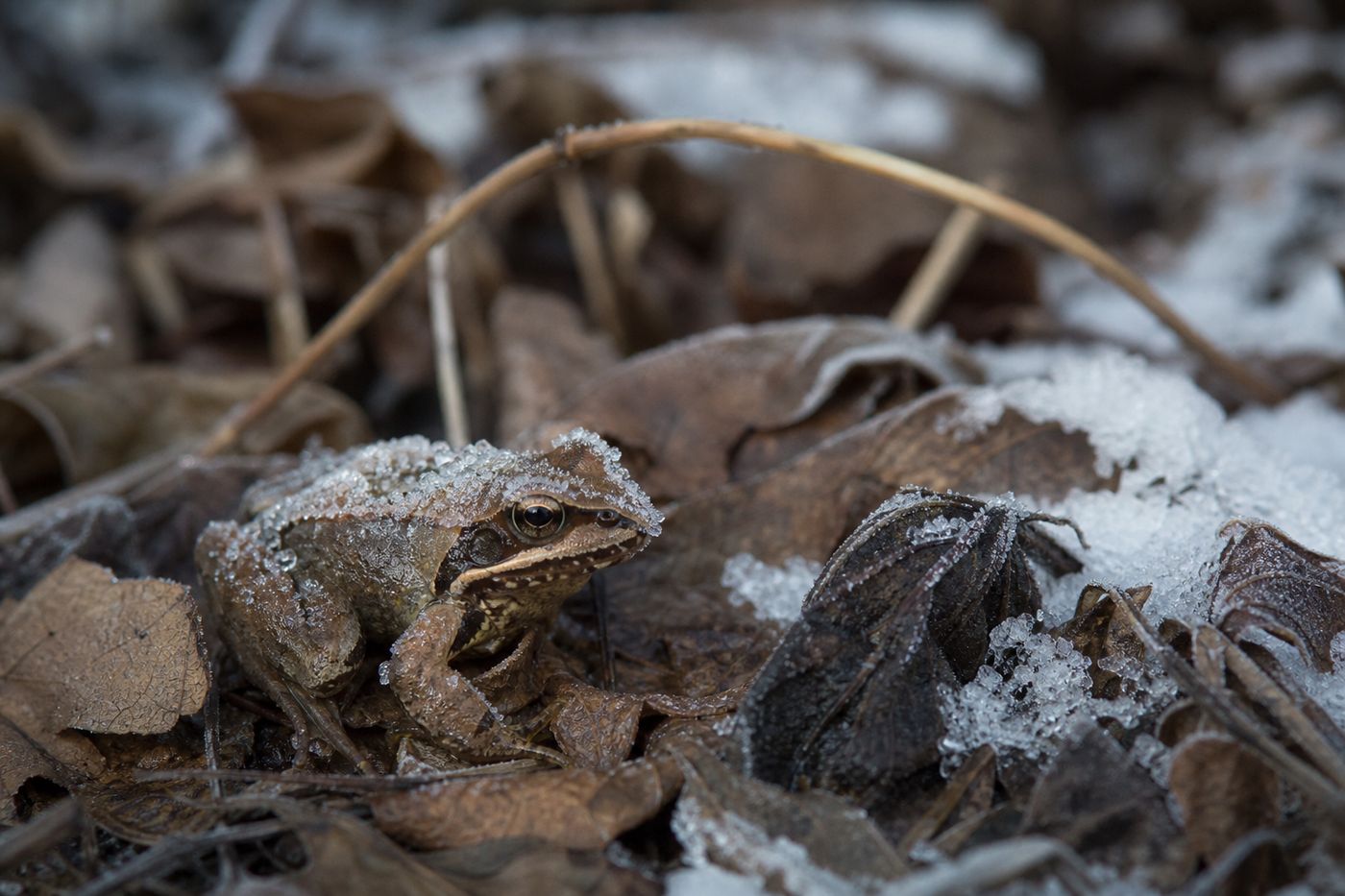
Every autumn, the wood frog does something that should be a death sentence. It burrows under leaf litter, lets the cold set in, and does nothing to stop what happens next.
Ice starts forming under its skin and between its muscles. Within hours, up to 65% of the water in its body turns to solid ice. Its legs stiffen. It looks, by any normal measure, dead.
Its heart stops beating completely. Blood flow halts. Breathing ceases entirely for weeks at a time, sometimes stretching across the entire winter season underground.
The trick keeping it alive is sugar. The frog's liver floods its cells with glucose right before freezing begins, acting like an internal antifreeze that protects tissue from the damage ice normally causes.
That glucose keeps individual cells from rupturing even while the spaces between them freeze solid. It's a chemical workaround scientists still study for organ preservation and long-term tissue storage in humans.
Come spring, as temperatures rise, the ice melts from the outside in. Within hours, the frog's heart simply restarts on its own, with no CPR, no gasping recovery, just a slow return to normal.
Researchers have found wood frogs surviving repeated freeze-thaw cycles in a single season without lasting harm. For an animal with no fur, no shelter, and no way to migrate south, freezing itself solid turned out to be the safest option available.