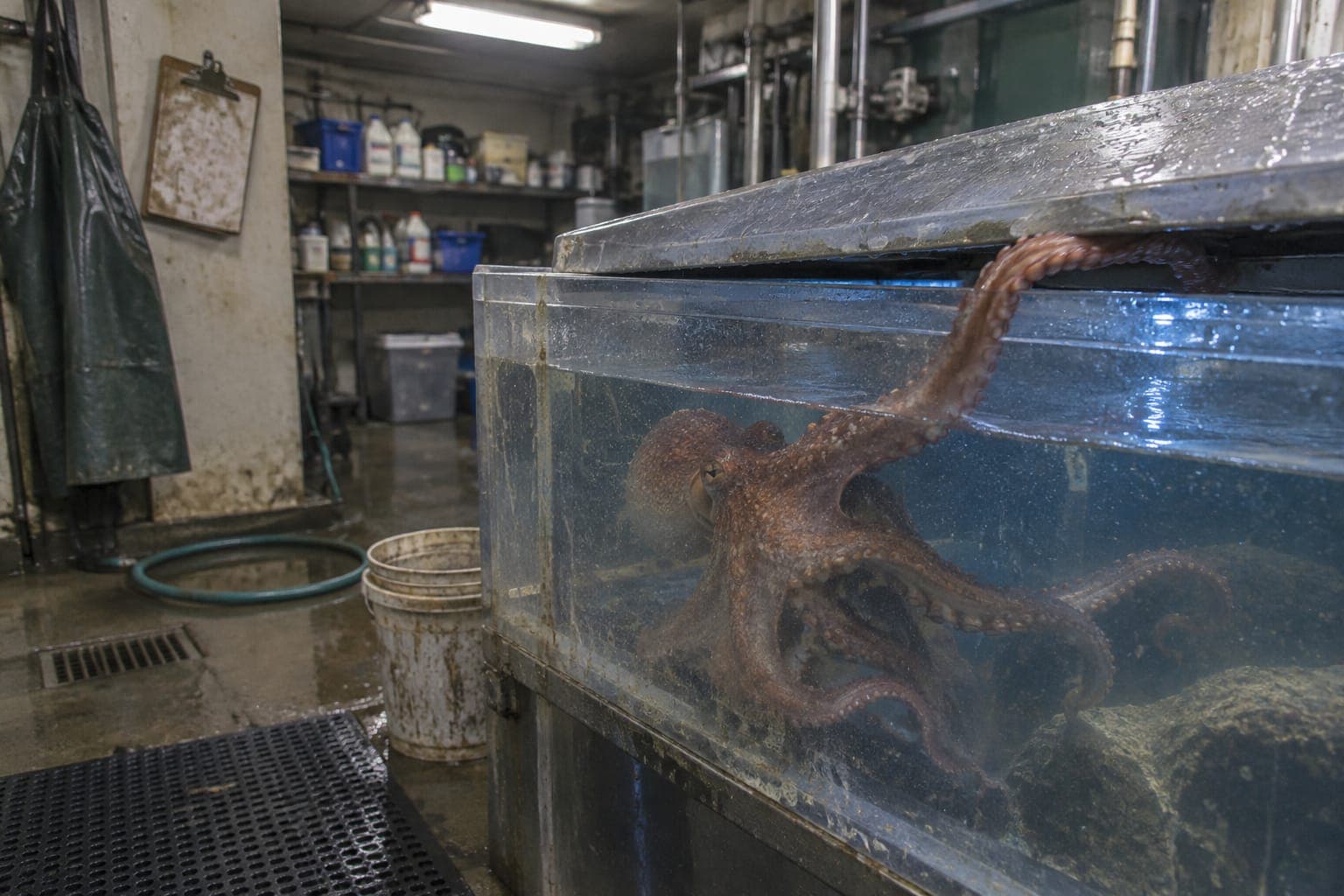
Octopuses have been escaping aquariums for as long as people have kept them. Keepers have found them in neighboring tanks, and one famously slipped out of a drain pipe.
In 2016, a New Zealand aquarium reported that an octopus named Inky vanished overnight. Staff found a trail of suckers leading to a drain, and he was never seen again.
The trick is anatomy. An octopus has no skeleton, so it can squeeze through any gap larger than its hard beak, the only rigid part of its body.
That flexibility comes with a heavy mental load. Each arm holds a cluster of neurons, and about two thirds of an octopus's roughly 500 million neurons sit in its arms, not its head.
Researchers have watched severed arms keep reacting to touch, reaching and grabbing for a short time. Each arm can make basic decisions without waiting on the brain.
Octopuses also solve puzzles, open screw-top jars from the inside, and recognize individual human keepers. At a Seattle aquarium, one reportedly squirted water at a particular staffer it disliked.
Their lives are short, often only one to five years depending on species. A creature this clever gets almost no time to pass anything on, since most never meet their young.