Right now, as you read this, you're having a hallucination. A controlled one — but a hallucination nonetheless. Your brain is not showing you the world as it actually is. It's showing you its best guess.
This isn't a fringe idea. It's one of the most well-supported theories in modern neuroscience, developed over decades by researchers including neuroscientist Anil Seth at the University of Sussex and Karl Friston at University College London. The theory is called predictive coding — and once you understand it, the way you think about your own mind changes completely.
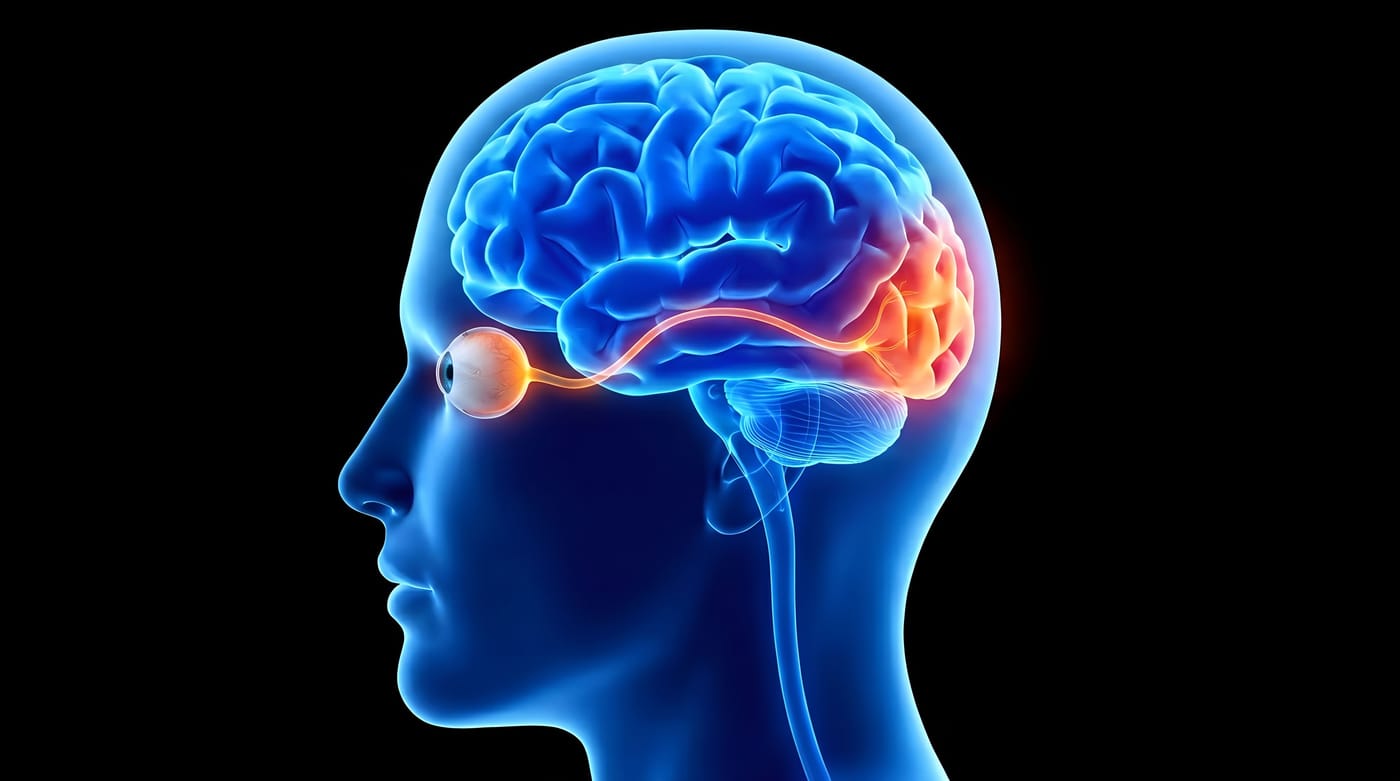
Here's the core problem your brain has to solve: sensory information is slow, incomplete, and constantly arriving late. By the time light hits your retina and gets processed, the moment you're perceiving has technically already passed. So your brain doesn't wait. It runs a constant internal simulation of the world — predicting what's out there based on past experience — and only updates that simulation when something doesn't match.
Seth calls this a "controlled hallucination." The hallucination part is real: your brain is actively generating what you see, hear, and feel. The controlled part is what keeps it grounded — incoming sensory signals constantly correct the prediction when it's wrong. But the prediction always comes first.
This is why optical illusions work even after you know they're illusions. Your brain isn't being fooled — it's doing exactly what it's supposed to do, prioritizing its model of the world over the raw sensory data. The illusion doesn't disappear because the prediction doesn't update. Knowing the truth intellectually doesn't override the simulation.
It also explains why two people can witness the same event and remember it completely differently. They weren't recording the same footage — they were running different simulations, shaped by different expectations, memories, and prior experiences. Neither version is fully accurate. Both are constructions.
Psychedelic drugs appear to work by disrupting this system — loosening the brain's grip on its own predictions and flooding consciousness with raw, unfiltered sensory data. Researchers at Sussex actually built a "Hallucination Machine" using predictive coding principles to simulate the altered states caused by psychedelics, without any drugs involved.
The unsettling part isn't that your brain occasionally gets things wrong. It's that "reality" as you experience it has always been a construction — a model your brain built, refined over a lifetime, and presents to you as the truth. The world outside your head and the world inside it are never quite the same place.