Fun Facts

Trending Now

The Accidental Invention Behind Beaded Ice Cream

The Accidental Invention Behind Beaded Ice Cream

One of these claims about a famous beaded ice cream's strange origin is true, and one isn't. Can you guess which one really happened?

Read more
A Command Sent Today Won't Land Until Tomorrow

A Command Sent Today Won't Land Until Tomorrow

A NASA probe is about to hit a milestone no other human-made object has reached.

Read more

The Wild Story of a Broken Tour de France Bike

One of these claims about an early Tour de France mishap is true, and one isn't. Can you guess which story really happened? Find out inside.

Read more
The Year America Served Two Thanksgivings

The Year America Served Two Thanksgivings

In 1939, families argued over which Thursday was the real one. A retailer's pitch started it all.

Read more
A Siberian Tomb Just Failed a 2,800-Year-Old Drug Test

A Siberian Tomb Just Failed a 2,800-Year-Old Drug Test

Researchers tested a princely tomb in southern Siberia and found something surprising in the hair.

Read more
See All Content
logo
  • Sports

  • History

  • Language

  • Food

  • Tech

  • Animals

  • Sports
  • History
  • Language
  • Food
  • Tech
  • Animals
  • ​

Why Some People Feel Pain Completely Differently Than Others

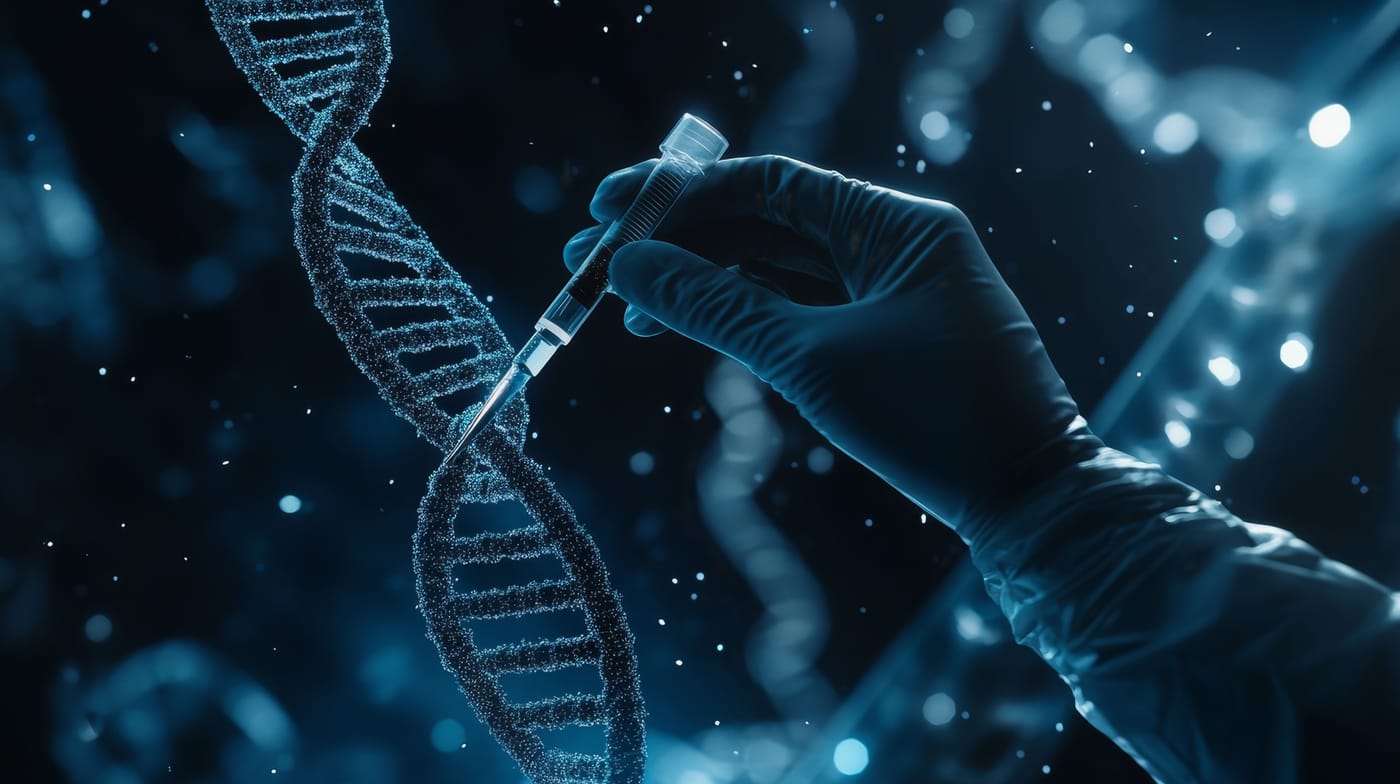
DNA strand pain genetics concept

Pain tolerance is one of those things people tend to treat as a personality trait — something you either have or you don't, a measure of toughness or willpower. Research tells a different story. How much pain you feel in response to a given stimulus is significantly determined by your genetics, varies measurably from person to person, and has nothing to do with how tough you are. Two people can have the exact same injury and experience two completely different levels of pain — and neither one is exaggerating.

One of the most studied genes in pain research is COMT — short for catechol-O-methyltransferase. The COMT gene regulates the breakdown of dopamine and other neurotransmitters in the brain, and a specific variant of it directly affects how intensely pain signals are processed. People who carry one version of the variant break down these neurotransmitters more slowly, leaving higher levels circulating in the brain — which amplifies pain perception. People with a different version process them faster, resulting in lower pain sensitivity. The difference between these two groups, measured in controlled experiments, is significant and consistent.

COMT isn't the only gene involved. Researchers have identified variants in the OPRM1 gene — which encodes the brain's main receptor for opioids — that affect both how intensely people feel pain and how well they respond to pain medication. People with certain OPRM1 variants need significantly higher doses of morphine to achieve the same pain relief as people without them. In a 2008 study of cancer patients receiving morphine for pain management, OPRM1 variants reliably predicted how much medication a patient would require — a finding that has direct implications for how doctors should be dosing painkillers.

The redhead connection is one of the most striking examples of genetic pain sensitivity in action. People with red hair carry variants in the MC1R gene — the gene responsible for their hair and skin pigmentation — that also affect how their nervous system processes pain. Multiple studies have found that redheads require significantly more anesthesia during surgery than non-redheads — on average, about 20% more — and are more sensitive to certain types of pain, particularly thermal pain. Anesthesiologists have known about this for years, and it's now a standard consideration in surgical planning for redheaded patients.

Beyond specific gene variants, pain perception is also influenced by the overall density of nerve fibers in a given person's skin. Some people simply have more pain-sensing nerve endings per square centimeter than others — a difference that's measurable under a microscope and that has nothing to do with psychology or attitude. Areas of the body with higher nerve density, like the fingertips and face, are universally more sensitive than areas like the back — but the baseline density varies person to person in ways that compound everything else.

The practical consequences of ignoring this extend well beyond surgery. Pain that goes undertreated because a doctor assumes a patient is being dramatic is a documented medical problem — one that disproportionately affects women, who studies consistently show are more likely to have their pain dismissed or undertreated compared to men reporting equivalent symptoms. The genetic basis of pain sensitivity adds an important layer to that conversation: not only is undertreated pain a bias problem, it may also reflect a failure to account for real, measurable biological differences.

The field of pain genetics is still relatively young, but it's already beginning to reshape clinical practice. Some hospitals are now using genetic screening to help predict how patients will respond to pain medication before surgery, allowing anesthesiologists to adjust doses preemptively rather than reactively. The idea that pain is purely subjective — that it exists only in the mind and can be willed away — is becoming increasingly difficult to defend. Your pain tolerance was partly decided before you were born.


Related Content

History Facts

Fun Facts

10 November 2026

Post

A Hostage Waits at the Palace Whenever the King Visits

Every year, a politician is held at a palace so the monarch comes home safe. Here's why....

History Facts

Fun Facts

10 November 2026

Post

The Strange Story of Gunpowder and Pigeon Droppings

One of these claims about England's old gunpowder-and-pigeon-dung business is true, and one isn't. Can you guess which one really happened?...

History Facts

Fun Facts

10 November 2026

Post

Viagra Facts: A Heart Drug, Blue Vision and Hamsters

Why Viagra began as a heart drug, how it can tint your vision blue and why the FAA cares, and the hamster jet lag study that won an Ig Nobel Prize....

History Facts

Fun Facts

09 November 2026

Post

Cannibalism: 3 True Stories You Won't Believe

Which state bans cannibalism, why the CDC warned about placenta pills, and how a tribe's funeral ritual may have left a gene that fights brain disease....

History Facts

Fun Facts

09 November 2026

Post

The Laughing Sickness That Shut Down Schools

In 1962, three schoolgirls started laughing and a whole region couldn't stop. Nobody was joking....

History Facts

Fun Facts

09 November 2026

Post

The Surprising Origin of the Movie Trailer

One of these claims about the first movie trailer is true, and one is completely made up. Can you guess which one really happened?...

Language Facts

Fun Facts

08 November 2026

Post

Your Latte Art Is Named After a Monk's Hood

A Sunday coffee order shares its name with a monk's wardrobe and a monkey. Here's the link....

Tech Facts

Fun Facts

08 November 2026

Post

How NASA Sends Tools to Astronauts in Orbit

One of these claims about NASA and tools for astronauts is true, and one is completely made up. Can you guess which one really happened?...

History Facts

Fun Facts

08 November 2026

Post

Tattoos: The Iceman, Ink in Your Nodes (+1 More)

Ötzi's 5,300-year-old tattoos, where your tattoo ink really travels in your body, and the company that frames a dead loved one's actual tattooed skin....

History Facts

Fun Facts

07 November 2026

Post

The Taboo Word That Broke Through Ad Breaks

One of these claims about a taboo word in a 1980s TV commercial is true, and one is completely made up. Can you guess which one really happened?...

Sports Facts

Fun Facts

07 November 2026

Post

Why a Marathon Is Exactly 26.2 Miles Long

The odd number behind every marathon traces back to one summer day in London. Here's how it happened....

History Facts

Fun Facts

07 November 2026

Post

Starbucks Secrets: Pequod, the CIA and Fecal Ice

The Moby-Dick name Starbucks almost used, the secret store inside CIA headquarters and the 2017 UK investigation that found fecal bacteria in coffee shop ice....

History Facts

Fun Facts

06 November 2026

Post

Lobotomies: 3 True Stories That Sound Made Up

How lobotomies won a Nobel Prize, why a 12-year-old was operated on for being a kid, and the secret Kennedy family surgery that was hidden for decades....

Food

Fun Facts

06 November 2026

Post

The Curious Case of How Spam Got Its Name

One of these claims about how Spam got its name is true, and one is completely made up. Can you guess which one really happened?...

Language Facts

Fun Facts

06 November 2026

Post

A Frustrated Author, a Word List, and a Hat

A famous children's book began as a publisher's headache. The author hated the assignment....
Terms and ConditionsDo Not Sell or Share My Personal InformationPrivacy PolicyPrivacy NoticeAccessibility NoticeUnsubscribe
Copyright © 2026 Fun Fact Feed