History Facts

Recent Content

The History of the New Year's Baby vs Old Man Time

The History of the New Year's Baby vs Old Man Time

The New Year's Baby and Old Man Time mascots symbolize the year changing. Both were invented by political cartoonists in the 1800s to sell newspapers.

Read more
Why 80% of New Year's Resolutions Fail by February

Why 80% of New Year's Resolutions Fail by February

80% of New Year's resolutions fail by February. Brain science explains why we're biologically terrible at keeping them—and why January 1st makes it worse.

Read more
The First Ball Drop Almost Killed People

The First Ball Drop Almost Killed People

The 1907 Times Square ball was 700 pounds of iron and wood. It nearly fell during the first drop, almost killing the crowd below.

Read more
How January 1st Became New Year's Day

How January 1st Became New Year's Day

Julius Caesar picked January 1st as New Year's Day in 46 BC. Before that, the new year was March 1st—which is why our month names don't make sense.

Read more
Why Boxing Day Is Called Boxing Day

Why Boxing Day Is Called Boxing Day

Boxing Day started as the one day British servants got off after working Christmas. They received boxes of leftovers and tips from their employers.

Read more
See All Content
logo
  • Sports

  • History

  • Language

  • Food

  • Tech

  • Animals

  • Sports

  • History

  • Language

  • Food

  • Tech

  • Animals

  • ​
    ​

Violet Jessop Survived the Titanic, Britannic, AND Olympic Disasters

Violet Jessop Survived the Titanic, Britannic, AND Olympic Disasters

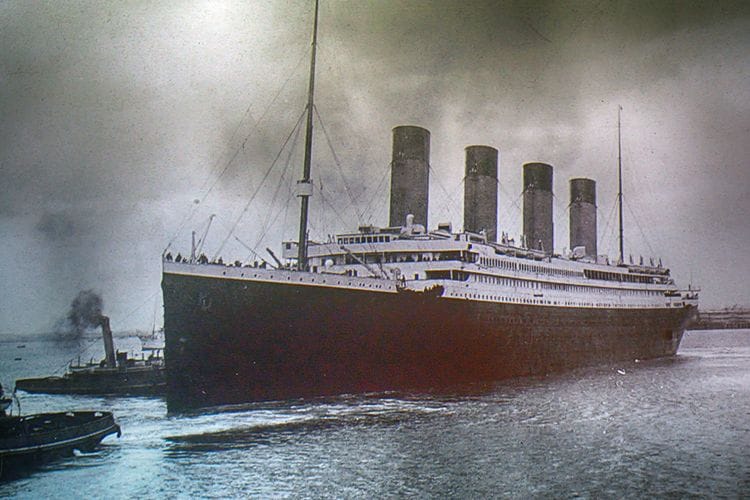
Meet Violet Jessop - the woman who survived not one, not two, but THREE major ship disasters and lived to tell about it!

Jessop was working as a stewardess aboard the RMS Olympicin 1911 when it collided with a British warship, creating a massive hole in the hull. The ship barely made it back to port, but Jessop survived her first maritime disaster.

Undeterred by her close call, Jessop took a job aboard the RMS Titanicin 1912. When the "unsinkable" ship hit an iceberg, Jessop was ordered into Lifeboat 16 and survived the most famous shipwreck in history while 1,500 others perished.

You'd think she'd avoid ships after that, but World War I was raging and Jessop felt called to serve. She became a nurse aboard the HMHS Britannic (Titanic's sister ship) in 1916. The ship hit a mine in the Aegean Sea and sank in just 55 minutes.

Jessop jumped from the sinking ship and was nearly killed by the propeller, but incredibly survived her third major shipwreck. She suffered a serious head injury but lived to tell the tale.

The mathematical odds of surviving three separate major maritime disasters are astronomical - roughly 1 in 200 million. Jessop became known as "Miss Unsinkable" and continued working on ships for decades after her near-death experiences.

She wrote in her memoirs: "I never lost my love for the sea, despite everything it threw at me."

Jessop's incredible survival story makes her one of the luckiest (or unluckiest, depending on how you look at it) people in maritime history!
Related Content

Terms and ConditionsDo Not Sell or Share My Personal InformationPrivacy PolicyPrivacy NoticeAccessibility NoticeUnsubscribe
Copyright © 2026 Fun Fact Feed