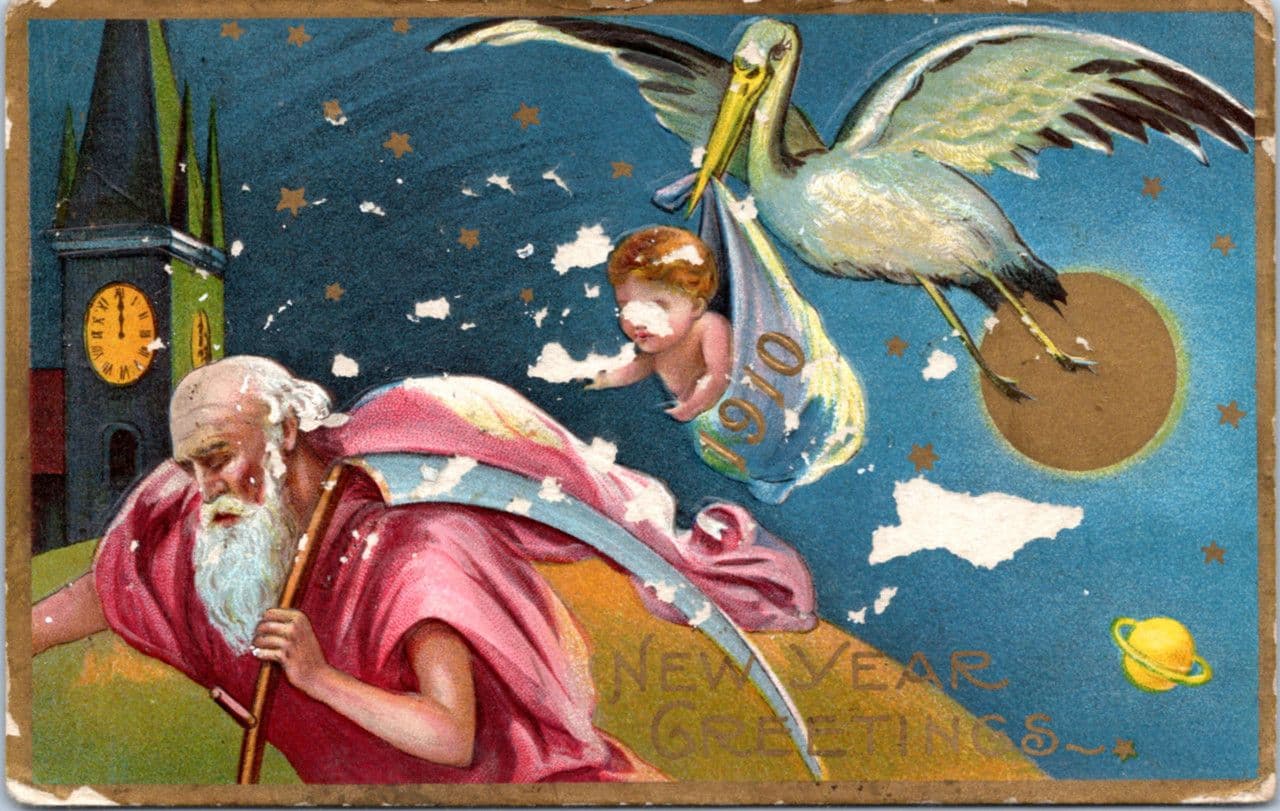
Every New Year's Eve, you see the same imagery: a baby in a diaper with a "Happy New Year" sash, and an old bearded man with a scythe and hourglass representing the dying year. These mascots feel ancient, but they were actually invented by American newspaper cartoonists in the 1800s as a visual gimmick to sell more papers.
The concept of personifying time as an elderly man dates back to ancient Greece. Chronos, the god of time, was depicted as an old man with a long beard. Romans adopted this imagery, and by medieval times, "Father Time" had become a common symbol in European art.
But the specific "Old Man Time" who represents the dying year? That version was popularized by political cartoonist Thomas Nast in the 1870s. Nast—the same guy who created the modern image of Santa Claus—drew Father Time as a frail old man with a scythe, symbolizing death and the end of the year.
The scythe wasn't random—it's the Grim Reaper's weapon, linking the old year to death and mortality. The hourglass represented time running out. Nast's depiction was dark and morbid, perfect for Victorian sensibilities about time and death.
The New Year's Baby came later as a counterpoint. In the late 1800s, American newspapers started depicting the new year as a baby—innocent, fresh, full of potential. It was meant to contrast with the dying old man, creating a visual narrative of renewal and hope.
The baby would be shown crawling in on January 1st while Father Time shuffled out. Sometimes the cartoons depicted Father Time literally handing the baby an hourglass or passing a torch, symbolizing the transition of responsibility from one year to the next.
Why a baby specifically? Babies represented new beginnings, unblemished potential, and the idea that anything could happen in the coming year. They were also cute and non-threatening, which balanced out the grim imagery of death associated with Father Time.
By the early 1900s, the New Year's Baby had become standard imagery in advertisements, greeting cards, and decorations. Companies used the baby to sell everything from champagne to calendars. The mascot became so ubiquitous that people assumed it was an ancient tradition.
The baby usually wore a sash with the new year printed on it and sometimes carried party favors or noisemakers. In some depictions, the baby wore a diaper made from the new calendar. The symbolism wasn't subtle—this baby literally represented the fresh 365 days ahead.
Today, both mascots have faded from prominence but still appear in vintage-style decorations and editorial cartoons. Most people under 40 have no idea why an old man with a scythe and a baby in a diaper are supposed to represent New Year's Eve—they just accept it as "traditional."
So when you see these mascots, remember: they're not ancient symbols passed down through generations. They're Victorian newspaper gimmicks that stuck around because they made good visuals.