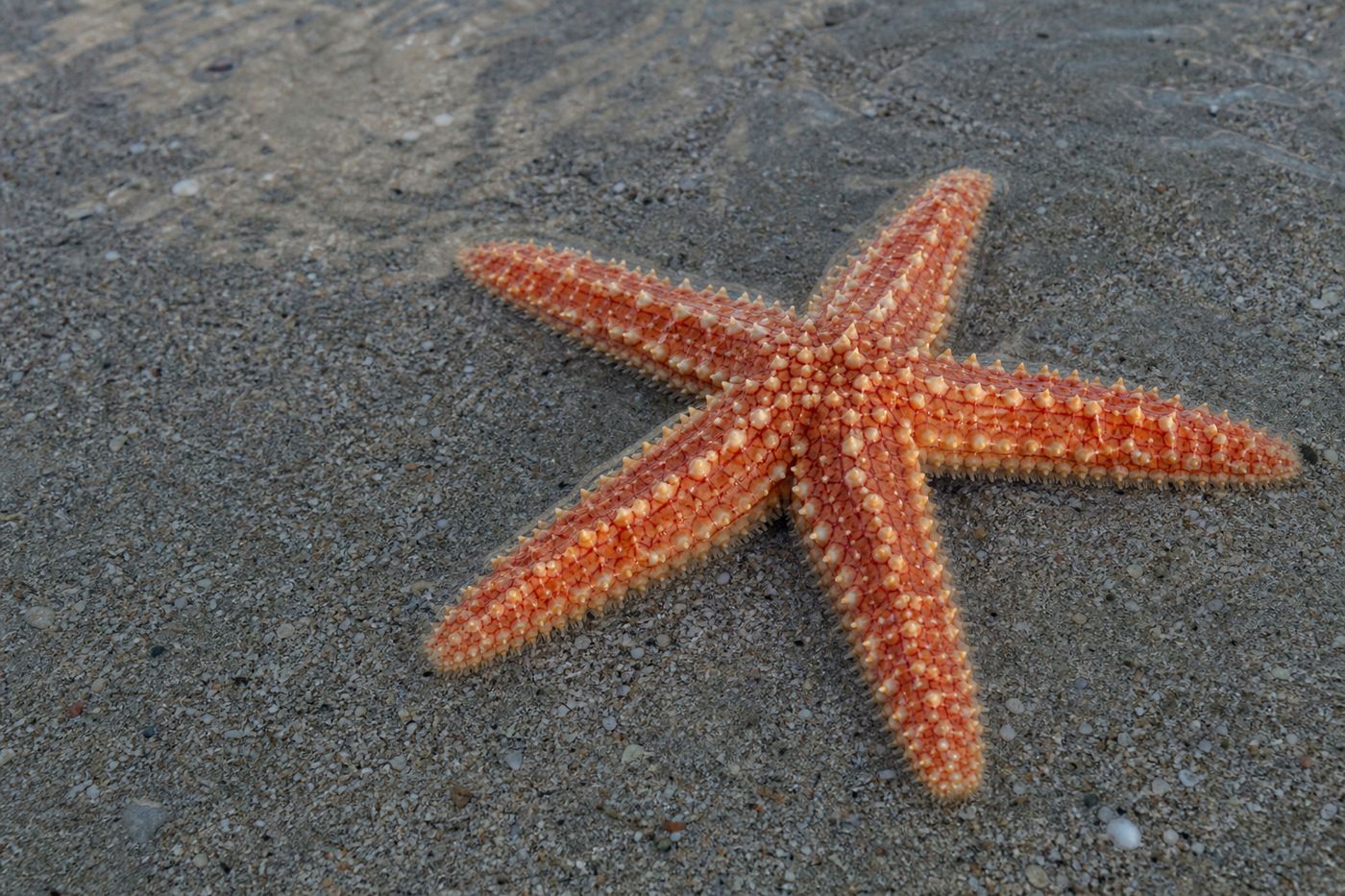
Starfish look like simple beach decorations, but underneath those five arms sits one of the strangest digestive systems in the animal kingdom. They don't hunt and swallow prey the way most creatures do. Instead, they've developed a feeding method so unusual it took marine biologists decades to fully document.
A starfish will slowly wrap itself around a clam or mussel and pry the shell open using hundreds of tiny suction-cupped feet. This process can take hours, since the starfish is essentially arm-wrestling a shellfish that doesn't want to lose its dinner. Patience, not speed, is the starfish's real weapon.
Once the shell cracks open even slightly, the starfish does something that sounds almost impossible: it pushes its own stomach out through its mouth and into the shell. The stomach oozes out like a living liquid, squeezing through gaps too small for the rest of the body to fit through.
Inside the shell, the everted stomach releases digestive enzymes that dissolve the prey's soft tissue directly, turning it into a nutrient soup before any of it is ever technically 'eaten' in the traditional sense. Digestion starts outside the starfish's own body.
Once the meal is liquefied, the stomach slowly retracts back inside the starfish, pulling the digested nutrients along with it. The whole process can take several hours from start to finish, and larger prey may require the starfish to camp out on the same meal overnight.
This external digestion trick lets starfish eat prey that would otherwise be impossible to consume, including animals protected by thick shells that no mouth could ever swallow whole. It's a workaround evolution built instead of bigger jaws or sharper teeth.
Some species can even evert their stomachs to digest food too large to fit inside their bodies at all, essentially eating meals that are bigger than they are, one dissolved bite at a time, entirely outside their own skin.