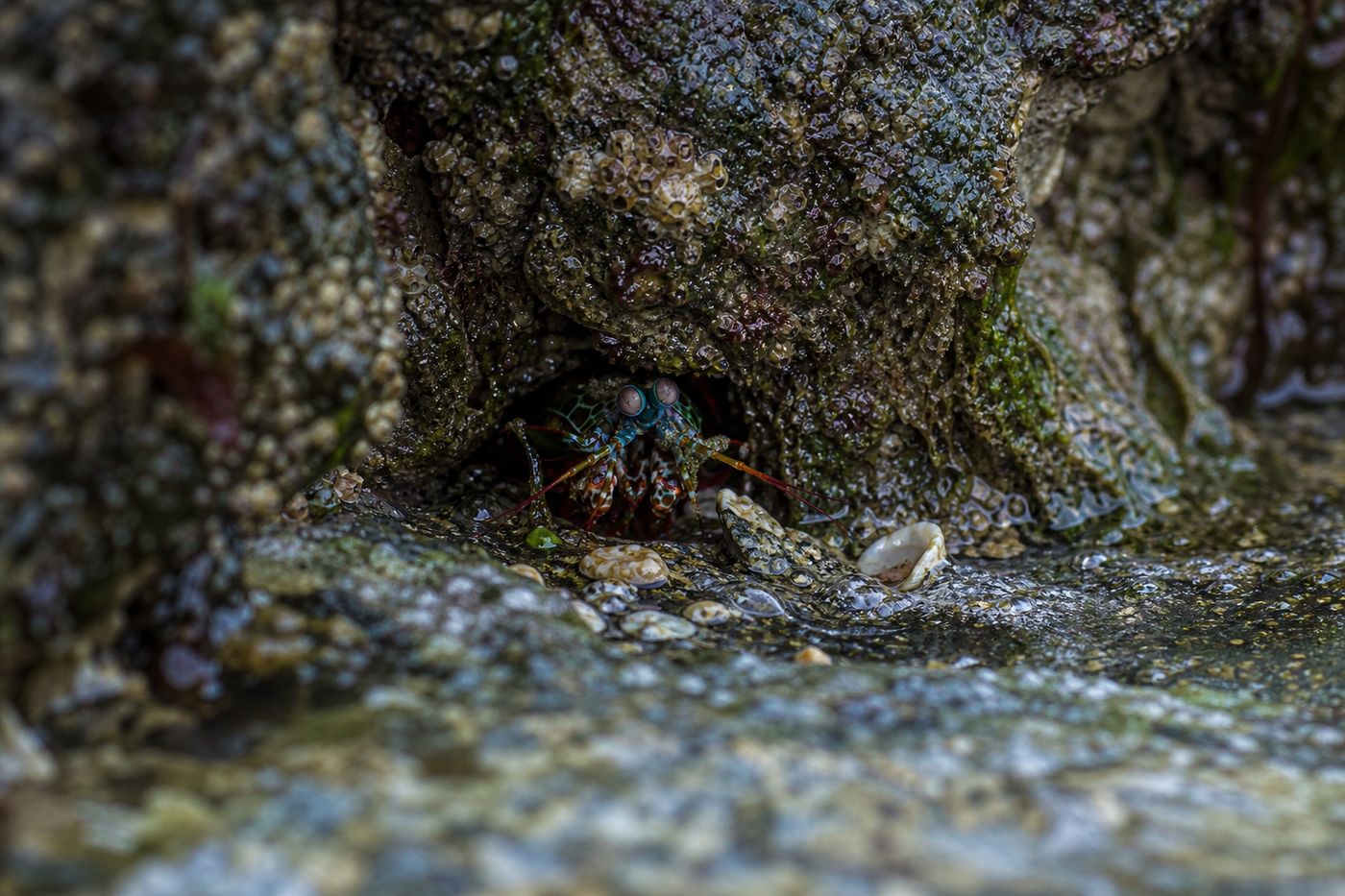
Tide pools look calm from the surface, but some of the smallest creatures inside them are running combat operations most predators would envy. The peacock mantis shrimp barely stretches past four inches, yet it's considered one of the most feared hunters on the reef floor.
Its weapon isn't venom or teeth. It's a modified claw called a dactyl club, and the shrimp uses it like a spring-loaded hammer, cocking it back and releasing with almost no warning.
The strike moves so fast it clocks in around 50 miles per hour underwater, which for something the size of a finger is closer to a gunshot than a punch. Water resists movement far more than air, which makes the speed even harder to believe.
That speed creates a strange side effect. The claw moves so quickly that it causes the water in front of it to boil for a fraction of a second, forming a collapsing bubble known as cavitation.
When that bubble collapses, it releases a second shockwave and a tiny flash of light and heat, briefly reaching temperatures close to the surface of the sun. The shrimp effectively hits its target twice with a single swing — once from the claw, once from the bubble collapse.
Researchers have filmed the shrimp shattering snail shells and even cracking aquarium glass, which is why marine biologists nicknamed it the "thumb splitter." The force involved is enough to break bone on contact, all generated by a creature most people could hold in one hand.
Scientists studying the mechanism have used it to design better body armor and shock-resistant materials, borrowing directly from the shrimp's claw structure. A backyard tide pool animal, it turns out, solved an engineering problem humans are still catching up on.