Most animals live and die by the genetic code they're born with. DNA gets transcribed into RNA, RNA builds proteins, and that's the end of the story for nearly every creature on Earth.
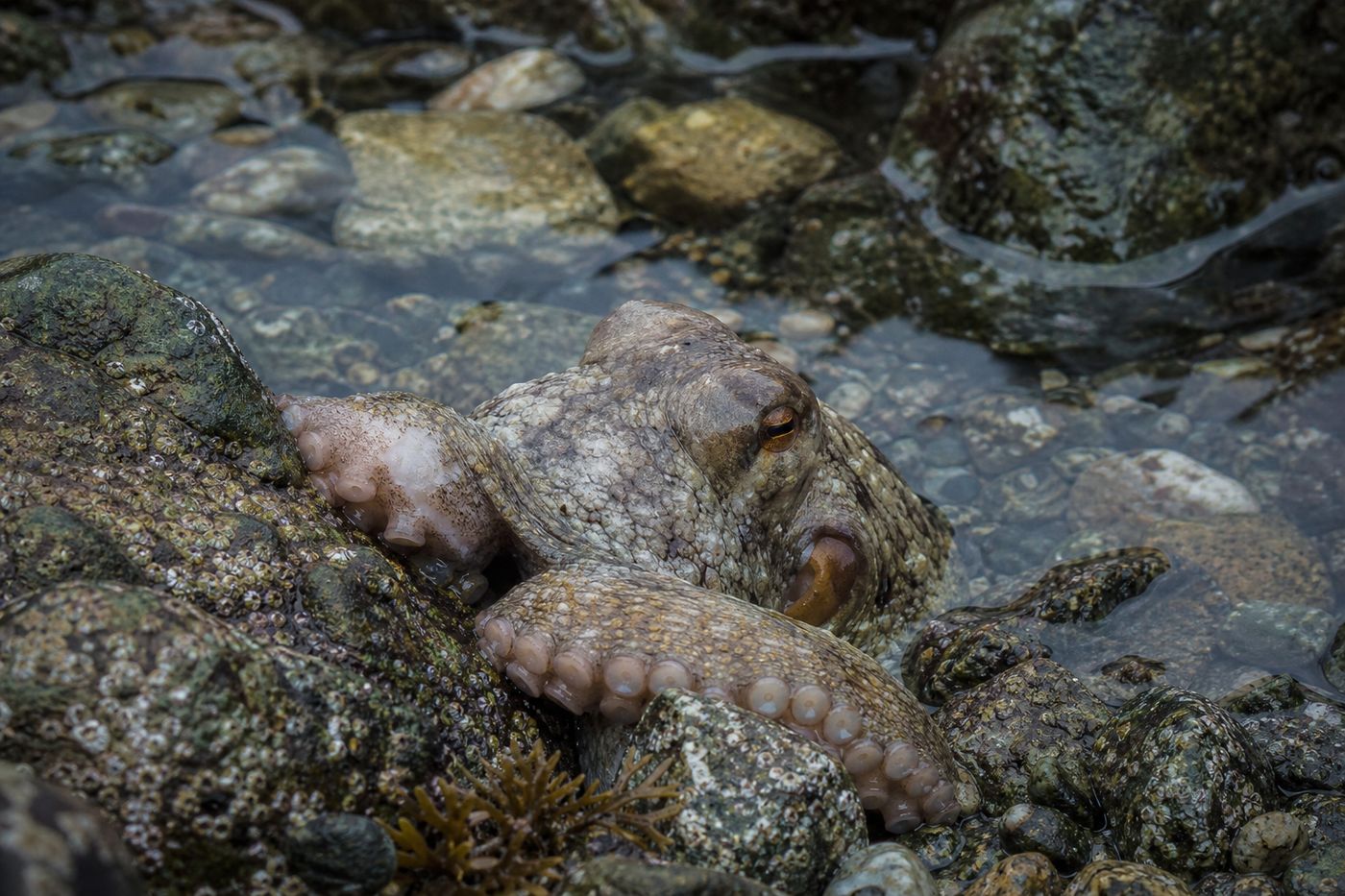
Octopuses, squid, and cuttlefish broke that rule entirely. Researchers discovered these cephalopods can edit their own RNA messages after they're written, changing instructions before proteins ever get built.
This process, called RNA editing, exists in other animals too, but barely. Humans edit a tiny fraction of their RNA. Octopuses edit thousands of sites, concentrated heavily in their nervous system.
Scientists at the Marine Biological Laboratory found that octopuses use this editing to fine-tune proteins controlling how neurons fire. It's essentially a way to reprogram brain function without changing DNA at all.
The catch is steep. Cephalopods that rely heavily on RNA editing show unusually slow rates of actual DNA evolution, as if editing soaked up the flexibility other species spend on mutation.
Researchers suspect this trade-off helps octopuses adapt to temperature shifts almost instantly, adjusting neural proteins in real time rather than waiting generations for genetic change.
No one has found another branch of life that leans on this trick so heavily. For now, the octopus remains the only known animal quietly rewriting its own instructions as it goes.